

NEWS AND UPDATES
The latest updates regarding our products and our company

What Is the Best Rechargeable Headlamp for Buyers?
Choosing the best Headlamp Rechargeable model is less about chasing the brightest number and more about matching light, runtime, and comfort to real tasks. A trail runner may need a stable beam and quick controls. A camper may value a red-light mode, a lockout, and a battery that lasts through a cold night. Small details matter. So does fit: a headlamp that slips down your forehead can turn a simple repair into a nuisance.
For a transparent editorial perspective, this guide uses Morgan Lee as a fictional composite outdoor-lighting specialist, not a real-world source. Lee’s guiding line is: “Judge a rechargeable headlamp by the light it sustains, not just the brightness it advertises.” Treat that as a useful buying principle, not a verified quotation. Compare beam shape, measured runtime, charging method, weather resistance, and battery replacement options. Check whether the manufacturer’s runtime reflects a useful brightness level; a long figure may describe a dim setting. Look for clear specifications and dependable support, too.
There is no perfect pick for every buyer. A compact model may feel effortless on a short walk, yet disappoint during a long night outside. And product labels rarely show every trade-off. This guide weighs those compromises, explains which features matter most, and helps buyers choose a rechargeable headlamp for their actual routine—not an idealized one.
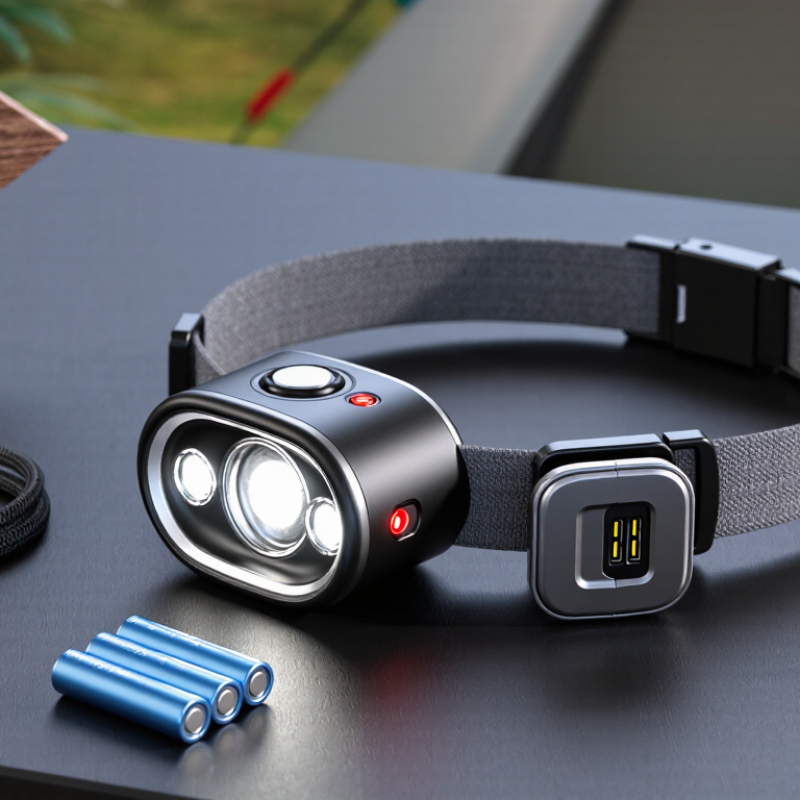
Define Buyer Requirements by Task, Fit, Weight, and Recharge Frequency
What Is the Best Rechargeable Headlamp for Buyers?
Start with the task, not the feature list. A headlamp for reading a map needs a steady, usable beam, while trail work may call for broader coverage and quick access to a brighter setting. For close tasks, check whether the light can dim enough to avoid glare on nearby surfaces. Outdoors, consider how well the beam reveals uneven ground. Small details matter. A control that is easy to find with gloves can be more useful than an extra mode you rarely use.
Fit changes how often you reach for the lamp. Look for an adjustable strap that sits securely without pinching, and check whether the lamp stays put when you look down. Weight matters most over time: a few extra ounces can feel noticeable during a long walk or repeated overhead work. Try it on if possible. A comfortable fit in a shop may shift after an hour. Recharge frequency depends on brightness, session length, battery capacity, and temperature, so compare realistic use rather than headline runtime. If you use the lamp nightly, convenient charging may matter more than maximum output. Keep in mind that real conditions rarely match a neat estimate; I would leave a little charge in reserve instead of planning around the last minute.
Compare ANSI/PLATO FL 1 Beam Distance at Its 0.25-Lux Threshold
A headlamp’s beam-distance number is useful only when you know how it was measured. ANSI/PLATO FL 1-2019 defines beam distance at the point where illuminance falls to 0.25 lux. Using the inverse-square relationship, that threshold corresponds to about 100 candela at 20 metres, or 225 candela at 30 metres. These figures help compare published claims, but they do not show how evenly a lamp lights a trail or doorway. A narrow hotspot can reach farther while leaving nearby ground dim.
For a rechargeable model, compare beam distance at the same test threshold, then check runtime and output mode. A long-range figure may describe a brief high setting, not the light you will use during a full evening walk. Battery charge, temperature, and optics can also affect real use. I still find the number a little too tidy: outdoor surfaces and weather vary, and a spec sheet cannot reproduce every path.
Tips: Look for ANSI/PLATO FL 1 testing details, not distance alone. Compare the beam on a dark wall or trail, and note whether the center is harsh or the edge fades smoothly. A stated range is a reference, not a promise.
Evaluate Runtime Using the FL 1 Endpoint of 10% Initial Light Output
When comparing rechargeable headlamps, check how runtime was measured—not just the number of hours.
ANSI/PLATO FL 1-2019 defines runtime as the time from initial measured output until light falls to 10% of that output.
That is still visible, but it may be too dim for careful trail work. This endpoint makes specifications more comparable, yet it does not mean every hour feels equally bright. A headlamp may begin with a strong beam, then gradually dim as its battery drains.
On a cold evening, I would also expect real runtime to differ from a warm-room test. Check whether the published figure uses the same brightness mode you would actually wear. Low mode may last much longer, but it can make wet roots and trail markers harder to see.
Small detail, big difference.
Treat FL 1 runtime as a standardized benchmark, not a promise of constant brightness. Look for test conditions and mode-specific figures; if those are missing, the headline runtime leaves important questions unanswered.
Check Water Resistance Against IEC 60529 IP Ratings, Including IPX4
A rechargeable headlamp should suit the weather and tasks you actually face, not just offer the brightest number on its packaging. Check its water-resistance rating against IEC 60529. IPX4 means protection from water splashing from any direction. That can help during drizzle, sweaty hikes, or a brief splash near a sink. It does not mean the lamp can be submerged. The “X” also means a dust rating is not specified.
Read the rating carefully. IPX4 is useful, but it is not a promise that every seal stays effective after wear or impact. Check whether the charging port has a cover, and whether it must be closed for the rating to apply. Small detail. A loose cover can matter in steady rain. Avoid charging the lamp while its port is wet, and follow the maker’s care instructions.
For buyers, compare water resistance with beam adjustment, a secure headband, and runtime at the brightness level you will use. A lamp may last far less on high than its headline runtime suggests. If your route includes heavy spray or possible immersion, look for a rating specifically suited to those conditions; IPX4 alone is not enough. I’d also check how the button feels with cold, damp fingers. Specs help, but they do not tell the whole story.
Assess Battery Type, Charging Options, and Cold-Weather Performance
A rechargeable headlamp is only dependable when its battery suits the way you use it. Check whether the battery is built in or removable, and note its stated capacity. A removable cell can be replaced on a long trip; a built-in one may make charging simpler. Numbers on a package help, but they do not tell the whole story.
Charging details matter. A common USB connection lets you recharge from a wall adapter or portable power bank, while a proprietary cable can be inconvenient if misplaced. Check how long a full charge takes and whether the lamp can operate while plugged in. That feature can be useful at camp, but it may leave the cable exposed to rain or snagging. Small trade-offs.
Cold weather can reduce battery output, especially during long use. Look for published operating-temperature guidance, then test the lamp outside before relying on it overnight. Keep a spare battery warm in an inner pocket, not loose in a damp pack. Cold changes things. A bright setting may drain power quickly, so compare runtime at the brightness you actually need. Manufacturer figures can be optimistic, and real conditions vary; that is worth remembering.
Article Source:
Schedule
Monday to Thursday:
8:15 – 17:00
Friday:
8:00-15:00
Address
Leonardo Da Vinci, 10
Valencia Technology Park
46980 Paterna, Valencia, SPAIN
Real Laboratory SL
info@site_e1c8a3bd-d539-4d7f-8695-37f21373de39
Teléfono: +34 96 136 61 07
