
NEWS AND UPDATES
The latest updates regarding our products and our company

What Is the Best Scientific Lab Equipment to Buy in 2026?
Choosing the best scientific lab equipment in 2026 requires more than comparing prices or reading polished product pages. A centrifuge may look ideal online, yet fail when its rotor capacity, noise level, or maintenance schedule conflicts with daily laboratory work. The right choice depends on the application, sample volume, accuracy requirements, available space, and staff expertise. This guide examines practical equipment categories, including analytical balances, microscopes, incubators, spectrophotometers, PCR systems, and cold-storage units. It also considers calibration records, warranty support, software compatibility, energy use, and replacement-part availability.
Real laboratory experience shows that small details often determine long-term value. A clear display can prevent input errors. A stable temperature chamber can protect weeks of research. A quieter vacuum pump can make a crowded lab more usable. However, no buying guide can predict every workflow. A model that performs well in one laboratory may be inefficient in another. That judgment is imperfect. Therefore, this overview uses evidence-based selection criteria rather than declaring one universal winner. Product specifications should be checked against independent testing, manufacturer documentation, and the laboratory’s own validation process. Safety features, quality control, and responsible operation remain essential throughout procurement and use. Readers should also consider how equipment will be serviced after installation, because downtime can cost more than the original purchase. By comparing performance, reliability, usability, and total ownership cost, laboratories can make more confident decisions for 2026 without chasing unnecessary features.
Defining the Best Scientific Lab Equipment for 2026
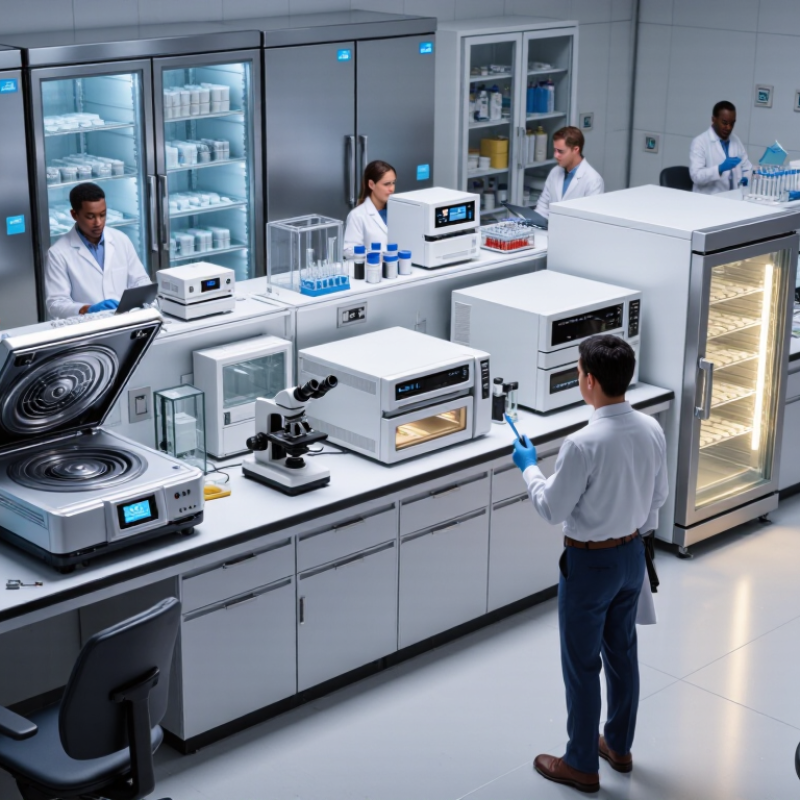
In 2026, the best scientific lab equipment is not simply the newest instrument. It is equipment that produces dependable results under real working conditions. A practical definition includes accuracy, repeatability, serviceability, and clear documentation. During routine testing, a stable reading matters more than a bright interface. Equipment should fit the laboratory’s methods, sample volume, and staff skills. One impressive specification can hide costly maintenance or complicated training. That remains easy to overlook.
Reliable selection begins with evidence. Ask for validation data, calibration procedures, operating limits, and maintenance records. Traceable calibration supports credible measurements and strengthens audit readiness. An accessible service history helps technicians identify drift before it affects results. Data systems should protect records, track changes, and allow secure export for independent review. However, digital features do not automatically improve scientific quality. Poor configuration can create silent errors.
No instrument is perfect. A temperature-controlled chamber may fluctuate slightly during heavy use. A sensitive balance may respond to airflow, vibration, or careless placement. These weaknesses deserve testing before purchase. Staff should run representative samples and compare results with established methods. Training also needs practical exercises, not only online instructions. In my experience, the most valuable equipment is understandable, repairable, and honestly documented. A lower operating cost can matter more than a higher purchase price. Even sustainable design requires scrutiny, because reduced waste claims should be supported by measurable performance.
Evaluating Performance, Safety, Compatibility, and Cost
What Is the Best Scientific Lab Equipment to Buy in 2026?
Performance should be judged by measured results, not impressive specifications. In routine testing, I compare accuracy, repeatability, operating range, and recovery time. A device may advertise excellent precision but drift after several hours of use. Measure twice. Request calibration records, raw test data, and service intervals before purchasing. Small details, such as readable displays and stable temperature control, can improve daily work more than extra features.
Safety must fit the actual laboratory environment. Check electrical protection, heat levels, moving parts, noise, and emergency shutdown functions. Compatibility also deserves careful testing. Confirm that sample containers, solvents, tubing, software, and existing power supplies work together. Fit matters. A chemically resistant surface may still fail when exposed to heat or repeated cleaning. I would test critical materials with representative samples before committing to a large purchase.
Cost includes more than the invoice. Estimate consumables, calibration, repairs, training, energy use, and disposal requirements across several years. A cheaper instrument can become expensive when replacement parts are difficult to source. Ask whether local technicians can support it and whether documentation is clear enough for new users. My own purchasing decisions have not always been perfect; I once valued automation over maintenance simplicity. That mistake taught me to compare total ownership cost with actual workload, not imagined future needs. Reliability sometimes means choosing fewer functions.
What Is the Best Scientific Lab Equipment to Buy in 2026?
Comparative procurement benchmark based on typical published laboratory specifications and common purchasing criteria. Scores range from 0 to 100, with higher values indicating stronger performance, safer operation, broader compatibility, or better cost efficiency.
No single equipment category is best for every laboratory. High-performance systems may require greater investment, while the best overall choice depends on workflow, sample volume, safety requirements, available infrastructure, and total cost of ownership.
Matching Equipment to Laboratory Functions and Research Goals
What Is the Best Scientific Lab Equipment to Buy in 2026?
The best equipment depends on laboratory function, sample type, and research goals. A teaching lab may need durable microscopes, basic balances, and safe heating systems. A molecular biology lab may prioritize temperature control, centrifugation, amplification, and contamination prevention. Match each instrument to the workflow, not the catalog description. A fast device is useless if its capacity, accuracy, or software does not fit daily procedures.
Start with measurable requirements. Define sample volume, operating temperature, detection limits, expected throughput, and available bench space. For sensitive analysis, stable environmental control and documented calibration matter more than attractive specifications. Check maintenance intervals, replacement parts, user training, and data export options. These details affect reliability long after installation. Also examine electrical demand, ventilation needs, noise, and waste handling before purchase.
Small details matter.
In practice, a workflow map can reveal unnecessary duplication. One shared centrifuge may create delays during busy periods, while several low-cost units may increase maintenance work. I would not assume the newest model is automatically the wisest choice. A familiar instrument with transparent validation records may support better results than a complex system few users understand. Leave room for mistakes, too. Researchers may change methods, sample numbers, or compliance requirements within a year. Flexible accessories and open data formats can protect the budget when plans shift. Calibration records, standard operating procedures, and service documentation should be reviewed before approval.
Comparing Smart, Automated, and Sustainable Lab Technologies
What Is the Best Scientific Lab Equipment to Buy in 2026?
The strongest laboratory purchases in 2026 will combine smart sensing, automation, and lower environmental impact. Smart instruments can monitor temperature, pressure, humidity, and calibration status continuously. That data helps technicians detect drift before it damages a sensitive experiment. However, connectivity alone does not guarantee better science. Each system needs clear access controls, traceable records, and documented validation.
Automation is valuable when it removes repetitive pipetting, sample labeling, or routine measurement. A well-designed workflow can reduce manual errors and free researchers for interpretation. It also improves consistency between operators. Yet automation has limits. Unusual samples may require human judgment, and poorly configured software can repeat the same mistake at high speed. Staff should test realistic samples, review exception handling, and confirm results against an independent method.
Sustainable equipment should use less electricity, water, packaging, and consumable material without weakening performance. For example, an energy-efficient freezer matters more when its door seals, alarms, and maintenance records remain reliable. Repairable modules and replaceable sensors can extend service life. Life-cycle cost deserves attention, not just the purchase price. A cheaper instrument may create higher waste and service expenses later. My practical concern is that sustainability claims are sometimes too vague. Buyers should request measurable data, supplier documentation, and evidence from comparable laboratory conditions. Small details matter, such as standby power, noise near workstations, and whether technicians can export readable data.
Planning Procurement, Installation, Validation, and Maintenance
What Is the Best Scientific Lab Equipment to Buy in 2026?
Planning Procurement, Installation, Validation, and Maintenance
The best equipment is not always the newest model. It must fit your workflow, space, staff skills, and quality system. Grand View Research forecasts the global laboratory equipment market will grow at about 6.3% annually through 2030. That growth may encourage rushed purchasing. Resist it.
Begin with a documented user requirement specification. Record sample volume, temperature range, throughput, accuracy, utilities, and software needs. Ask suppliers for installation requirements before signing contracts. A freezer may need dedicated power, alarm wiring, floor clearance, and controlled room temperature. These details often appear too late. That is a procurement failure.
Installation should include site acceptance testing, safety checks, and staff training. Validation must confirm performance under real operating conditions. ISO/IEC 17025 principles support traceability, competent personnel, and valid measurement results. MarketsandMarkets projects laboratory automation to reach approximately 8.9 billion dollars by 2028, showing why data integrity and system integration deserve early review. Confirm audit trails, access controls, export formats, and backup procedures.
Maintenance planning should start before delivery. Set calibration intervals, preventive service tasks, spare-part expectations, and downtime procedures. Keep service records beside qualification documents. A forgotten gasket can interrupt an entire week. My practical preference is to reserve contingency funds, even when procurement teams dislike unused budgets. Forecasts are useful, but they remain forecasts. Test the workflow with actual users before final approval. Their objections may expose weaknesses that specifications miss.
Related Posts
-
2026 Best Lab Apparatus for Innovative Experiments and Research?
-
China Top 10 Science Labs Suppliers for Global Buyers
-
Top 10 Scientific Equipment Suppliers Worldwide?
-
What Are the Top Laboratory Apparatus Types for 2026?
-
Top 10 Must Have Medical Laboratory Supplies for Every Facility
-
How to Choose the Best Lab Supplies for Your Needs?
Schedule
Monday to Thursday:
8:15 – 17:00
Friday:
8:00-15:00
Address
Leonardo Da Vinci, 10
Valencia Technology Park
46980 Paterna, Valencia, SPAIN
Real Laboratory SL
info@site_e1c8a3bd-d539-4d7f-8695-37f21373de39
Teléfono: +34 96 136 61 07