China Top 10 PES Membrane Manufacturers
China’s leading Pes Membrane manufacturers serve water treatment, bioprocessing, food production, and laboratory filtration. This guide introduces ten companies and offers a starting point for comparing their capabilities. PES membrane products can differ in pore size, membrane format, housing design, and stated operating limits. Those details matter.
A useful principle, consistent with Professor Anthony G. Fane’s membrane-engineering work, is to match membrane selection to the feed and operating conditions rather than rely on broad performance claims. This is a paraphrase, not a verbatim quotation. For buyers, that means checking chemical compatibility, pressure limits, flow data, and the test conditions behind each specification. A clean product sheet is helpful. It is not proof of performance in your process.
The manufacturers in this overview should be assessed using comparable evidence: technical documentation, quality controls, application support, and verifiable product information. Where specifications are missing or difficult to compare, that uncertainty deserves attention. Small differences count. A membrane that performs well with one feed may foul quickly with another, even when both applications appear similar on paper. This list is an orientation, not an endorsement or a substitute for qualification testing. Use it to identify candidates, request current data, and ask specific questions before selecting a supplier.
China's PES Membrane Sector: Polymer Chemistry and a ~225°C Glass-Transition Point
Polyethersulfone (PES) is valued in membrane production for its heat resistance, mechanical strength, and chemical stability. Its glass-transition temperature is commonly cited at about 225°C. That figure describes a polymer transition, not a guaranteed membrane operating limit. Pressure, cleaning chemicals, moisture, and exposure time also matter.
In practical manufacturing, PES is often formed into porous sheets through phase inversion. Small changes in casting conditions can alter pore size, surface structure, and water flow. A smooth, uniform membrane may look reassuring, but appearance alone cannot verify separation performance. Test data should include permeability, rejection, and resistance to repeated cleaning. Details matter.
For comparisons among China-based PES membrane manufacturers, buyers can examine polymer consistency, process controls, and published test methods alongside the headline temperature. Ask how samples perform after thermal cycling, not only under ideal laboratory conditions. Results may vary between batches, and that is easy to overlook. A careful technical review should distinguish the resin’s thermal properties from the finished membrane’s limits, especially when selecting materials for hot-water filtration or demanding industrial use.
Phase-Inversion Production: PES Pore Sizes and Typical 1–100 kDa UF Cutoffs
Phase-inversion PES membranes form when a polymer solution contacts a nonsolvent, often water. Solvent exchange causes precipitation, leaving a selective skin above a porous support. Guillen et al.’s review of nonsolvent-induced phase separation describes how polymer concentration, solvent choice, and bath conditions influence membrane structure (Journal of Membrane Science, 2011, volume 367). For manufacturers, controlling these variables helps produce repeatable filtration performance. The polymer name alone tells only part of the story.
Ultrafiltration specifications commonly span 1–100 kDa molecular-weight cutoffs. MWCO is a solute-retention rating, not a direct measurement of pore diameter. Protein shape, charge, concentration, and test conditions can all shift observed rejection. A nominal 10 kDa membrane may therefore behave differently across production processes. Small difference. Real impact. When evaluating PES membranes, compare the stated test method and retention data alongside the cutoff. Phase-inversion conditions deserve scrutiny too; the literature explains the mechanisms, but individual production lines still need careful validation.
China Top 10 PES Membrane Manufacturers — Phase-Inversion Production: PES Pore Sizes and Typical 1–100 kDa UF Cutoffs
Representative nominal PES ultrafiltration MWCO ratings are shown for context, not as data for specific manufacturers or products. Phase-inversion conditions influence membrane structure and pore-size distribution. MWCO is a nominal solute-retention rating, not a direct pore-diameter measurement; results vary with test solute and conditions.
Key Performance Metrics: Flux, Rejection, Chemical Compatibility, and Pressure
China Top 10 PES Membrane Manufacturers: Key Performance Metrics
For buyers comparing PES membrane manufacturers in China, headline flux values are only a starting point. Ask whether figures come from clean-water tests, at a stated temperature, and after conditioning. A membrane measured at 25°C may perform differently in a colder process line. Small details matter. Compare rejection results against the intended feed, not just a generic protein or dye test. Suspended solids can foul pores and make early results look better than sustained performance. Request test duration, sample size, and repeatability records.
Chemical compatibility needs equal attention. Confirm the membrane’s tolerance for the actual cleaning agents, concentration, temperature, and contact time. A broad claim of “chemical resistance” is not enough. Pressure data should include operating and maximum limits, plus any change in flux after repeated pressure cycles. Check whether the support layer and housing impose separate limits. For a top-ten shortlist, use the same test conditions for every supplier and ask for dated technical reports. A tidy comparison table still has blind spots; feed variation and installation quality can shift results. Treat unexplained gaps in data as questions, not proof of poor quality.
Top 10 Chinese PES Membrane Manufacturers: Products, Applications, and Certifications
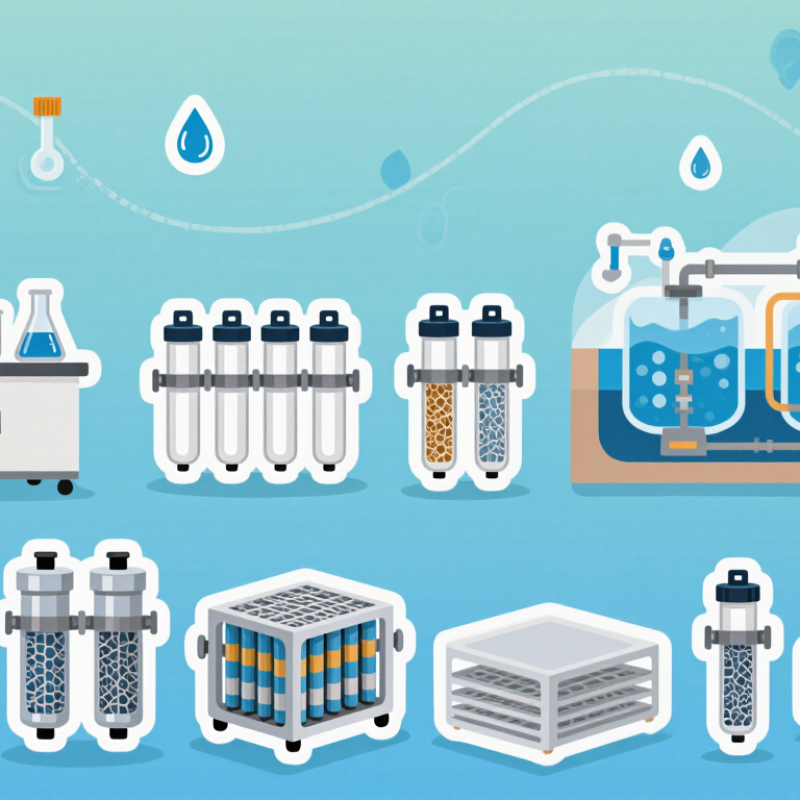
Chinese PES membrane manufacturers serve water treatment, food processing, pharmaceutical production, and laboratory filtration. Their product ranges may include hollow-fiber modules, flat sheets, and membrane cartridges with different pore sizes. Fit depends on the feed, target particles, operating pressure, and cleaning method. The details matter.
For a practical comparison of ten suppliers, review each product’s stated pore size, permeability, material compatibility, and operating limits. Ask for test data under conditions close to your process, not just a headline flux figure. A membrane that performs well with clean water may behave differently with oily or protein-rich feeds. Pilot testing helps expose that gap.
Certifications can support supplier assessment, but check their exact scope and issuing body. Quality-management certificates do not automatically certify every membrane model or its performance. Request product-specific reports, batch traceability details, and installation guidance. Also compare replacement availability and technical response times. These points are less exciting, yet they can shape operating costs. Some supplier pages leave cleaning limits unclear; that deserves a direct question before purchase.
How to Compare Suppliers: Capacity, Quality Systems, and ISO 9001 Credentials
China’s top 10 PES membrane manufacturers should be compared by measurable production ability, not headline claims. Ask whether stated capacity covers finished membrane or only casting output. Those figures differ. Request recent monthly output, typical lead times, and evidence of stable supply during peak orders. Then match capacity to your required pore size, membrane format, and annual volume.
Tips: Request a sample lot, its inspection records, and a current ISO 9001 certificate. Check that the certificate names the production site and covers relevant activities. Numbers need context.
Quality systems matter beyond a certificate. Review how the supplier controls raw materials, tracks production batches, and handles nonconforming products. Ask for inspection data on key properties, such as pore-size distribution, flow rate, and thickness. ISO 9001 indicates a quality management system; it does not certify every membrane or guarantee performance in your process. Verify the certificate’s validity and scope with its issuing body. A polished scorecard can still miss practical issues, so discuss change control and complaint handling before placing an order. One supplier may look stronger on paper, yet provide less useful documentation.