

• NEWS AND UPDATES

    The latest updates regarding our products and our company

How to Choose the Best Handheld Gas Monitor for Your Needs?

Choosing the right Handheld Gas Monitor can significantly impact safety and efficiency in various industries. According to Dr. Emily Carter, an expert in gas detection technology, "Selecting the appropriate gas monitor ensures that you can respond effectively to hazardous conditions." This highlights the importance of understanding your specific needs before making a decision.

The variety of Handheld Gas Monitors on the market can be overwhelming. Features often vary between models, making it crucial to assess which parameters matter most for your work environment. For instance, if you’re working in confined spaces, a monitor with robust features like real-time data and alarms may be necessary.

Consider the type of gases you need to detect. Some monitors specialize in specific gases, while others offer multi-gas capabilities. Not all models are reliable under every circumstance, leading to potential safety risks. Researching and consulting with professionals can help refine your options. A personalized approach to choosing a Handheld Gas Monitor ensures you invest in a device that not only meets regulatory requirements but also enhances safety standards in your operations.
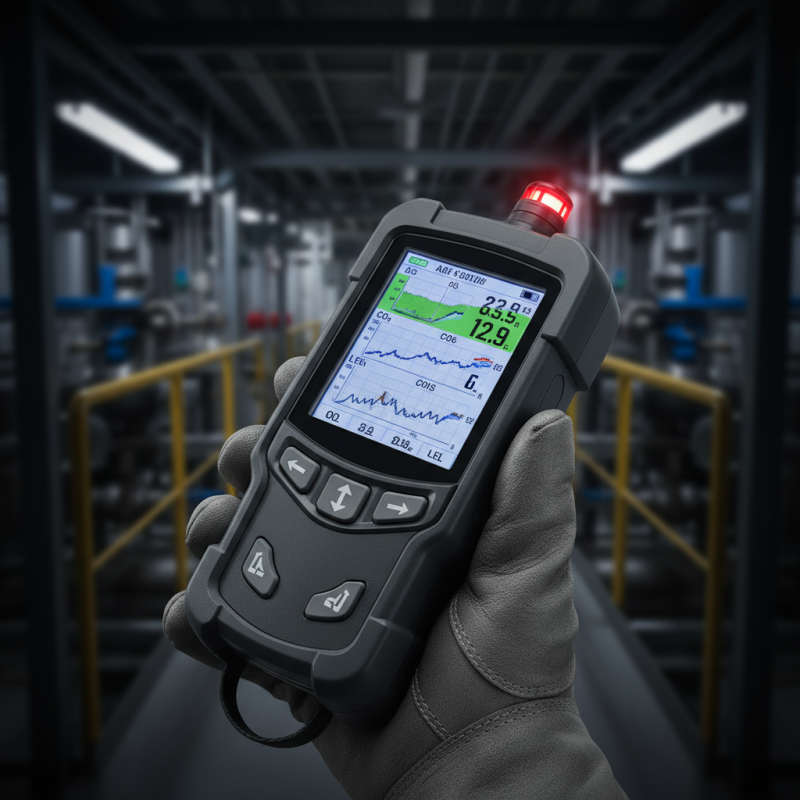
How to Choose the Best Handheld Gas Monitor for Your Needs?

Understanding the Importance of Handheld Gas Monitors

Handheld gas monitors are crucial for ensuring safety in various environments. These devices detect harmful gases, mitigating risks associated with exposure. Understanding their importance helps you make informed decisions when choosing one for your needs.

When selecting a handheld gas monitor, consider the specific gases you may encounter. Different models detect various substances. For instance, some are designed for toxic gases while others focus on flammable ones. It’s vital to know what you might face in your work environment.

Tips: Regular calibration is essential for accuracy. A malfunctioning gas monitor can lead to dangerous situations. Additionally, familiarize yourself with the monitor’s operation. Practice using the device in a safe setting. This knowledge helps ensure that you're ready in the field, minimizing potential risks.

Also, consider ease of use. Some monitors have complex interfaces that can be challenging during emergencies. Choose a model with clear displays and intuitive controls. This feature is critical for quick readings and instant decisions. Proper training and familiarity with your equipment are paramount for safety.

How to Choose the Best Handheld Gas Monitor for Your Needs? - Understanding the Importance of Handheld Gas Monitors

Feature Description Importance
Detection Range The range of gas concentrations that the monitor can accurately detect. Essential for ensuring safety in environments with varying gas levels.
Response Time The speed at which the monitor can react to the presence of gas. Critical for immediate safety measures in case of leaks.
Battery Life The duration the monitor can operate before requiring a recharge or battery replacement. Important for fieldwork to minimize downtime during operations.
Calibration The process of setting the monitor to detect gases accurately. Ensures reliability and accuracy in readings.
Portability The weight and size of the monitor making it easy to carry. Crucial for workers in the field who need a lightweight and handy device.
Multi-gas Detection Ability to detect several gases simultaneously. Enhances safety in environments with multiple potential hazards.
User Interface The design and functionality of the monitor's display and controls. Affects ease of use and quick access to critical information.

Key Features to Consider in a Handheld Gas Monitor

When selecting a handheld gas monitor, key features are crucial. Accuracy ranks high on this list. According to industry reports, even a slight deviation in detection can lead to severe safety hazards. Moreover, gas monitors with a higher sensitivity level often provide more reliable readings, making them essential in sensitive environments.

Portability is another critical aspect. Many professionals work in tight spaces or remote locations. A lightweight design enhances usability, especially during prolonged usage. Users should also consider the battery life. Continuous monitoring is vital, and a device that requires frequent recharging can be a liability. Some models offer extended battery options but may not be as compact.

Additionally, data logging capabilities cannot be ignored. A report from a leading safety organization notes that 40% of incidents arise from inadequate record-keeping. Monitors that retain past data allow for effective trend analysis and can help prevent future risks. Lastly, ease of use affects adherence to safety protocols. If a device is complicated, users may overlook its significance. Finding balance is essential for effective safety management.

Different Types of Gases Monitored by Handheld Devices

When selecting a handheld gas monitor, understanding the types of gases it can detect is crucial. Various sectors, such as industrial, healthcare, and environmental monitoring, require different gas detection capabilities. According to a recent industry report, over 40% of workplace incidents are related to gas exposure. Thus, knowing which gases your primary operations involve can help in making a more informed choice.

Common gases monitored include volatile organic compounds (VOCs), methane, carbon monoxide, and hydrogen sulfide. VOCs are found in industrial emissions and can cause health risks. Methane detection is vital in the oil and gas sector, given its potential for explosive reactions. Hydrogen sulfide, known for its toxic properties, poses significant risks in sewage treatment and oil extraction environments. Carbon monoxide is commonly monitored for its silent, dangerous effects in confined spaces.

Choosing a handheld monitor involves balancing sensitivity and specificity. Devices that detect multiple gases can be beneficial but may be less accurate for specific gases. It's crucial to assess your environment carefully. Not every device suits every application. Investing in the right technology requires thought and careful research to ensure safety and compliance. Be wary of claims about a monitor’s capability unless backed by credible data.

Evaluating Budget and Price Range for Gas Monitors

When evaluating the budget and price range for handheld gas monitors, consider various factors. Quality often correlates with price. Investing in a reliable gas monitor may prevent costly accidents or health hazards. Lower-priced models may lack essential features or durability, potentially leading to inaccurate readings.

Prices vary widely based on functionality. Basic monitors might be affordable but may not detect multiple gases. A more advanced model can handle diverse situations but may stretch your budget. Don't forget to factor in maintenance costs. Regular calibration and sensor replacements can add expenses over time.

Assessing your specific needs is crucial. Will you primarily monitor a single gas type or multiple gases? Understanding your environment can help you make a well-informed decision. Make a balanced assessment of risks versus costs. Ultimately, investing wisely in a gas monitor can save more than just money; it can protect lives.

Maintaining and Calibrating Your Handheld Gas Monitor

Maintaining and calibrating your handheld gas monitor is crucial for accurate and reliable readings. Regular calibration is essential. A study from the Environmental Protection Agency suggests that 40% of portable monitors provide erroneous readings after six months without recalibration. Therefore, conduct checks frequently to ensure they perform optimally.

Tips: Always follow manufacturer guidelines for calibration frequencies. Typically, biannual checks are standard for most models. However, environmental conditions can affect this timeline. Adjust your schedule based on usage levels and exposure to extreme conditions, which can accelerate sensor degradation.

Calibration involves using known gas concentrations to determine the accuracy of the monitor. It's not a one-size-fits-all process. Reviewing calibration certificates from previous tests is crucial. Understanding your device's drift over time can help make informed adjustments. Remember that an uncalibrated monitor can lead to fatal consequences in hazardous environments. Reflect on past experiences where calibration was neglected; these lessons are vital for future safety protocols.

Gas Monitor Calibration Frequency and Accuracy