

NEWS AND UPDATES
The latest updates regarding our products and our company

How to Choose Science Lab Equipment for Schools
Choosing science lab equipment for schools is not simply a purchasing task. It is a decision about safety, teaching quality, maintenance, and student confidence. A microscope may look impressive, yet it becomes a poor investment if students cannot adjust its focus. A digital balance may offer advanced features, but teachers might need simpler controls during crowded laboratory sessions.
Eric Mazur, a Harvard physicist and science education expert, says, “Learning is not a spectator sport.” His observation should guide every equipment decision. Effective science lab equipment for schools must invite students to measure, test, record, question, and repeat. Equipment should support real classroom activity, not sit unused in locked cabinets. Durability matters too. A cracked beaker, loose microscope stage, or confusing software can quickly weaken a practical lesson.
This guide examines the details that purchasing teams often overlook. We will consider age-appropriate design, safety features, calibration, storage, warranty support, and teacher training. We will also compare basic tools with digital alternatives, because newer does not always mean better. A school with limited technical support may need dependable manual equipment first. That conclusion can feel less exciting, but it may be more honest.
There is no perfect catalogue choice. Schools differ in budgets, curricula, room layouts, and staff experience. The right decision comes from matching equipment to actual learning goals. Before approving a purchase, ask one practical question: Can students use it confidently, safely, and repeatedly?
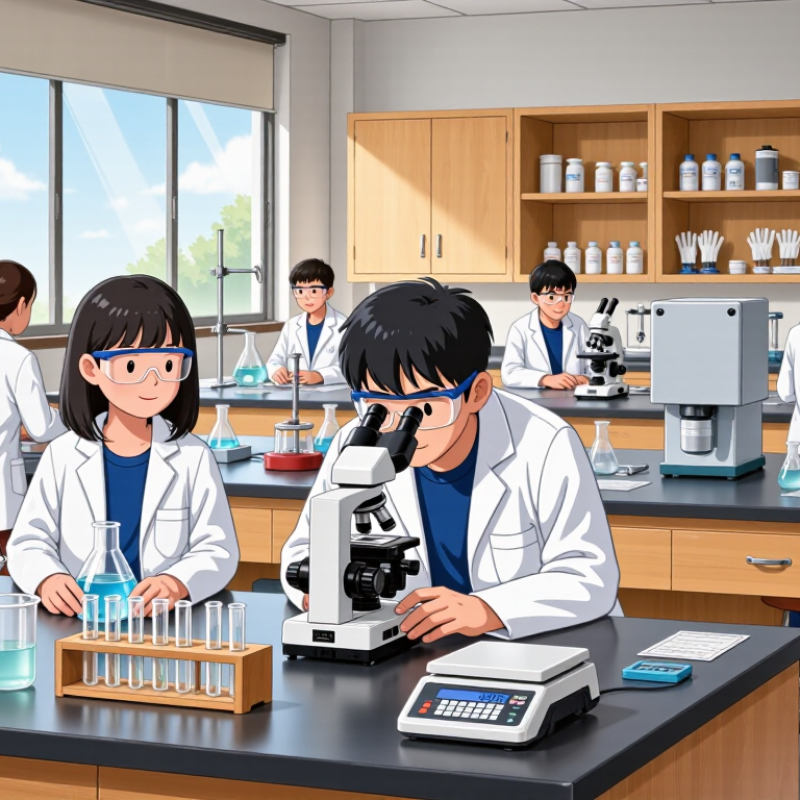
Define the Learning Goals and Laboratory Activities
How to Choose Science Lab Equipment for Schools
Define the Learning Goals and Laboratory Activities
Equipment should begin with the lesson, not the catalogue. A teacher might want students to measure reaction rates, compare soil samples, or model electric circuits. Each activity needs a clear question, observable evidence, and a manageable safety routine. The OECD’s PISA 2022 Results report recorded an average science score of 485 across OECD countries. This suggests schools should strengthen practical reasoning, not simply purchase more instruments.
Map every learning goal to a student action. If learners must interpret temperature changes, select thermometers with readable scales and suitable ranges. If they investigate forces, provide repeatable masses, rulers, timers, and stable surfaces. Shared equipment can support collaboration, but limited quantities may create waiting time. That weakness deserves honest planning. A polished equipment list can still fail during a noisy, crowded lesson.
Tips: Write the activity sequence before choosing equipment. Test one complete setup with a small group. Record preparation time, breakage, cleaning needs, and student confusion. The National Science Teaching Association emphasizes investigation, evidence, and safe laboratory practice in science instruction. Keep those principles visible beside the storage cabinet. Avoid buying advanced devices without teacher training, replacement plans, and activities that use their measurements. A simple setup often teaches more clearly. Not always.
How to Choose Science Lab Equipment for Schools
Define the Learning Goals and Laboratory Activities
This planning benchmark shows the number of distinct equipment categories commonly needed for major school laboratory activities. The counts are based on practical learning requirements such as measuring, observing, heating, preparing solutions, and collecting experimental data. They indicate equipment variety, not the number of individual items.
Assess Safety Standards, Durability, and Ease of Use
How to Choose Science Lab Equipment for Schools
When selecting school laboratory equipment, safety standards should guide every decision. Check electrical grounding, stable construction, chemical-resistant surfaces, and clear emergency controls. Equipment should support safe ventilation and allow students to work without crowding. Review current school-laboratory requirements, manufacturer instructions, and inspection records before purchasing. A low price means little if safety features are unclear.
Durability matters because students may move, spill, or misuse equipment during busy lessons. Choose reinforced parts, washable surfaces, and corrosion-resistant materials where possible. Test hinges, knobs, cables, and clamps before installation. I have seen seemingly strong equipment fail at small connection points. That detail is easy to miss. Ease of use also affects safety. Large labels, simple controls, readable measurements, and accessible cleaning areas reduce confusion. Teachers should be able to demonstrate each device quickly, while students should understand its basic operation without repeated correction.
Tips: Ask teachers to test sample equipment during a real lesson. Place a measuring cylinder, power unit, or microscope on the bench. Check whether students can adjust it safely and return it easily. Keep instructions nearby. Avoid designs that require excessive force or complicated setup. A short trial may reveal problems that a catalog never shows. Recheck equipment after several months, because practical experience can challenge the original purchase decision.
Match Equipment Types to Student Age and Curriculum Needs
Choosing science lab equipment begins with the learner, not the catalogue.
For primary students, use large, durable tools: transparent measuring cups, magnetic tiles, hand lenses, and sealed observation containers. These support safe exploration without overwhelming fine-motor skills. Lower-secondary students can use thermometers, digital balances, simple circuits, and prepared slides. Older students need greater precision, including sensors, variable power supplies, and calibrated glassware. Equipment should mirror the curriculum’s verbs: observe, measure, compare, model, and evaluate.
The OECD’s PISA 2022 results reported that about 76% of students across OECD countries reached the baseline level in science. This suggests many learners need stronger practical foundations before advanced experimentation. A school should map each item to a learning outcome and age-appropriate risk assessment. For example, a lesson on energy may need insulated wires and low-voltage sources, not complex instruments. Teachers should also check setup time, storage space, maintenance records, and accessibility. I would not pretend every purchase decision is perfect. Pilot testing with one class can expose awkward controls, fragile parts, or confusing instructions.
Tips: Keep a curriculum-to-equipment spreadsheet. Mark each tool as essential, shared, or optional. Choose equipment students can see clearly and handle confidently. Review the list each term. OECD data can guide priorities, but local classroom evidence matters more than impressive specifications.
Compare Quality, Budget, Maintenance, and Supplier Support
Choosing school laboratory equipment requires more than comparing catalog prices. Quality should mean safe construction, repeatable measurements, and clear calibration records. Stainless-steel sinks, chemical-resistant surfaces, and guarded power outlets usually withstand frequent student use. A practical test helps: inspect hinges, cables, labels, and replacement parts before approving a purchase. It is less impressive than a glossy demonstration, but more revealing.
Budget decisions should include the full ownership cost. The OECD’s Education at a Glance 2023 reports average annual spending of about US$12,647 per student across education levels in OECD countries. That figure covers entire education systems, not laboratory equipment, so schools should avoid treating it as a purchasing allowance. Compare energy use, consumables, training, delivery, installation, and disposal. A cheaper microscope can become expensive after repeated repairs. Sometimes, buying fewer durable units is wiser than filling every bench.
Maintenance and supplier support often decide whether equipment remains useful after installation. UNESCO’s Global Education Monitoring Report 2023 stresses that technology depends on infrastructure, teacher capacity, and ongoing support. Request service schedules, troubleshooting guides, warranty limits, and response times in writing. Ask whether replacement parts will remain available for five years. Include teacher training, but do not assume one workshop is enough. That assumption is easy to make and often wrong. Keep a simple maintenance log beside each workstation, recording cleaning, faults, calibration, and responsible staff. Suppliers should welcome technical questions, not merely offer discounts.
Plan Installation, Storage, Training, and Equipment Evaluation
How to Choose Science Lab Equipment for Schools
Plan Installation, Storage, Training, and Equipment Evaluation
Choosing school laboratory equipment involves more than comparing prices. Begin with the room itself. Check power outlets, water access, ventilation, lighting, and floor strength. Measure doorways and corridors before ordering large equipment. A cabinet may fit the room but fail through the doorway. Leave clear paths around workstations for safe movement and teacher supervision.
Storage deserves equal attention. Separate glassware, chemicals, electrical tools, and specimens by use and risk. Use labeled shelves at reachable heights, with secure storage for restricted materials. Keep heavy items below shoulder level. Installation should include cable management, drainage checks, and emergency access. A practical inspection record can prevent small faults from becoming expensive repairs.
Training must match real classroom routines. Teachers should practice setup, cleaning, fault reporting, and emergency procedures. Students need short demonstrations before independent work. Equipment evaluation should use measurable criteria, including durability, accuracy, maintenance time, and accessibility. Ask teachers to test equipment during ordinary lessons, not only demonstrations. A trial may reveal awkward controls or confusing instructions. That matters. I have seen attractive equipment remain unused because staff lacked confidence or storage space. Plans also change after installation. Review them each term and record what failed, what worked, and what needs improvement.
How to Choose Science Lab Equipment for Schools - Plan Installation, Storage, Training, and Equipment Evaluation
Practical planning matrix for selecting, installing, storing, training, and evaluating school laboratory equipment.
| Equipment Category | Typical Quantity for 24 Students | Installation Requirements | Storage and Safety Controls | Recommended Staff Training | Evaluation Measures | Replacement or Review Cycle |
|---|---|---|---|---|---|---|
| Student Workstations and Benches | 6 laboratory stations, 4 students per station | Stable, chemical-resistant surfaces; clear walkways; access to power and water where required | Keep aisles unobstructed; anchor movable units; inspect surfaces and fittings each term | 1 hour on safe setup, student supervision, and emergency access | Ergonomics, durability, accessibility, load capacity, and ease of cleaning | Inspect annually; replace damaged surfaces or fittings as needed |
| Compound Light Microscopes | 12 units, shared by pairs | Low-glare lighting, grounded outlets, level benches, and sufficient working space | Store covered in a dry cabinet; protect lenses from dust; keep electrical cords loosely coiled | 2 hours on focusing, slide preparation, cleaning, and safe handling | Optical clarity, illumination consistency, mechanical stability, and ease of student use | Clean and inspect each term; performance review every 3 years |
| Digital Scales and Balances | 6 units, one per workstation | Stable, vibration-free bench; avoid direct airflow and excessive humidity | Keep clean and covered; do not store heavy objects on weighing platforms | 1 hour on zeroing, calibration checks, spill response, and weighing technique | Repeatability, readability, calibration stability, and maximum capacity | Check before practical work; formal calibration at least annually |
| Glassware and Measuring Equipment | One class set: 24 beakers, 24 test tubes, 12 graduated cylinders, and 6 funnels | Provide washing facilities, drying space, and suitable work surfaces | Use labeled bins; separate clean and used glassware; remove chipped or cracked items immediately | 1 hour on inspection, transport, heating precautions, and breakage response | Accuracy of graduations, heat resistance where applicable, durability, and replacement rate | Inspect before every lesson; replace damaged items immediately |
| Heating Equipment | 6 controlled heating units, one per workstation | Heat-resistant benches, adequate ventilation, nearby fire extinguisher, and accessible shut-off controls | Store away from flammable materials; allow equipment to cool before storage | 2 hours on heating procedures, burns prevention, fire response, and electrical safety | Temperature control, stability, guarding, shut-off function, and suitability for lesson activities | Safety inspection each term; replace when controls or insulation deteriorate |
| Sensors and Data-Collection Devices | 6 classroom sets, including temperature, pH, and light sensors | Compatible computers or tablets, charging points, software access, and stable wireless or wired connections | Label each sensor; store dry; protect probes and charging cables; maintain an inventory log | 2 hours on setup, data recording, probe care, software use, and troubleshooting | Measurement range, accuracy, software usability, battery life, and data export options | Check each term; review software and compatibility every 2 years |
| Chemical Storage Cabinet | 1 lockable cabinet sized for current teaching requirements | Ventilation appropriate to the materials stored; secure anchoring; restricted access; clear labeling | Separate incompatible chemicals; retain safety data sheets; use secondary containment where appropriate | 3 hours on chemical segregation, labeling, inventory control, and spill procedures | Lock quality, corrosion resistance, ventilation, capacity, and compliance with local regulations | Inventory review each term; cabinet condition review annually |
| Personal Protective Equipment | 30 pairs of safety goggles, 30 laboratory coats or aprons, and suitable disposable gloves | Provide accessible storage, handwashing facilities, and adequate space for fitting and removal | Store clean and dry; separate used items; replace damaged or contaminated PPE | 1 hour on correct selection, fitting, limitations, cleaning, and disposal | Coverage, fit, visibility, comfort, cleaning requirements, and student compliance | Inspect before every practical session; replace according to condition and use |
| Emergency and First-Aid Equipment | 1 accessible station with eyewash, first-aid supplies, fire blanket, and appropriate extinguisher | Install near the exit and visible from work areas; maintain unobstructed access and signage | Keep sealed where appropriate; record inspections and expiry dates; do not use emergency equipment for routine work | 2 hours on emergency response, evacuation, eyewash use, and incident reporting | Accessibility, visibility, inspection status, staff confidence, and response time during drills | Inspect monthly or according to local requirements; replenish after use |
| Ventilation and Fume Control | Capacity determined by room design and planned experiments | Professional assessment of airflow, exhaust discharge, noise, access, and electrical requirements before installation | Keep vents clear; prohibit storage inside extraction areas; maintain service records | 2 hours on operating limits, alarm response, safe use, and reporting faults | Airflow performance, noise level, user visibility, maintenance access, and suitability for planned activities | Routine operational checks; professional inspection and servicing at least annually |
School Equipment Evaluation Checklist
| Evaluation Dimension | Suggested Weight | Evidence to Collect | Minimum Acceptance Standard |
|---|---|---|---|
| Safety and regulatory suitability | 25% | Risk assessment, safety instructions, inspection records, and staff review | No unresolved high-risk issue before classroom use |
| Curriculum alignment | 20% | Lesson plans, practical objectives, and teacher feedback | Supports the required practical activities for the intended grade levels |
| Ease of use and training needs | 15% | Setup time, user instructions, staff trial, and student usability observations | Teachers can complete normal setup and shutdown procedures confidently |
| Durability and maintenance | 15% | Maintenance schedule, repair process, warranty terms, and inspection results | Routine maintenance is practical within the school’s staffing and budget |
| Total cost of ownership | 15% | Purchase price, consumables, energy use, training, repairs, and disposal costs | Fits the approved budget without reducing essential safety provisions |
| Accessibility and inclusion | 10% | Accessibility review, workstation measurements, and student support requirements | Can be used safely and meaningfully by the intended student population |
Related Posts
-
Top Science Lab Supplies to Buy in China Now?
-
2026 Best Medical Lab Equipment for Global Buyers?
-

Top Biology Equipment for Effective Scientific Research and Experiments?
-

2026 How to Choose the Best Lab Equipment Distributor for Your Needs?
-

2026 How to Choose the Best Medical Laboratory Software for Your Needs?
-
How to Choose the Right Laboratory Supplies for Your Needs?
Schedule
Monday to Thursday:
8:15 – 17:00
Friday:
8:00-15:00
Address
Leonardo Da Vinci, 10
Valencia Technology Park
46980 Paterna, Valencia, SPAIN
Real Laboratory SL
info@site_e1c8a3bd-d539-4d7f-8695-37f21373de39
Teléfono: +34 96 136 61 07