• NEWS AND UPDATES

    The latest updates regarding our products and our company

Top Biology Equipment for Effective Scientific Research and Experiments?

Biology equipment plays a critical role in scientific research and experiments. The right tools can significantly impact the quality of results. According to a report by Research and Markets, the global laboratory equipment market is expected to grow at a CAGR of 6.5% through 2025. This growth underscores the importance of investing in high-quality biology equipment.

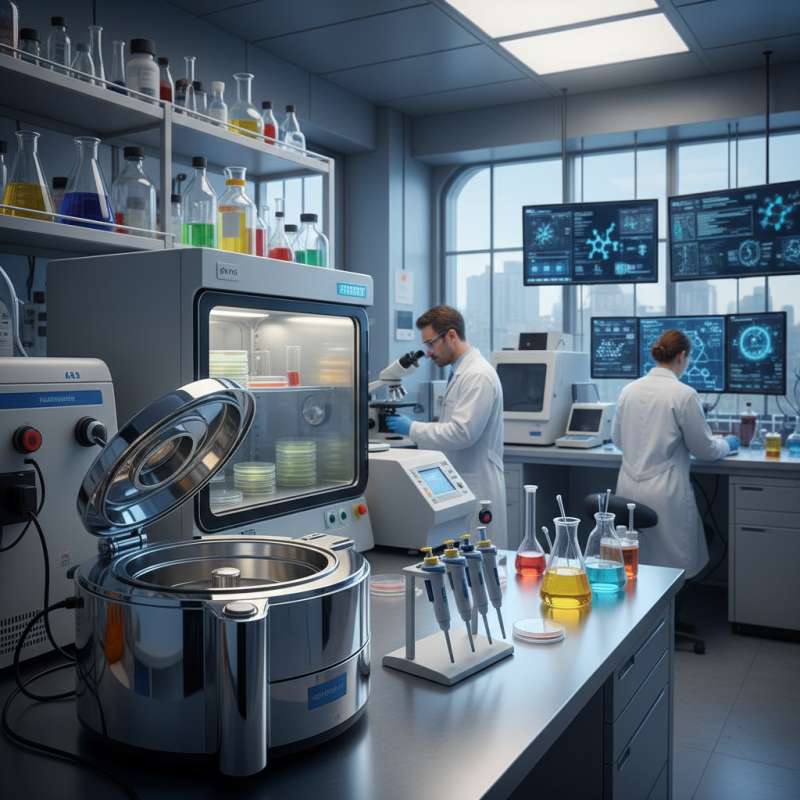
Modern laboratories are equipped with advanced biology equipment. Items like centrifuges, incubators, and pipettes enhance research efficiency. However, there are concerns about equipment maintenance and calibration. Inadequate handling leads to inaccurate results. Moreover, many researchers overlook the need for regular training on new technologies. This oversight can hinder progress.

Inadequate funding also remains a challenge. Some institutions struggle to acquire essential biology equipment. This limits their research capabilities. A lack of resources may lead to compromised experiments. Addressing these issues is crucial for advancing the field of biology. Investing in reliable equipment should be a priority to ensure effective scientific outcomes.
Top Biology Equipment for Effective Scientific Research and Experiments?

Essential Tools for Biological Research in Laboratories

In biological research, having the right tools is crucial. Microscopes are essential for examining cells and microorganisms. A good microscope allows researchers to observe intricate details. However, the choice of microscope can be overwhelming. Different types serve various purposes, and each has its own limitations.

Pipettes are another staple in the lab. They ensure accuracy in fluid measurements, which is vital for experiments. Yet, improper usage can lead to errors. Cleaning and calibration are often neglected, causing further complications.

Incubators provide a controlled environment for cell cultures. They help maintain specific temperatures and conditions. But they require regular monitoring to ensure stability. An unexpected fluctuation can compromise an entire experiment. Researchers must be vigilant and attentive to these details.

Top Biology Equipment for Effective Scientific Research and Experiments

Equipment Function Applications Price Range ($)
Microscope Magnifies small objects Cell biology, histology 100 - 5000
Centrifuge Separates particles based on density Microbiology, biochemistry 500 - 20000
Pipettes Measures and transfers liquids Molecular biology, chemistry 20 - 300
Spectrophotometer Measures light absorption DNA/RNA quantification, enzyme activity 1000 - 50000
Incubator Maintains constant temperature Cell culture, microbiology 300 - 5000

Microscopy Equipment: Types and Uses in Biological Studies

Microscopy is a cornerstone of biological studies. Different types of microscopy equipment serve various purposes in research. Light microscopes are common in classrooms and labs. They allow scientists to see living cells in action. Electron microscopes, on the other hand, provide much higher magnification. They reveal the intricate details of cell structures but require complex preparation.

When using microscopy equipment, proper technique is essential. Focus on sample preparation to avoid artifacts. A clean slide can make a difference. Pay attention to lighting and angle while viewing samples. It's easy to miss details if your setup is off. Practice adjusting these variables to find what works best for you.

Be mindful of the limitations of each microscopy type. Light microscopes may not give enough detail for certain studies. Conversely, electron microscopy can distort living samples. Always question the results you see. Different angles can lead to different interpretations. This reflection can guide further research and improve experimental design.

Incubators and Environmental Controls for Optimal Growth Conditions

Top Biology Equipment for Effective Scientific Research and Experiments?

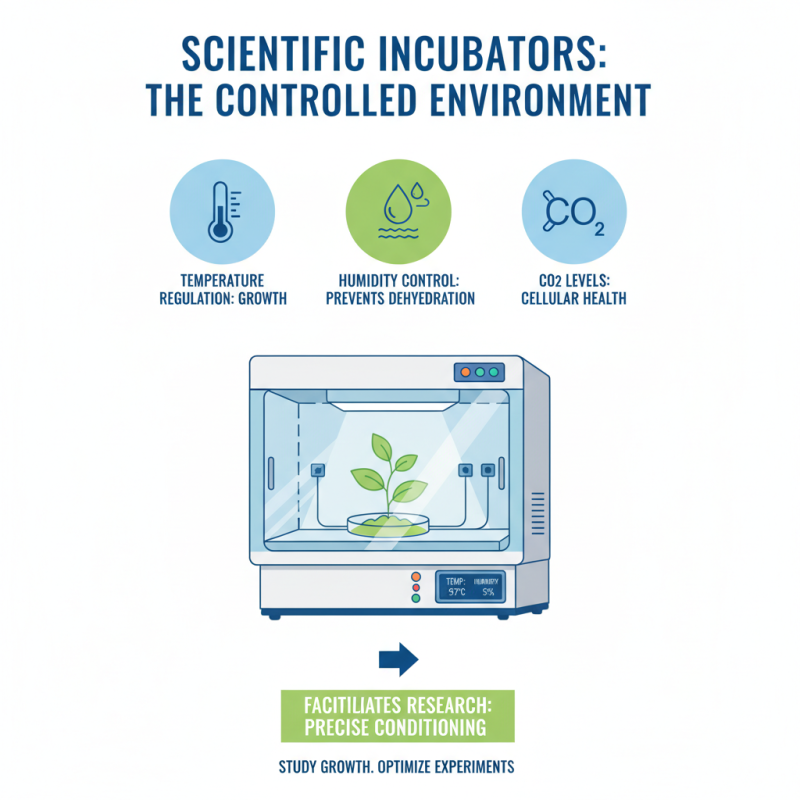
Incubators play a crucial role in scientific research. They create stable environments for organisms. Temperature, humidity, and CO2 levels are all controlled. This allows researchers to study growth under specific conditions. For example, plant growth can be optimized in a well-regulated incubator.

Environmental controls are essential for cellular experiments. Maintaining precise conditions can be challenging. Fluctuations in temperature can affect results dramatically. This makes careful monitoring vital. Researchers often face difficulties in achieving consistency. A minor error can lead to significant data variations. Having backup systems can mitigate these issues.

Lighting is another aspect to consider. Proper light cycles can enhance growth rates. However, achieving the right intensity is often tricky. Some researchers find that too much light can stress plants. The balance is delicate. Creating optimal growth conditions requires ongoing observation and adjustments. It's a continuous process of learning and refining.

Spectrophotometers: Analyzing Biological Samples Effectively

Spectrophotometers play a vital role in biological research. They measure light absorption in biological samples, allowing scientists to analyze concentrations and understand molecular structures. A recent study found that about 60% of labs use spectrophotometers for quantitative analysis. With precision and speed, they are essential for effective experiments.

When using a spectrophotometer, calibration is crucial. Small errors can lead to significant inaccuracies. Always run control samples alongside your test samples. This practice helps maintain reliability and consistency in results. Researchers often overlook this step, leading to flawed conclusions.

Tip: Regularly clean the cuvettes to avoid contamination. Dirty cuvettes can skew readings. Additionally, always use appropriate wavelengths specific to your sample type. Not every sample requires the same wavelength for optimal results.

Understanding limitations is equally important. Spectrophotometers measure absorbance but can’t provide detailed qualitative data. They may not be suitable for all types of samples, especially turbid or multi-component solutions. In such cases, alternative methods might be required. Embracing a range of techniques enhances the depth of analysis.

Reagents and Consumables: Key Components for Laboratory Experiments

Reagents and consumables are vital for laboratory experiments. They are essential in various scientific fields. Without quality reagents, results can be inconsistent. These materials include chemicals, enzymes, and buffers. Each reagent has a specific role. For instance, a buffer helps maintain the pH during reactions. This stability is critical in biological experiments.

Choosing consumables must involve careful consideration. Researchers need to evaluate quality and compatibility. Sometimes, seemingly minor details can impact outcomes. For example, using expired reagents can lead to flawed data. Cost is also a concern. Budget constraints may limit choices. Yet, investing in reliable reagents is often necessary for accurate results.

Not all reagents perform as expected. Some may yield unexpected side reactions. This unpredictability can frustrate even the best scientists. Testing new reagents can require extensive trials. Results may not always align with theoretical expectations. It’s an integral part of the scientific process. Ongoing evaluation and adaptation are crucial for success in experiments.

Top Biology Equipment Usage in Laboratory Experiments