

• NEWS AND UPDATES

    The latest updates regarding our products and our company

10 Essential Tips for Choosing Science Lab Equipment for Schools

Choosing the right science lab equipment for schools is crucial. Quality equipment can enhance students' learning experiences. Every school aims to provide a safe and effective learning environment.

Selecting equipment involves more than just budget considerations. It's essential to understand how different tools can impact teaching methods. Not all equipment suits every curriculum or student age group. Schools may overlook the importance of ergonomic designs. This oversight can lead to discomfort and reduced productivity during experiments.

Investing in science lab equipment for schools requires careful thought. Reliable suppliers and well-reviewed products should be prioritized. High-quality tools often come with warranties, ensuring longevity and support. Schools should also consider space availability and equipment maintenance. Ensuring these factors are addressed can lead to a more efficient, engaging, and inspiring science education.
10 Essential Tips for Choosing Science Lab Equipment for Schools

Understanding the Importance of Quality Science Lab Equipment in Education
10 Essential Tips for Choosing Science Lab Equipment for Schools

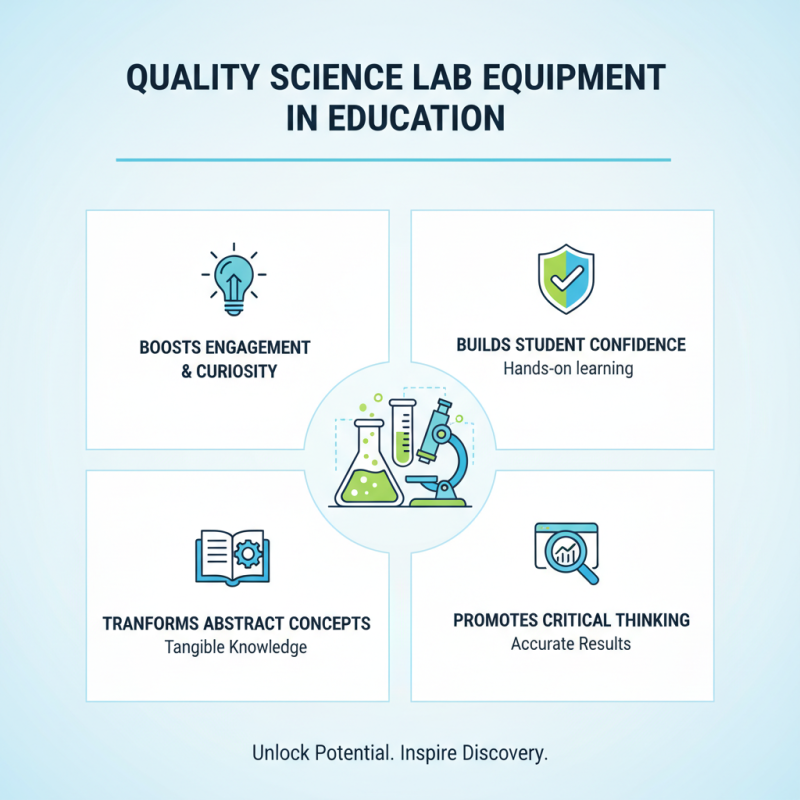
In education, quality science lab equipment plays a vital role. It enhances student engagement and curiosity. When students work with reliable tools, they feel more confident in their experiments. This confidence can transform abstract concepts into tangible knowledge. High-quality equipment ensures accurate results, prompting students to think critically and ask questions.

Yet, not all schools have access to the best equipment. Budget constraints often lead to compromises. This can affect the quality of education. Schools need to invest wisely in durable instruments that can withstand regular use. They should also consider maintenance costs. Regular checks and updates may be necessary for optimal performance. Investing in quality equipment may involve higher upfront costs, but it pays off in the long run.

Teachers also require appropriate training to use this equipment effectively. Without proper knowledge, even the best tools can be rendered ineffective. Schools should prioritize professional development for educators. This ensures they feel competent in teaching using these tools. Careful planning is essential to maximize the benefits of quality science lab equipment.

Assessing the Specific Needs of Your Science Curriculum

When selecting science lab equipment for schools, understanding your curriculum’s specific needs is crucial. Studies indicate that hands-on experiments can improve student engagement by 75%. Therefore, the equipment chosen must align with the objectives of the science curriculum.

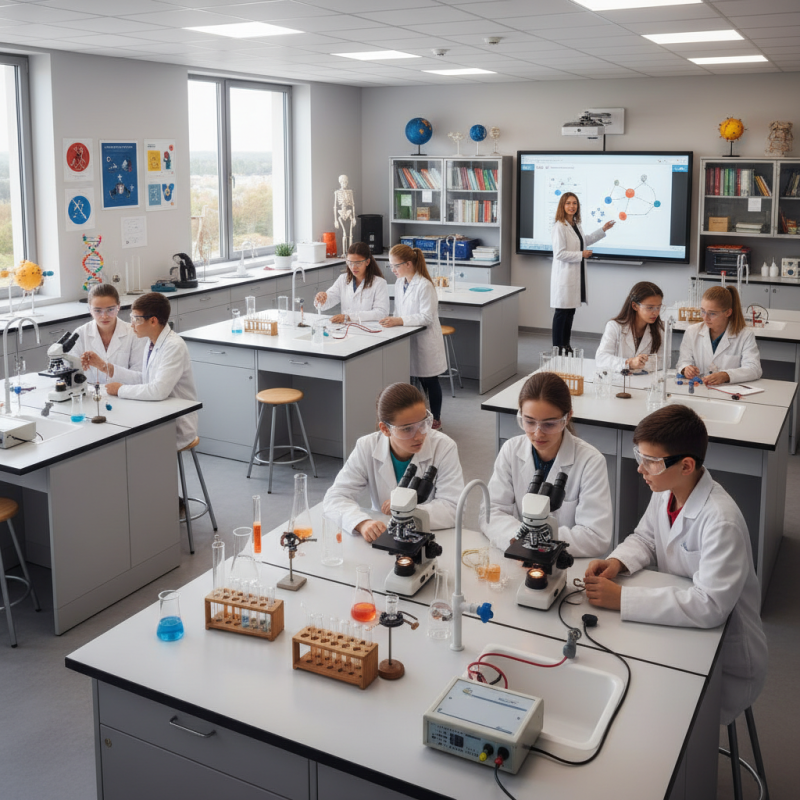
Consider what scientific disciplines your curriculum covers. For instance, biology labs require microscopes and dissection kits, while chemistry classes need beakers and safety goggles. Engaging students in real-world scenarios can enhance learning. Ensure that your selected tools facilitate group projects, promoting collaboration.

Tip: Always involve educators in the decision-making process. Their insights on classroom challenges are valuable. Assess existing equipment too. According to a recent report, 60% of schools upgrade their equipment every five years. Frequent assessments can help identify gaps and needs.

Choose adaptable equipment. Versatile tools can cater to various experiments. Investing in modular stations, for example, allows educators to reshape the lab space as necessary. This flexibility can support diverse learning styles while maximizing resource use. Ultimately, aligning equipment with curriculum goals will yield better educational outcomes.

10 Essential Tips for Choosing Science Lab Equipment for Schools - Assessing the Specific Needs of Your Science Curriculum

Equipment Type Purpose Key Considerations Budget Range
Microscopes For examining small objects and organisms Optical quality, ease of use, type (compound or digital) $200 - $1500
Bunsen Burners Heat sources for experiments Safety features, fuel type, flame control $30 - $200
Glassware Holding, mixing and heating substances Durability, size variety, resistant to thermal shock $50 - $500
Safety Equipment Protecting students during experiments Type of protection (goggles, gloves, lab coats) $10 - $200
Balances Measuring mass of substances Precision, capacity, ease of calibration $100 - $800
pH Meters Measuring acidity or alkalinity of solutions Calibration frequency, temperature compensation, portability $50 - $300
Fume Hoods Removing hazardous fumes and vapors Size, airflow performance, maintenance requirements $1,000 - $5,000
Centrifuges Separating substances based on density Speed, capacity, ease of use $500 - $3,000
Lab Safety Stations Emergency response tools Accessibility, contained materials, compliance with safety regulations $200 - $2,000

Evaluating Safety Standards and Compliance for Lab Equipment

When selecting lab equipment for schools, evaluating safety standards is crucial. Schools must ensure that all equipment complies with national and international safety regulations. This reduces risks of accidents and injuries. Regular reviews of these standards help maintain a safe learning environment.

It's essential to consider the materials used in lab equipment. Items made from durable, non-toxic materials should always be prioritized. Avoid equipment with sharp edges or breakable components. These choices reflect a commitment to student safety and well-being. Equipment should also be easy to clean and maintain, which contributes to a safer space.

Training staff on safety protocols is another important factor. Staff must understand how to use equipment correctly. Regular safety drills can prepare students for potential emergencies. Inadequate training might lead to accidents or misuse of equipment, causing safety hazards. Schools must prioritize consistent evaluations for all lab equipment to uphold high safety standards.

Balancing Budget Constraints with Quality Equipment Choices

When schools are outfitting science labs, balancing budget constraints with quality is crucial. Educators often face budget cuts that limit their purchasing options. However, choosing lower-priced equipment can lead to compromised quality, which may hinder student engagement and learning outcomes. Striking the right balance is essential for fostering a productive learning environment.

Selecting the right equipment involves careful consideration. Seek out versatile tools that serve multiple functions. This way, you maximize utility without overspending. Invest in durable, long-lasting items, even if they come with a higher initial cost. They can save money in the long run by reducing the need for replacements. Additionally, consider purchasing second-hand equipment from reputable sources. This can provide significant savings while still ensuring quality and safety standards are met.

It's important to involve teachers in the decision-making process. They can provide valuable insights into what equipment is truly necessary for their curriculum. Reflect on any previous purchases that didn't meet expectations. Understand what went wrong and how to avoid repeating mistakes. Building a lab with limited resources is challenging, but thoughtful planning and collaboration can lead to successful outcomes.

Researching and Selecting Trusted Suppliers for Lab Equipment

When selecting science lab equipment for schools, the choice of suppliers is critical. Trusted suppliers are often those with a proven track record. A recent survey shows that 74% of educators prioritize supplier reliability over price. This highlights the need for careful evaluation. Validating a supplier's reputation can be done through references, customer reviews, and industry certifications.

Another core aspect is to ensure compliance with safety standards. Reports indicate that schools face significant risk when purchasing non-compliant equipment. An alarming 32% of schools have experienced equipment failures that led to safety incidents. This underlines the importance of rigorously assessing suppliers for adherence to safety regulations. Moreover, having a diverse range of suppliers can mitigate risks. It allows schools to compare options effectively, ensuring they get the best quality available.

Engaging with suppliers early in the planning process is also beneficial. It opens communication channels for inquiries about equipment specifications and maintenance. Schools should conduct their own research, as relying solely on supplier recommendations may lead to potential pitfalls. Keeping a critical eye on supplier promises and claims fosters a more reliable procurement process.