

NEWS AND UPDATES
The latest updates regarding our products and our company

How to Identify Lab Apparatus and Their Uses Effectively?
In the realm of scientific exploration, understanding lab apparatus and their uses is crucial. Dr. Emily Chester, a renowned chemist, emphasizes, "Knowing your tools is the first step to discovery." Each piece of lab equipment plays a distinct role in experiments. From beakers to Bunsen burners, these items facilitate complex processes.
Take a moment to consider this: how often have you misidentified a tool? Mistakes can lead to errors in results, affecting the entire experiment. It is vital to recognize each apparatus's function to ensure accuracy. Knowledge gaps persist. Many novice scientists struggle with equipment names and uses, highlighting the need for effective training.
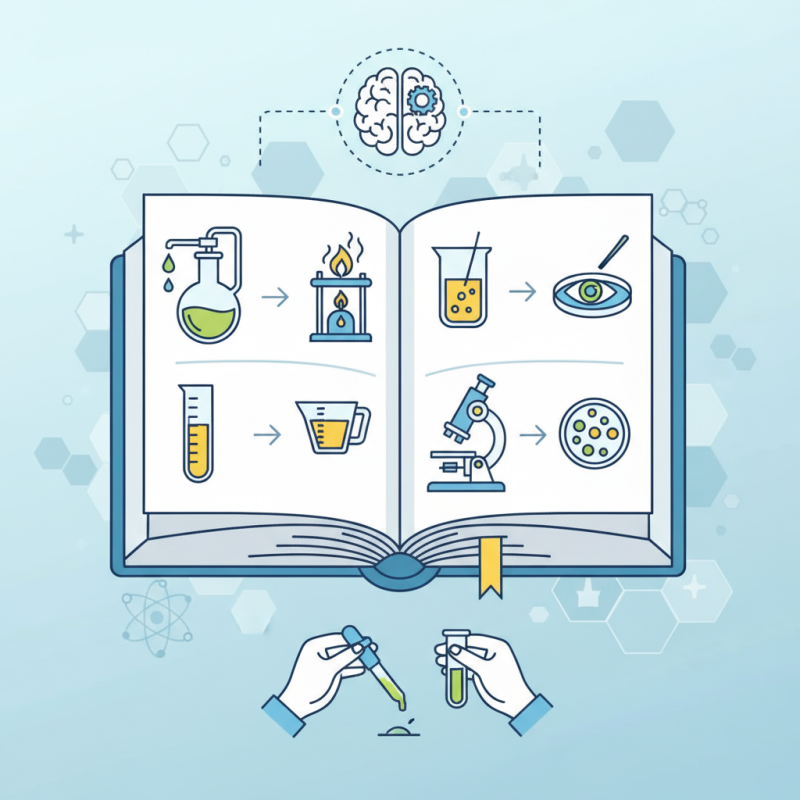
Visual aids can enhance comprehension. Using diagrams or charts helps clarify functions. Moreover, hands-on experience allows for deeper understanding. Yet, despite resources available, some still overlook the basics. Emphasizing the significance of lab apparatus and their uses can foster better practices in the lab environment.
Understanding the Basics of Laboratory Apparatus Identification
Identifying laboratory apparatus is crucial for effective experiments. Many students struggle with this foundational skill. A study published in the Journal of Chemical Education found that 70% of students felt unprepared to identify basic lab equipment. Familiarity with apparatus enhances safety and accuracy.
Consider common items like beakers, test tubes, and pipettes. Each has specific uses. Beakers hold liquids, while test tubes are for small samples. Incorrect use can lead to contamination or inaccurate results. Interestingly, a significant number of laboratory accidents occur due to improper equipment handling.
However, even experienced professionals can make mistakes. Misidentifying apparatus can result in protocols being compromised. According to a recent report by the National Institute of Standards and Technology, nearly 30% of lab errors stem from equipment misuse. Continuous learning about these tools is essential for both novices and veterans.
How to Identify Lab Apparatus and Their Uses Effectively?
| Apparatus Name | Description | Common Uses |
|---|---|---|
| Beaker | A cylindrical glass container with a spout used for mixing, heating, and stirring. | Transferring liquids, containing reactions, and heating solutions. |
| Burette | A long, graduated tube with a tap at the bottom used for delivering known volumes of liquid. | Titration and measuring precise volumes of liquids. |
| Pipette | A slender tube used to transfer or measure small volumes of liquid. | Transferring liquids, preparing samples, and conducting assays. |
| Test Tube | A thin glass tube closed at one end used for mixing, heating, or observing chemical reactions. | Conducting small-scale reactions and observations of changes. |
| Erlenmeyer Flask | A conical flask with a narrow neck that allows for easy mixing by swirling. | Mixing solutions, performing reactions, and containing liquids safely. |
Common Types of Lab Apparatus and Their Functions Explained
Understanding lab apparatus is crucial for effective experiments. Various tools serve distinct purposes, each contributing to scientific inquiry. One common item is the beaker. This glass container is used for mixing and heating liquids. Beakers come in different sizes, making them versatile for various tasks. However, they are not precise measuring tools. An error in volume can lead to inaccuracies in experiments.
Another essential piece is the Pipette. This tool allows for transferring small volumes of liquid. It can be manual or electronic, each with its own advantages. Manual pipettes require skill; improper handling can cause spills. The Graduated Cylinder is also vital for accurate liquid measurements. Its markings help determine volumes precisely. Yet, like beakers, using a graduated cylinder may still result in minor measurement errors if not read correctly.
Safety equipment cannot be overlooked. Goggles protect eyes from splashes. Lab coats prevent contamination of clothing. While these tools are straightforward, attention to detail is essential. Proper identification and understanding of each apparatus enhance laboratory efficiency. Familiarity with these tools can avoid mistakes. Each piece plays a significant role in successful scientific experiments.
Techniques for Effectively Recognizing Lab Equipment
Recognizing lab equipment can be challenging for newcomers. Visual aids can enhance learning. Many sources provide images and detailed descriptions. Flashcards are excellent for quick memorization. They help in reinforcing memory and identifying different tools efficiently.
Hands-on experience is invaluable. Spending time in a lab environment builds familiarity. Observing how each piece of equipment is used makes a difference. It’s common to forget some tools. Sometimes, you may mix them up. Focusing on their specific functions can aid in retention.
In addition, discussions with instructors can clarify doubts. Asking questions leads to deeper understanding. Peer learning also helps. Working with others exposes you to new perspectives. You might discover unique tips for identifying devices. Engaging with your peers creates an enriching lab experience. Mistakes are part of the process, and they lead to growth.
Identification of Common Lab Apparatus and Their Uses
Safety Precautions When Using Laboratory Apparatus
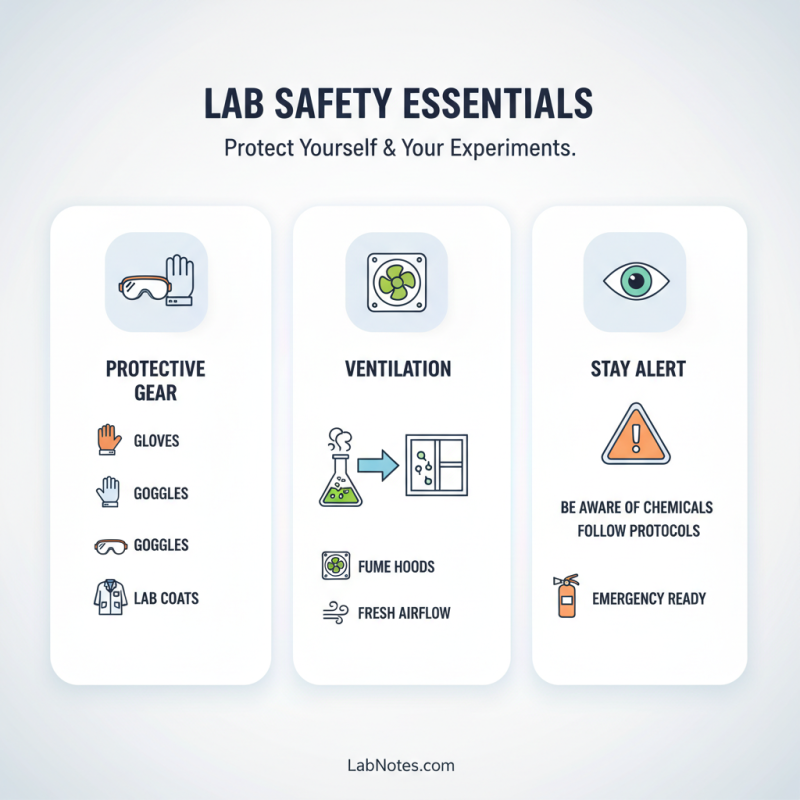
Safety is paramount when working with laboratory apparatus. Always wear appropriate personal protective equipment (PPE). This includes gloves, goggles, and lab coats. Good ventilation is crucial. Many experiments release hazardous fumes. Proper ventilation helps reduce inhalation risks. In small spaces, consider using fume hoods.
When handling glassware, be cautious. Broken glass can lead to cuts and injuries. Inspect glassware for cracks before use. Use caution when heating substances. Flames and hot surfaces can cause burns. Always use heat-resistant gloves when handling hot items. Never leave equipment unattended while it’s being heated.
Make sure to familiarize yourself with every apparatus. Understand each tool's function and limits. Misusing an apparatus can lead to accidents. For instance, improperly mixing chemicals can cause dangerous reactions. Keep your workspace organized. Clutter can lead to spills or accidents. Remember, safety is everyone's responsibility in the lab.
Resources for Further Learning About Lab Apparatus Usage
Understanding lab apparatus is crucial for effective scientific work. Many educational resources are available for students and professionals alike. For instance, according to a 2022 report from the National Science Foundation, 45% of lab accidents result from improper use of equipment. Knowing how to identify each piece and its function can help minimize risks.
Online platforms provide interactive diagrams and videos. Websites like educational portals offer detailed descriptions of apparatus such as pipettes, flasks, and microscopes. Using these resources can enhance comprehension significantly. However, even experienced users often overlook basic safety protocols. In a survey by Lab Manager, 30% of respondents admitted to inadequate training on new equipment.
Engaging with peer-reviewed journals is another robust resource. They offer insights into advanced techniques and innovations in laboratory practices. A study published in the Journal of Laboratory Science highlighted that continuous learning positively impacts lab efficiency by 60%. Nevertheless, many still hesitate to update their knowledge regularly. Continuous improvement is necessary for safe and effective lab environments.
Related Posts
-
10 Essential Tips for Finding the Best Lab Supply Store Near You?
-
Why Choose a Lab Supply Store for Your Scientific Needs?
-
2026 How to Optimize Science Labs for Innovative Research and Learning?
-

Top 10 Science Labs That Inspire Innovation and Discovery?
-
10 Essential Tips for Choosing the Best Medical Lab Supplies
-

What is the Importance of Lab Supplies in Scientific Research?
Schedule
Monday to Thursday:
8:15 – 17:00
Friday:
8:00-15:00
Address
Leonardo Da Vinci, 10
Valencia Technology Park
46980 Paterna, Valencia, SPAIN
Real Laboratory SL
info@site_e1c8a3bd-d539-4d7f-8695-37f21373de39
Teléfono: +34 96 136 61 07