

NEWS AND UPDATES
The latest updates regarding our products and our company

What is Lab Supplies Used For in Scientific Research?
In scientific research, lab supplies play a critical role in experimentation and analysis. According to a report by MarketsandMarkets, the global lab supplies market is projected to reach $36.4 billion by 2025. This growth underscores the importance of quality materials for reliable results. Researchers rely heavily on lab supplies for various applications, from basic experiments to complex clinical trials.
Lab supplies include items such as pipettes, beakers, and test tubes. These tools enable researchers to conduct experiments accurately. However, the dependency on these supplies can lead to potential risks. Poor quality or contaminated lab supplies can compromise research integrity. A study illustrated that 30% of lab results are affected by equipment failure.
The challenge lies in sourcing trustworthy lab supplies. Many researchers struggle with the balance between cost and quality. While cheaper options exist, they might not meet the necessary standards. Investing in high-quality materials is essential but can be daunting for smaller labs. Addressing these issues is vital for maintaining credibility in scientific findings.
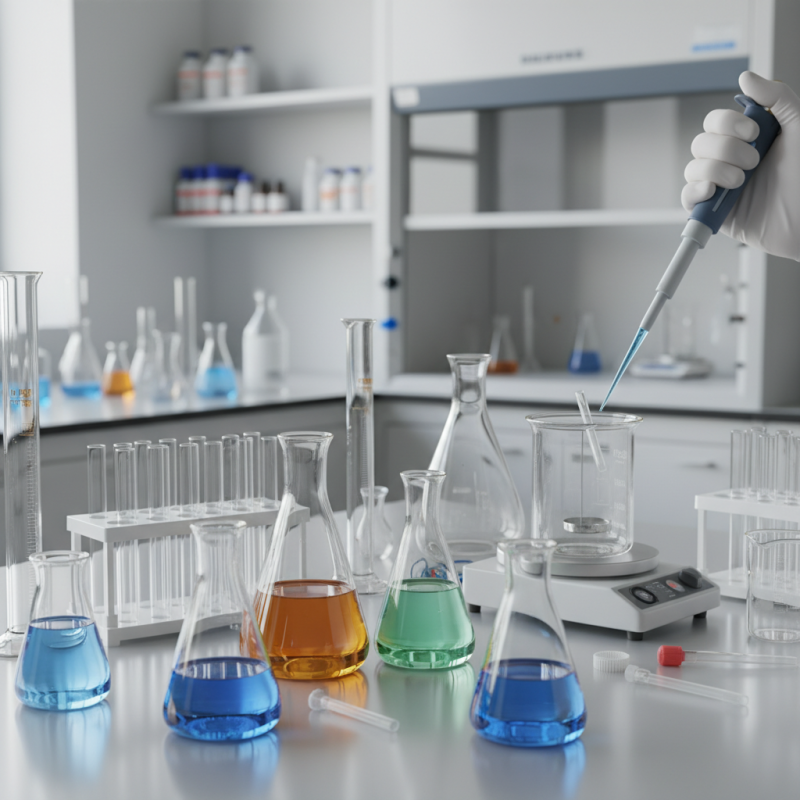
What are Lab Supplies and Their Role in Scientific Research?
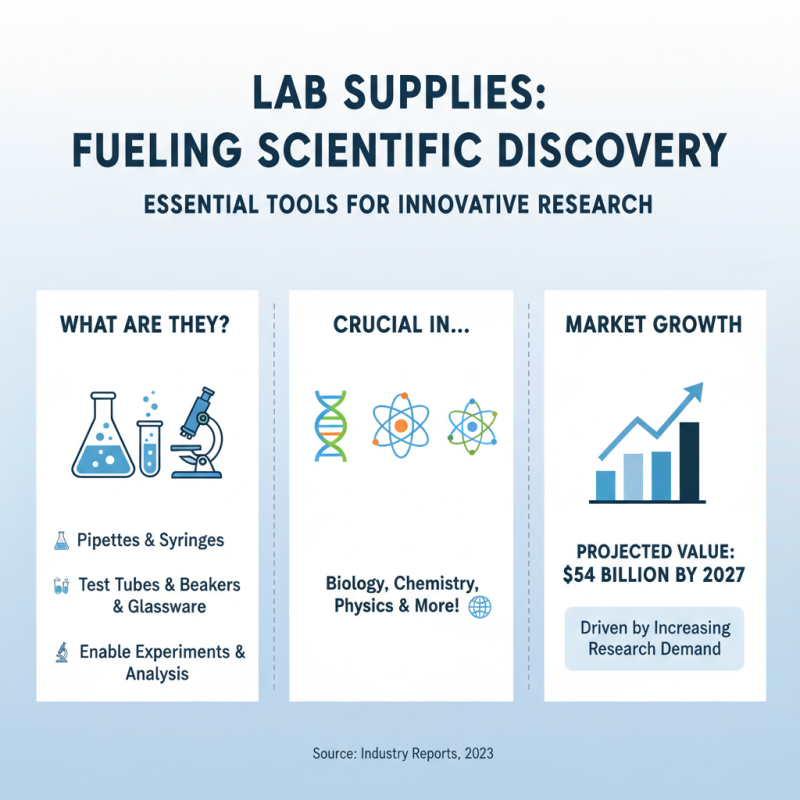
Lab supplies are essential tools in scientific research. They enable scientists to conduct experiments, analyze samples, and achieve accurate results. Items like pipettes, test tubes, and microscopes play crucial roles in various fields, including biology, chemistry, and physics. According to the latest industry reports, lab supplies are projected to reach a market value of $54 billion by 2027. This growth reflects the increasing demand for innovative research across disciplines.
In the laboratory, each supply has a specific purpose. For example, pipettes help measure and transfer liquids with precision. Test tubes allow researchers to mix and heat substances. Each piece must be maintained properly. Neglecting care can lead to contamination or inaccurate results. Ensuring cleanliness is not just important; it is vital for valid outcomes.
Tips: Always double-check measurements before proceeding. Even minor errors can lead to significant consequences. Keep a log of all supplies used. This helps track usage and avoid waste. Inadequate inventory management can stall experiments. Scientists should communicate regularly about supply needs to ensure efficient workflows.
Types of Lab Supplies Commonly Used in Laboratories
Laboratories rely heavily on various types of lab supplies for precise scientific research. Common items include pipettes, test tubes, and petri dishes. These tools play a crucial role in experiments and data collection. According to industry reports, nearly 70% of scientists consider the quality of lab supplies as a critical factor in their research outcomes.
Pipettes, for instance, are essential for accurate liquid measurements. They allow researchers to transfer small volumes of liquids with precision. Test tubes serve multiple purposes, from mixing to storage. They are fundamental in biochemical analysis and reaction experimentation. Surprisingly, many labs overlook the importance of proper maintenance of these supplies. Broken or uncalibrated tools can lead to significant errors in results.
Petri dishes are vital for microbiological studies. They provide a controlled environment for culturing bacteria and fungi. An estimated 65% of experiments involving microorganisms rely on these dishes. Yet, contamination remains a significant risk. Researchers must ensure sterile conditions to avoid misleading results. Attention to detail in using and maintaining lab supplies directly impacts the reliability of scientific findings.
What is Lab Supplies Used For in Scientific Research? - Types of Lab Supplies Commonly Used in Laboratories
| Type of Lab Supply | Purpose | Common Examples |
|---|---|---|
| Glassware | Used to hold, mix, or heat substances. | Beakers, Erlenmeyer flasks, test tubes |
| Plasticware | Lightweight and disposable, used for various experiments. | Pipettes, Petri dishes, microcentrifuge tubes |
| Chemicals | Used as reactants, solvents, or catalysts in experiments. | Reagents, solutions, buffers |
| Instruments | Used for measuring, observing, or manipulating samples. | Microscopes, balances, pipettors |
| Personal Protective Equipment (PPE) | Protect researchers from exposure to hazardous materials. | Gloves, goggles, lab coats |
| Consumables | Used in experiments and need to be replaced frequently. | Filters, syringes, absorbent pads |
Importance of Quality Control in Lab Supplies
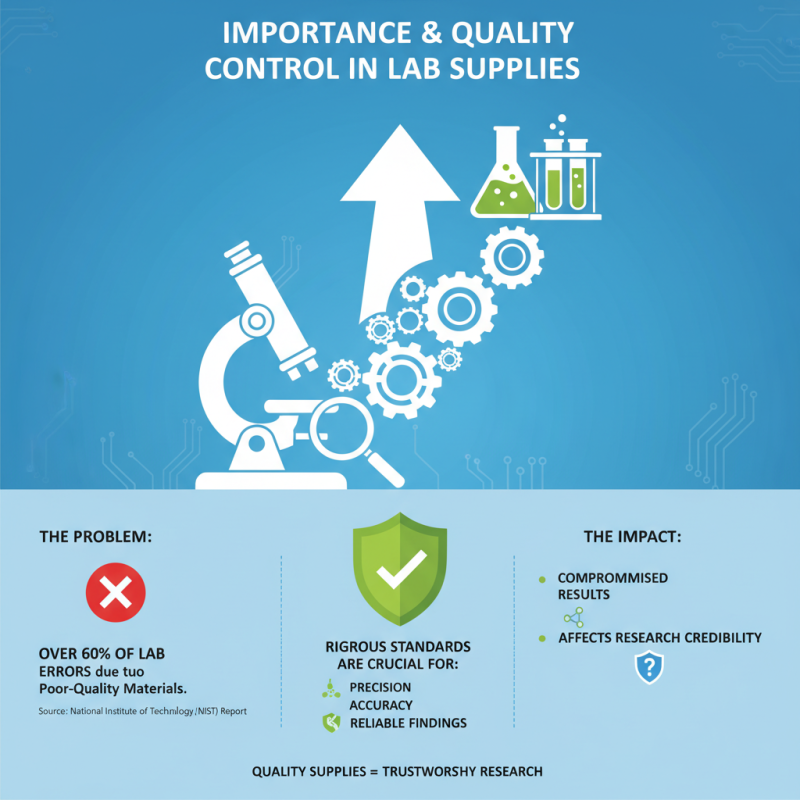
In scientific research, the significance of quality control in lab supplies cannot be overstated. A report by the National Institute of Standards and Technology indicates that over 60% of lab errors result from poor-quality materials. This statistic highlights the need for rigorous standards in selecting lab supplies. Researchers rely on precision and accuracy. Subpar supplies can lead to compromised results, affecting the credibility of the findings.
Quality control processes must be stringent and consistent. Regular audits can identify potential issues before they escalate. For example, testing reagents for purity can prevent errors in experiments. A study published in the Journal of Laboratory Automation revealed that implementing quality management systems reduced error rates by 30%. These numbers underline the value of investing in quality.
However, despite these statistics, many labs still overlook quality control. Often, cost-saving measures take priority. This short-sighted approach can lead to unreliable data and wasted resources in the long run. Quality is not merely an expense; it is an investment in research integrity. Balancing budgets and standards is a challenge, but it is essential for advancing science.
How Lab Supplies Facilitate Experimentation and Data Collection
Laboratories rely heavily on supplies to conduct research effectively. These supplies include pipettes, beakers, and petri dishes, which play crucial roles in experiments. Research shows that over 60% of scientists feel that high-quality lab supplies directly enhance data accuracy. Precise measurement tools, like calibrated pipettes, help minimize errors during liquid handling. This precision is vital for valid results that can influence scientific conclusions.
However, challenges often arise. A lack of essential supplies can hinder the flow of experimentation. Studies indicate that nearly 30% of researchers report delays due to unavailable equipment. This can lead to frustration and wasted resources. Additionally, safety equipment, such as gloves and goggles, is critical but sometimes overlooked in planning. Ensuring availability is essential for maintaining a safe working environment and achieving reliable outcomes.
Effective data collection is heavily impacted by the quality of lab supplies. Inconsistent equipment can introduce variability into experiments, leading to questions about validity. Thus, fostering a culture of rigorous supply management is necessary. Resources must be allocated wisely. Overall, adequate lab supplies are foundational for innovative research, yet their management presents ongoing challenges that require constant attention.
Usage of Lab Supplies in Scientific Research
This chart illustrates the distribution of various lab supplies used in scientific research, highlighting their roles in experimentation and data collection.
Future Trends in Lab Supplies for Scientific Advancements
The future of lab supplies in scientific research is exciting but complex. Innovations are on the rise. Emerging technologies are changing how scientists work. Smart lab equipment is now a part of many research environments. Devices that track samples automatically enhance accuracy. These tools save time in tedious tasks. Increased efficiency leads to more productive findings.
Sustainable materials are becoming a focus. Researchers are pushing for eco-friendly supplies. Biodegradable plastics and recycled materials are being explored. However, finding reliable options can be challenging. Balancing performance with sustainability requires careful consideration. Some materials may not meet all needs. This creates a dilemma for many labs.
Collaboration tools are evolving too. Digital platforms enable remote teamwork. Scientists can share data and insights instantly. Yet, the reliance on technology raises security concerns. Protecting sensitive information is vital. Navigating these future trends will require adaptability and innovation. Scientists must be willing to rethink traditional approaches. The lab landscape will continue to transform in unexpected ways.
Related Posts
-
What is the Importance of Lab Supplies in Scientific Research?
-

Top Microbiology Equipment for Effective Laboratory Research and Analysis?
-

Top Lab Apparatus Essential Tools for Every Scientist?
-

2026 Best Lab Apparatus for Innovative Experiments and Research?
-

Why Choose a Lab Supply Store for Your Scientific Needs?
-

Top 10 Science Labs That Inspire Innovation and Discovery?
Schedule
Monday to Thursday:
8:15 – 17:00
Friday:
8:00-15:00
Address
Leonardo Da Vinci, 10
Valencia Technology Park
46980 Paterna, Valencia, SPAIN
Real Laboratory SL
info@site_e1c8a3bd-d539-4d7f-8695-37f21373de39
Teléfono: +34 96 136 61 07