

China Top Laboratory Software Manufacturers Suppliers?
China’s laboratory software market is expanding across pharmaceutical, clinical, environmental, food, and industrial testing laboratories. Local manufacturers and suppliers now offer laboratory information management systems, electronic laboratory notebooks, and instrument integration tools. Their platforms increasingly support sample tracking, barcode workflows, audit trails, quality control, and cloud-based collaboration.
Michael Elliott, a recognized laboratory informatics analyst, has emphasized, “A LIMS is not a technology problem; it is a business problem.” This perspective matters when comparing Chinese suppliers. Software should fit daily laboratory work, not simply display impressive features. A useful system must connect instruments, analysts, managers, and compliance records without creating unnecessary manual steps.
This overview examines leading China-based laboratory software manufacturers and suppliers through practical criteria. These criteria include product capability, implementation experience, data security, customization, technical support, and total ownership cost. Evidence should come from product documentation, customer references, demonstrations, and verified company information. Marketing claims alone are not enough.
A strong supplier may provide flexible workflows for a small testing room or a multi-site enterprise. Another may offer lower pricing but limited integration support. That difference can become expensive later. Users should inspect real screens, test reporting procedures, and ask how failed instrument connections are handled.
No ranking is perfect. Supplier strengths change quickly, and regional service quality may vary. Some companies also publish limited English documentation, which deserves careful attention. The best choice is not always the largest manufacturer. It is the supplier that understands the laboratory’s samples, instruments, approval process, and future growth.
What Is Laboratory Software and Why Is It Important in China?
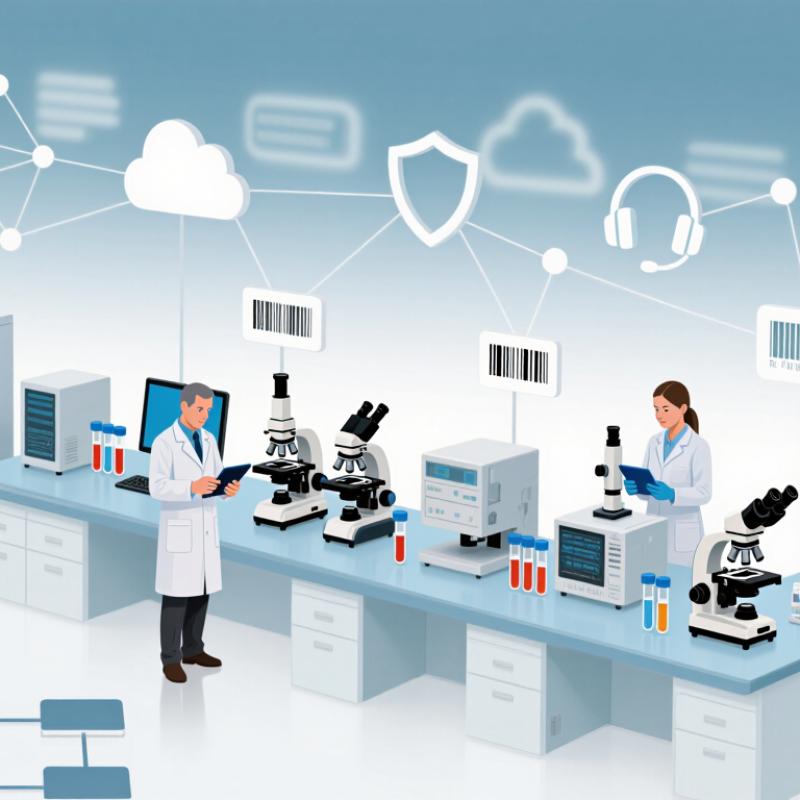
Laboratory software is the digital system behind routine work: sample registration, test scheduling, instrument data, review, and report storage. A laboratory information management system (LIMS) tracks samples from arrival to disposal, while electronic lab notebooks capture methods and observations. Together, these tools can reduce repeated data entry and make results easier to trace. Small details matter: a mislabeled tube or missing calibration record can delay an entire batch. They are not magic, though. Poorly planned workflows can simply become faster digital confusion.
The need is significant in China’s expanding research and testing environment. The National Bureau of Statistics’ Statistical Communiqué on 2023 National Economic and Social Development reported that China’s research and development expenditure reached RMB 3.33 trillion in 2023, or 2.64% of GDP. More research activity means more samples, datasets, and records to manage across universities, manufacturers, hospitals, and testing laboratories. Software can support controlled access, audit trails, instrument integration, and consistent reporting, helping teams review how a result was produced. For laboratories working toward ISO/IEC 17025 accreditation, documented processes and reliable records are especially important. Yet implementation still takes careful staff training and data migration. Even experienced teams may need to rethink familiar procedures before a system truly fits their work.
China Top Laboratory Software Manufacturers Suppliers? - What Is Laboratory Software and Why Is It Important in China?
| Software Category | What It Does | Typical Users | Common Data Managed | Why It Matters in China | Evaluation Considerations |
|---|---|---|---|---|---|
| Laboratory Information Management System (LIMS) | Coordinates sample registration, workflows, test assignments, results, and reporting. | Testing laboratories, research laboratories, pharmaceutical quality-control teams, and environmental laboratories. | Sample identifiers, chain-of-custody records, methods, results, and review status. | Helps laboratories manage growing sample volumes and maintain consistent, traceable workflows across teams and sites. | Check workflow configuration, instrument connectivity, role-based access, audit trails, and support for Chinese-language interfaces where needed. |
| Electronic Laboratory Notebook (ELN) | Records experimental plans, observations, calculations, attachments, and conclusions in a searchable electronic format. | University, industrial R&D, biotechnology, and materials-science teams. | Experiment records, protocols, images, files, and review or approval history. | Supports collaboration and knowledge retention while reducing reliance on disconnected paper notebooks and shared files. | Assess search, templates, access controls, version history, data export, and whether electronic records meet the organization’s applicable requirements. |
| Chromatography Data System (CDS) | Acquires, processes, reviews, and reports data from chromatography instruments such as HPLC and GC systems. | Analytical chemistry laboratories and pharmaceutical quality-control laboratories. | Instrument runs, chromatograms, processing methods, calculations, and review records. | Provides structured handling of analytical data and can make review and reporting more consistent. | Verify compatibility with installed instruments, method and result traceability, user permissions, audit-trail functionality, and data backup arrangements. |
| Laboratory Execution System (LES) | Guides analysts through approved procedures and captures steps and results as work is performed. | Routine testing and quality-control laboratories with standardized procedures. | Procedure steps, entered results, exceptions, checks, and operator records. | Can help standardize execution of repeatable laboratory procedures and reduce transcription steps. | Review procedure control, exception handling, usability, instrument links, and alignment with the laboratory’s quality system. |
| Quality Management System (QMS) | Manages quality processes such as document control, deviations, corrective and preventive actions, and training records. | Quality-assurance teams and regulated or quality-focused laboratories. | Controlled documents, investigations, action records, approvals, and training status. | Connects laboratory work with broader quality processes and helps organize evidence for internal and external audits. | Check document version control, configurable workflows, access permissions, reporting, and integration with LIMS or other systems. |
| Instrument Data Management | Organizes data generated by laboratory instruments and supports transfer, storage, retrieval, or review. | Laboratories using multiple analytical or testing instruments. | Raw files, processed results, instrument metadata, and file-transfer records. | Improves the ability to locate and review data across instruments, particularly where laboratories use mixed equipment. | Confirm supported file formats, instrument interfaces, storage capacity, backup and recovery processes, and data ownership arrangements. |
| Laboratory Resource and Workflow Management | Tracks work queues, staff assignments, equipment availability, and laboratory capacity. | High-throughput testing laboratories, contract testing facilities, and multi-site organizations. | Work orders, schedules, equipment status, turnaround times, and workload records. | Helps teams coordinate work and identify bottlenecks without relying solely on manual scheduling. | Assess scheduling flexibility, dashboards, multi-site support, role permissions, and integration with sample or result workflows. |
| Regulated-Use and Data-Integrity Controls | Provides controls such as unique user accounts, permissions, audit trails, review steps, and protected records. | Laboratories whose records support regulated manufacturing, testing, or quality decisions. | User actions, record changes, approvals, timestamps, and electronic signatures where applicable. | For pharmaceutical operations, software and associated procedures should be assessed against applicable Chinese requirements, including relevant NMPA regulations and Good Manufacturing Practice provisions. | Validate intended use and configuration; review audit-trail behavior, access control, backup, change management, training, and applicable regulatory obligations. |
| Implementation and Supplier Evaluation | Covers deployment, configuration, migration, training, maintenance, and technical support. | Laboratory managers, IT teams, quality teams, and procurement teams. | Project requirements, migrated records, configuration documents, training evidence, and support tickets. | Successful adoption depends on local workflow fit, reliable support, clear data responsibilities, and integration with existing laboratory systems. | Compare documented requirements, implementation experience, service coverage, security practices, data export options, total cost, and long-term support commitments. |
Related Posts
-
2026 Top Laboratory Information System Innovations and Trends?
-
Best Lab Management System for Efficient Operations in 2026?
-
2026 Best Laboratory Information System for Global Buyers
-

Top 10 Laboratory Software Solutions for Enhanced Research Efficiency?
-
How to Choose the Best Laboratory Information System Software?
-
Top Medical Laboratory Software Solutions You Need to Consider?