

NEWS AND UPDATES
The latest updates regarding our products and our company

What Are U 40 Insulin Needles Used For?
U 40 Insulin Needles are designed to measure insulin labeled U-40, which contains 40 units per milliliter. The markings match that concentration. This matters. A syringe calibrated for another insulin strength can deliver an incorrect dose if used without professional guidance. The small barrel may look familiar, but its scale is not interchangeable.
Endocrinologist Dr. Irl B. Hirsch has studied insulin therapy and dosing safety. A practical paraphrase of the concentration-matching principle is: “Match the syringe to the insulin strength; never guess the conversion.” This wording is a paraphrase, not a verified direct quotation. That distinction matters when health information names an expert.
U-40 syringes are commonly used when a person or animal has been prescribed U-40 insulin. Check the insulin label and syringe markings before each use. Ask a pharmacist, doctor, or veterinarian to confirm that they match. A clear label helps. So does a calm second check. If the prescribed insulin or syringe is unclear, pause and seek professional advice rather than estimating a dose. A needle’s length and gauge also affect comfort and suitability, so follow the instructions supplied with the product. This guide explains what U 40 Insulin Needles are for, how their markings relate to insulin concentration, and what to verify before use. Small details can prevent confusion, though no short guide replaces individualized medical advice.
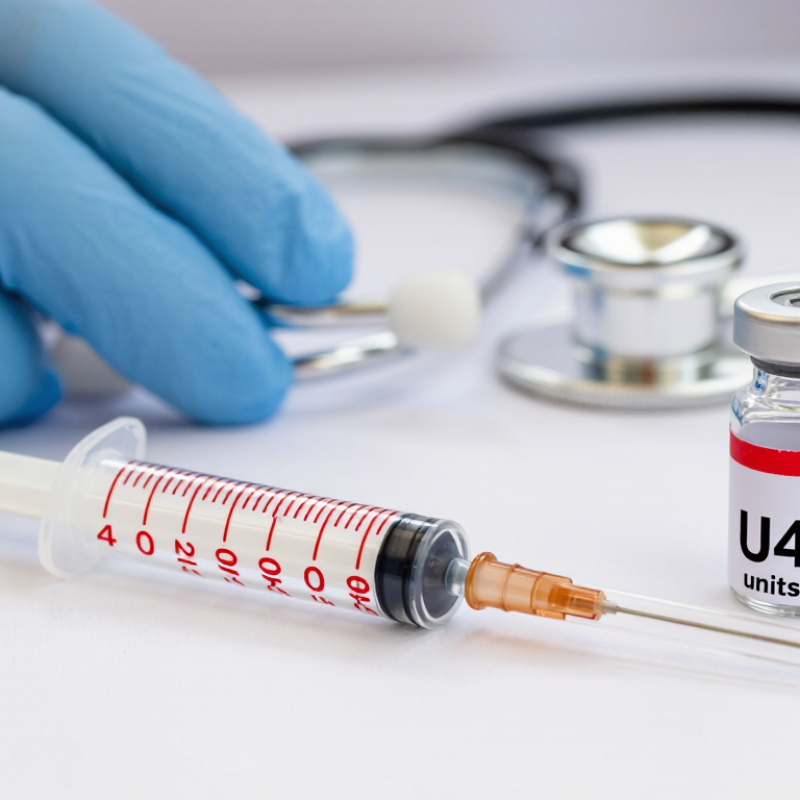
What “U-40” Means in Insulin Delivery
U-40 means the insulin contains 40 units in each milliliter of liquid. The label describes concentration, not the needle’s length or thickness. Small distinction. It matters because the syringe markings must match the insulin concentration to measure the intended volume.
A U-40 insulin syringe is calibrated for U-40 insulin, with markings designed around that strength. For example, its 10-unit mark represents a different liquid volume than the 10-unit mark on a U-100 syringe. They may look similar at a glance. Using a mismatched syringe can lead to a serious dosing error, even when the plunger is drawn to a familiar number. Check the insulin label and syringe markings together before use.
The needle itself delivers the injection; its gauge and length are separate features from U-40 calibration. People sometimes call the whole device a “U-40 needle,” but the syringe’s scale is the key detail. If the insulin or equipment is unfamiliar, pause and ask a pharmacist or prescribing clinician to confirm the match. Do not estimate a conversion or rely on appearance alone. A quick check can prevent a confusing mistake.
What U-40 Insulin Syringes Are Used For
U-40 insulin syringes are designed to measure insulin containing 40 units per milliliter. Their markings match that concentration, helping users draw the prescribed dose accurately. The syringe must match the insulin strength. A U-40 syringe is not interchangeable with a U-100 syringe, which is calibrated for a different concentration. That match matters.
Using the wrong syringe can lead to a serious dosing error, even when the plunger appears to line up with a familiar number. Check the insulin label and syringe markings every time. If either is unclear, pause and ask a pharmacist or healthcare professional before injecting. Do not guess or try to convert the dose yourself. The markings can look familiar, which is exactly why a quick glance may not be enough.
Tips: Keep the matching syringe with its insulin, and check the label under good lighting. Use a new syringe for each injection, then follow local guidance for safe disposal. If your insulin or syringe changes, confirm the dose and equipment with your care team.
How U-40 Syringes Match U-40 Insulin
U-40 means the insulin contains 40 units in each milliliter. A U-40 syringe is calibrated for that concentration, so its markings correspond directly to U-40 insulin doses. The syringe’s printed scale matters, not just its barrel size. Small mismatch, big consequence.
A U-100 syringe uses a different scale. Using it with U-40 insulin can deliver a different amount than the markings suggest; the reverse mismatch can also cause a dosing error. Never estimate a conversion or rely on syringe color. Check that both the insulin label and syringe state U-40, and ask a pharmacist or prescriber if either label is unclear. The markings can look deceptively familiar.
The CDC’s National Diabetes Statistics Report 2024 estimated that 38.4 million people in the United States had diabetes. That figure is not a measure of U-40 use, but it shows why clear insulin labeling and measurement matter at scale.
When preparing a dose, pause and read both labels under good light. If the prescribed insulin concentration or syringe changes, confirm the correct pairing with a healthcare professional before use. A little extra checking can feel fussy; it is worth it.
How U-40 Supplies Differ from U-100 Supplies
What Are U 40 Insulin Needles Used For?
How U-40 Supplies Differ from U-100 Supplies
U-40 insulin contains 40 units per milliliter, while U-100 contains 100 units per milliliter. The numbers on a matching syringe are calibrated for that concentration. U-40 syringes are marked for U-40 insulin; U-100 syringes are marked for U-100 insulin. The needle itself may look similar, but the syringe’s scale matters. A mismatch can deliver the wrong dose. Small markings, big consequences.
Do not choose supplies by appearance alone. Check the insulin label and syringe packaging, and ask a pharmacist or diabetes care professional if either is unclear. Never switch between U-40 and U-100 supplies without specific guidance. I know it can feel like a minor packaging detail, but it is worth checking twice.
Tips: Match the syringe concentration to the insulin label. Keep supplies in their original packaging. If you find a mismatch, pause and get professional advice before injecting.
Safety Checks When Choosing Insulin Delivery Supplies
“U-40” means insulin with a concentration of 40 units per milliliter. A U-40 syringe is calibrated for measuring that concentration; the needle’s length and thickness are separate specifications. Check the label. Do not assume a syringe marked U-100 measures U-40 insulin correctly. A mismatch can deliver the wrong dose. The CDC’s 2024 National Diabetes Statistics Report estimates that 8.4 million people with diabetes in the United States use insulin, making careful supply checks important for many households.
Before each use, match the insulin label to the syringe scale, and inspect the package for damage or expired supplies. Confirm the prescribed dose with a clinician or pharmacist if anything differs. Pause if unclear. Wash your hands, use a new sterile syringe, and never share needles. Dispose of used sharps in an approved sharps container, not loose in household trash. The World Health Organization estimated in its 2017 medication-safety report that medication errors cost about US$42 billion worldwide each year; this figure is not specific to insulin, but it underscores why small checks matter. It is easy to rush through a familiar routine. That is worth questioning, especially when labels look similar.
| Topic | What to Check | Why It Matters |
|---|---|---|
| What “U-40” means | U-40 describes insulin concentration: 40 units of insulin per milliliter (40 units/mL). The calibrated device is generally called a U-40 insulin syringe; a needle alone is not calibrated to insulin concentration. | The syringe scale must match the concentration of the insulin being measured. |
| Intended use | U-40 syringes are used to measure insulin labeled U-40 when a healthcare professional has prescribed or recommended that delivery method. | Using a syringe designed for a different concentration can result in an incorrect dose. |
| Match the label and syringe | Before each use, read the insulin label and confirm that the syringe is clearly marked U-40. Do not rely on packaging color or appearance. | U-40 and U-100 are different concentrations and their syringe markings are not interchangeable. |
| U-40 versus U-100 | U-100 insulin contains 100 units/mL. Use a measuring device specifically intended for the insulin concentration prescribed. Do not substitute a U-100 syringe for a U-40 syringe, or the reverse, unless a qualified professional has provided explicit instructions. | A concentration and syringe-scale mismatch can cause a serious dosing error. |
| Capacity and scale | Check the syringe’s maximum capacity and the size of its measurement markings. Select a device that can measure the prescribed dose clearly and accurately. | Clear, suitable graduations help reduce measurement errors. Capacity and scale can vary by product. |
| Needle suitability | For a syringe with an attached needle, follow the prescriber’s guidance on needle length and injection technique. For an insulin pen, use a compatible pen needle rather than a U-40 syringe. | Pen needles and syringes are different delivery supplies and are used with different devices. |
| Condition and packaging | Use a sterile, unopened, undamaged syringe or needle. Check the package and expiration information, and do not use a bent, loose, or damaged needle. | Damaged or non-sterile supplies can affect safe administration. |
| Single use and disposal | Follow local guidance and product instructions for use and disposal. Used needles and syringes should be placed promptly in an approved sharps container. | Safe disposal helps prevent accidental needle-stick injuries and exposure. |
| If the supplies do not match | Do not guess, convert markings, or administer a dose with mismatched supplies. Pause and contact a pharmacist, prescriber, or other qualified healthcare professional for instructions. | A qualified professional can confirm the correct insulin and delivery device for the prescribed dose. |
| Important note | This information is general safety guidance and does not replace instructions from a healthcare professional or the product’s directions for use. | Insulin dosing and delivery supplies should be selected for the individual prescription and insulin product. |
Article Source:
Schedule
Monday to Thursday:
8:15 – 17:00
Friday:
8:00-15:00
Address
Leonardo Da Vinci, 10
Valencia Technology Park
46980 Paterna, Valencia, SPAIN
Real Laboratory SL
info@site_e1c8a3bd-d539-4d7f-8695-37f21373de39
Teléfono: +34 96 136 61 07
