

NEWS AND UPDATES
The latest updates regarding our products and our company

Why Choose Quality Science Lab Equipment for Schools?
A science lesson changes when students can measure, observe, and test ideas themselves. A balance that settles steadily, a microscope with clear optics, and glassware with readable markings make results easier to discuss. Small details matter. Quality science lab equipment for schools supports these hands-on moments while helping teachers manage routine classroom work safely and consistently.
The OECD’s PISA 2015 Results, Volume II, reported that 47% of students across OECD countries conducted experiments in a laboratory at least once a month. That figure describes access to an activity, not the quality of the equipment or instruction. Still, it highlights how much practical science depends on usable lab spaces. Nobel Prize-winning physicist Richard Feynman wrote, “The test of all knowledge is experiment,” in his 1974 Caltech address, “Cargo Cult Science.” Reliable tools help students put that principle into practice.
Choosing equipment is not just a matter of buying the most expensive instruments. Schools need to consider class size, storage, cleaning, repair, and whether teachers can set up activities without losing valuable lesson time. A sturdy thermometer is useful; one with a scale students can actually read is more useful. Not automatically perfect. Even careful purchasing can miss the mark when real classroom use is overlooked. A sensible decision starts with the experiments students will perform, then checks accuracy, durability, safety features, and replacement needs. This article explores why quality matters—and what schools should look for before investing.

What Defines Quality in School Science Lab Equipment?
Quality school science lab equipment is accurate, safe, durable, and suited to the age of its users. A balance should give repeatable readings; glassware should have clear graduations and resist routine cleaning. Benches, clamps, and storage also matter. Equipment that is hard to maintain can quietly limit practical lessons. Small details count.
OECD’s PISA 2018 Results, Volume II, reported that roughly three in ten students across OECD countries attended schools where principals identified shortages or inadequacies in educational materials. That measure covers more than laboratory tools, but it highlights a real classroom constraint.
The American Chemical Society’s Guidelines for Chemical Laboratory Safety in Secondary Schools also emphasize suitable equipment, clear procedures, and teacher preparation. Quality is not a shiny finish. It is reliable performance, age-appropriate design, replaceable parts, and safety features that work during ordinary use. No checklist catches everything.
Tips: Before buying, test a few items with teachers and students. Check measurement accuracy, stability, cleaning needs, and whether replacement parts are available. Ask students to handle the equipment, too. Their feedback may reveal awkward grips or confusing scales that adults overlook. Revisit the choice after a term; some assumptions will be wrong.
How ACS’s 24-Student Class Guidance Shapes Equipment Capacity
A 24-student class is a useful planning benchmark, not a shopping list. For hands-on lessons, equipment capacity should match how students work. Twelve pairs may need twelve work areas, while individual measurements can require twenty-four sets of basic tools. That difference matters. A crowded bench can turn a simple observation into waiting time, misplaced parts, or rushed cleanup. Before ordering, teachers can map a typical lesson and note which items are shared, which must be within reach, and what the instructor demonstrates. One lesson can reveal gaps, though it may not reveal every need.
Capacity also includes durability, storage, and setup time. A few spare consumables can keep a lesson moving, but large orders without curriculum checks may leave unused stock. Choose equipment with clear instructions, stable construction, and easy-to-clean surfaces. Confirm that it suits the room and the students. Count outlets, sink access, cabinet space, and time for setup. These details are unglamorous. They matter. A plan can still miss something. Treat the 24-student figure as a starting point, then review an inventory after each unit. That record helps schools adjust purchases to actual classroom use.
| Equipment or Supply | Typical Classroom Setup | Quantity for 24 Students | Capacity Planning Notes |
|---|---|---|---|
| Student workstations | Two students per workstation | 12 stations | Allow enough bench space for students to work safely without crowding shared materials. |
| Compound microscopes | One per workstation | 12 | Supports paired observation. A small number of additional units can help accommodate maintenance or equipment failure. |
| Safety goggles | One pair per student | 24, plus a suitable spare supply | Provide properly fitting, impact-rated eye protection for activities that require it; follow school procedures for cleaning and storage. |
| Graduated cylinders | One set per workstation | 12 sets | Choose capacities appropriate to planned activities. Smaller cylinders are generally useful for measuring modest liquid volumes. |
| Beakers | Several sizes shared at each workstation | At least 36 | A practical starting point is three per station in varied capacities; the actual mix depends on the curriculum and lab activities. |
| Digital balances | One per two workstations | 6 | Students can share balances in pairs of stations when experiments do not require all groups to measure mass simultaneously. |
| Thermometers | One per workstation | 12 | Select instruments with a measurement range appropriate to the activities and use them according to their instructions. |
| Reusable trays | One per workstation | 12 | Trays help contain small equipment and minor spills during suitable classroom activities; they do not replace required safety controls. |
| Eyewash provision | Accessible emergency eyewash equipment | As required by the room design and applicable regulations | Selection, installation, accessibility, and maintenance should follow local requirements and the school’s risk assessment. |
| Storage and labeling | Dedicated, organized storage for each class set | Capacity for all equipment and supplies listed | Use clear labels and suitable storage practices. Store chemicals in accordance with their safety information and local rules. |
| Planning basis: 24 students working mainly in pairs. Quantities are illustrative starting points; adapt them to the curriculum, activities, room layout, supervision, and applicable safety requirements. | |||
ANSI Z358.1: Eyewash Stations Provide 0.4 gpm for 15 Minutes
In a school lab, an eyewash station is useful only if it delivers enough water immediately. ANSI/ISEA Z358.1-2014 (R2020) specifies at least 0.4 gallons per minute for 15 minutes for an eyewash unit. That is 6 gallons in total, delivered as a gentle, continuous flow. Seconds matter. The standard also calls for tepid water, generally 60–100°F, helping students keep their eyes open during flushing. A powerful-looking spray is not necessarily a safe one; pressure and flow both matter.
OSHA’s 29 CFR 1910.151(c) requires suitable flushing facilities where workers may encounter corrosive materials. For school managers, that requirement is a useful safety benchmark, alongside ANSI’s equipment specifications. ANSI calls for weekly activation of plumbed eyewash units and an annual inspection to confirm they meet the standard. A teacher can check that the path is clear, the drain works, and the unit runs without sputtering. Small details are easy to miss. And a test should not end with a wet floor and no record of the result. Training, accessible placement, and documented checks make the specified 0.4 gpm more than a number on a purchasing sheet.
How Precise Instruments Support Repeatable Science Experiments
Why Choose Quality Science Lab Equipment for Schools?
Repeatable experiments begin with measurements students can trust. A balance that returns to zero, a thermometer with a clear scale, and intact graduated cylinders help different groups follow the same procedure. Small differences matter. If one team reads liquid at eye level and another looks from above, their recorded volumes may diverge even with good equipment.
NIST Technical Note 1297 describes expanded measurement uncertainty using a coverage factor, commonly k = 2, which often corresponds to roughly 95% coverage when assumptions are met. This is not a promise that every school reading will be accurate; it is a useful reminder to consider uncertainty. A precise instrument can still mislead when it is poorly handled, uncalibrated, or used on an unstable bench. Repeatability depends on both instrument quality and consistent technique. That part is easy to overlook.
Tips: Check zero points before weighing, use the same reading method each time, and record units beside every result. Let thermometers settle before noting temperatures. If measurements still vary, pause and inspect the setup; the equipment may not be the only problem.
How Durable, Maintainable Equipment Reduces Lifecycle Costs
School laboratory equipment is used repeatedly, often by students with different levels of experience. A microscope should withstand regular focusing, careful cleaning, and years of classroom handling. Stable stands, sturdy hinges, and replaceable adjustment knobs can keep minor damage from requiring a full replacement. Small details matter.
The purchase price is only one part of the cost. Repairs, replacement parts, and lessons disrupted by broken equipment also affect a school’s budget. Equipment with accessible components and clear care instructions is often easier for staff to maintain. A simple cleaning routine and scheduled checks can catch loose fittings before they fail. Yet durability does not mean indestructibility. Glassware still breaks, and seals can wear out. It is easy to overvalue a rugged exterior while overlooking whether parts are available or repairs are practical. That trade-off deserves attention. Choosing maintainable equipment can extend useful service and reduce avoidable replacement, though no item lasts forever.
Why Choose Quality Science Lab Equipment for Schools?
10-Year Illustrative Lifecycle Cost Model — cumulative cost in normalized cost units
In this planning example, durable equipment starts at 100 cost units and costs 4 units per year to maintain. Lower-upfront-cost equipment starts at 70 units, costs 10 units per year to maintain, and is replaced for 70 units in year 6. The example shows how maintenance and replacement can affect lifecycle costs; it is not observed market data or a supplier quote.
Related Posts
-
2026 Top Lab Equipment Distributor Trends and Innovations?
-
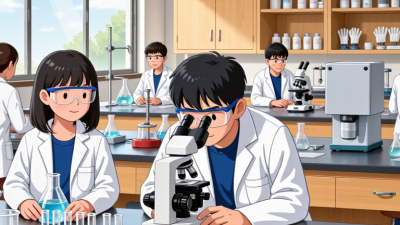
How to Choose Science Lab Equipment for Schools
-

Top Medical Laboratory Supplies for Global Buyers 2026?
-
Top Medical Lab Supplies for Global Buyers
-

What is the Importance of Lab Supplies in Scientific Research?
-

China Top Microbiology Laboratory Suppliers for Global Buyers?
Schedule
Monday to Thursday:
8:15 – 17:00
Friday:
8:00-15:00
Address
Leonardo Da Vinci, 10
Valencia Technology Park
46980 Paterna, Valencia, SPAIN
Real Laboratory SL
info@site_e1c8a3bd-d539-4d7f-8695-37f21373de39
Teléfono: +34 96 136 61 07