
• NEWS AND UPDATES

    The latest updates regarding our products and our company

What Are the Top Biology Lab Kits for Global Buyers?

Choosing the right biology lab kits is not simply a matter of counting experiments. Global buyers must examine learning goals, material quality, safety documentation, shipping conditions, and local classroom needs. A kit with attractive packaging may still fail when instructions are unclear or replacement parts are unavailable. Real classroom use reveals these weaknesses quickly.

Steve Spangler, a science educator and laboratory-kit entrepreneur, often states, “The best way to learn science is to do science.” That principle remains useful for schools, universities, training centers, and education distributors. Effective biology lab kits should let learners observe cells, test enzyme activity, or model ecosystems with clear steps and visible results. They should also include labeled components, stable reagents, age-appropriate procedures, and dependable technical support. Buyers should check whether product specifications are complete and whether quality information can be verified. This includes storage temperatures, shelf life, batch details, and replacement policies. It is easy to overlook these points.

Global purchasing adds further challenges. Climate-controlled shipping may matter in tropical regions. Translated instructions may prevent avoidable mistakes. Some kits also assume laboratory equipment that smaller schools do not have. That assumption deserves scrutiny. No single kit suits every market, budget, or curriculum. A practical comparison should balance scientific accuracy, user experience, total cost, and after-sales reliability. This guide examines leading biology lab kits through that broader lens, while recognizing one uncomfortable truth: impressive demonstrations do not always create meaningful learning.
What Are the Top Biology Lab Kits for Global Buyers?

Biology Lab Kits: Definition, Purpose, and Main Categories

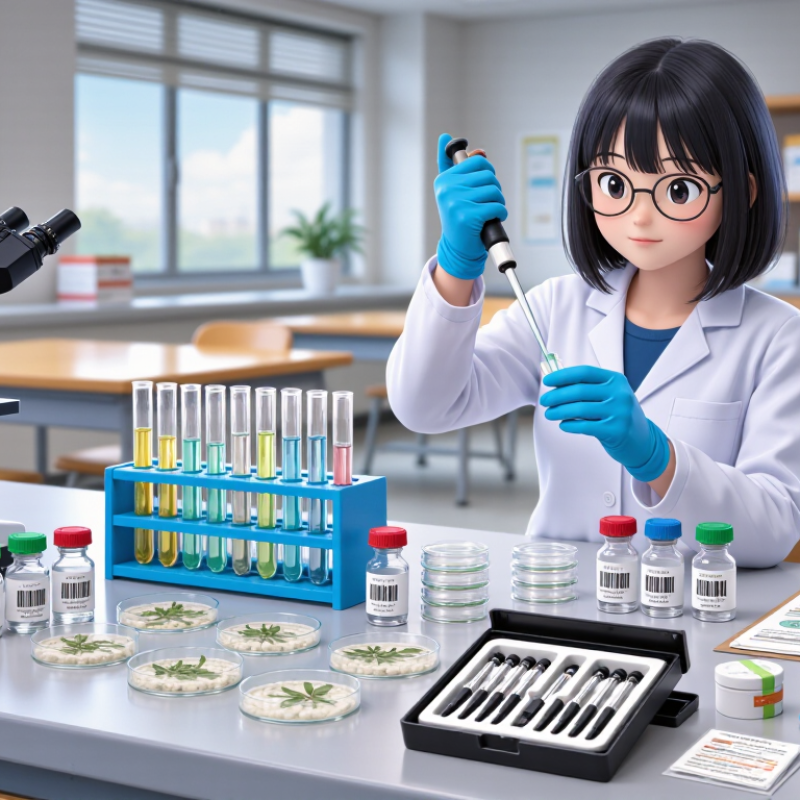
Biology lab kits are curated sets of tools, samples, reagents, and instructions for studying living systems. They turn abstract lessons into observable work, such as focusing onion cells under a microscope or measuring yeast activity. For global buyers, a useful kit should match the learner’s age, course goals, and laboratory conditions. Clear safety labels matter. So do stable packaging, multilingual instructions, and reliable replacement parts.

The main categories serve different learning purposes. Microscopy kits usually include slides, stains, droppers, and a basic microscope. They support cell structure and tissue observation. Molecular biology kits may demonstrate DNA extraction, gel separation, or simple amplification concepts. They require careful temperature control and precise timing. Ecology kits examine soil, water, plant growth, or local biodiversity. Microbiology kits should use safe, educational materials and emphasize clean handling, sealed disposal, and supervised procedures.

Quality is not only about the number of components. In purchasing practice, I have seen impressive-looking kits fail because a tiny adapter was missing. That detail can stop an entire lesson. Buyers should check shelf life, transport conditions, calibration needs, and regional safety requirements before ordering. A strong supplier provides batch information, technical support, and realistic photographs of the contents. Still, no kit fits every classroom. Some instructions may need adaptation for local water quality, language, or equipment. That is easy to overlook. Practical testing with one sample kit can reveal problems before a large international purchase.

Biology Lab Kits: Common Categories and Typical Protocol Stages

Biology lab kits are designed to support practical workflows such as sample preparation, DNA analysis, amplification, microscopy, and microbial culture. The chart compares common kit categories by the number of standard hands-on stages typically included in a basic educational or entry-level laboratory protocol. Actual kit contents may vary by application and laboratory level.

Typical stages include preparation, processing, reaction or observation, separation or analysis, and result interpretation.

Key Components and Features of High-Quality Biology Lab Kits

What Are the Top Biology Lab Kits for Global Buyers?

High-quality biology lab kits begin with reliable, clearly matched components. A basic set should include prepared slides, sterile swabs, droppers, forceps, measuring cylinders, and safe, labeled reagents. Microscopes need stable illumination, adjustable focus, and power options suited to different regions. Small details matter. A missing adapter can stop an entire classroom experiment.

The World Health Organization’s Laboratory Biosafety Manual recommends risk assessment before selecting procedures, materials, or protective equipment. Therefore, strong kits should include gloves, eye protection, spill guidance, waste containers, and simple decontamination instructions. Reagents should have batch information, storage temperatures, expiry dates, and hazard labels. The WHO and UNICEF Joint Monitoring Programme estimated that 646 million schoolchildren lacked basic hygiene services in 2022. This makes low-water activities and clear hand-cleaning instructions especially practical for international buyers. UNESCO’s Global Report on Teachers projects a shortage of 44 million teachers by 2030. Kits with illustrated protocols, teacher notes, and ready-to-use controls can reduce preparation time. Yet documentation alone does not prove quality. I would test every component after shipping, especially glassware, seals, and temperature-sensitive materials. Not always. Humidity, customs delays, and uneven classroom resources can expose weaknesses that a product sheet misses. A dependable kit should support repeatable observations, not merely impressive packaging.

Top Biology Lab Kits for Schools, Universities, and Professional Labs

What Are the Top Biology Lab Kits for Global Buyers?

Top biology lab kits should match the users, facilities, and learning goals of each laboratory. Schools often need safe, reusable sets for microscopy, cell structure, plant biology, and basic genetics. Clear instructions and durable materials matter more than a large component list. A crowded box can confuse younger learners.

Universities may require more flexible kits for microbiology, molecular biology, physiology, or ecology modules. Professional laboratories usually prioritize validated procedures, accurate measuring tools, sterile packaging, and reliable replacement supplies. Buyers should check storage temperatures, shelf life, training documents, and local import requirements. In practice, no kit fits every curriculum. Some products appear complete but lack essential consumables after several lessons.

Tips: Ask for a detailed inventory before ordering. Confirm whether microscopes, slides, gloves, stains, and waste containers are included. Request safety data and quality records for chemical materials. Test one sample kit with instructors before making a large purchase. It may reveal unclear labels, weak equipment, or unsuitable experiment times. Also compare supplier support, not only price. A responsive technical team can help schools solve small problems before they become expensive delays.

How Global Buyers Can Compare Suppliers, Standards, and Costs

Global buyers should compare evidence, not glossy catalogs. UNESCO’s 2021 Science Report placed global R&D spending at 1.8% of GDP in 2018, versus 1.7% in 2014. That pressure makes kit selection a budget decision, not only a technical one. Ask suppliers for current certificates, lot traceability, shelf-life data, and replacement-part availability. Request a sample certificate of analysis. Then check whether it matches the delivered lot.

Standards reveal supplier maturity. WHO’s Laboratory Biosafety Manual, fourth edition (2020), promotes risk-based controls, clear labeling, and documented procedures. For testing competence, ISO/IEC 17025 accreditation is stronger than a generic quality claim. Medical laboratories may also require ISO 15189 alignment. Compare instruction clarity, control materials, storage temperatures, and waste guidance. A kit needing constant refrigeration can become expensive in regions with unstable power. Ask for temperature-excursion evidence. Many buyers skip this.

Build a landed-cost sheet. Include freight, duties, cold-chain fees, calibration, training, consumables, and failed-run replacement. The lowest unit price can hide the highest operating cost. I would score performance, documentation, support, and total cost separately. Keep the scoring transparent. No spreadsheet is perfect. A low-cost kit may suit basic classroom work, while research laboratories need tighter controls and traceability. Run a small pilot with real users before a large order, and record failed steps, not only successful results.

Safety, Shipping, and Selection Criteria for International Purchases

What Are the Top Biology Lab Kits for Global Buyers?

Safety, Shipping, and Selection Criteria for International Purchases

The best biology lab kit depends on its learning purpose, user age, and destination country. Choose materials clearly labeled for educational use and containing no harmful biological agents. A reliable supplier should provide safety instructions, ingredient details, storage guidance, and responsive technical support. Check whether tools have rounded edges, sealed containers, and clear waste-handling directions. Small details matter. I once underestimated how confusing unfamiliar instructions can become for first-time users. Plain language reduces mistakes.

International shipping requires more than a low delivery price. Confirm customs documents, product classifications, declared contents, and import restrictions before payment. Temperature-sensitive items may need insulated packaging and delivery tracking. Some destinations also require special permits, even for harmless classroom materials. Ask about damaged-package procedures and replacement timelines. A strong supplier should explain these limits honestly, not promise universal delivery. Regulations change, and online information can become outdated.

Tips: Compare at least three suppliers using the same checklist. Request a current safety data sheet when relevant. Verify expiration dates and packaging photos before dispatch. Avoid kits with vague contents or unusually broad claims. Keep invoices, tracking records, and instructions together. Test one kit before ordering in bulk. That step may feel slow, but it can reveal missing parts, unclear labels, or unsuitable equipment early.

What Are the Top Biology Lab Kits for Global Buyers? - Safety, Shipping, and Selection Criteria for International Purchases

Kit Category Typical Learning or Research Use Typical Contents Storage Requirement International Shipping Profile Primary Safety Considerations Best Buyer Fit
DNA Extraction and Electrophoresis Kit Introduction to DNA isolation, restriction analysis, and gel electrophoresis. Extraction reagents, loading dye, agarose or pre-cast gels, electrophoresis buffer, stains, and basic consumables. Usually room temperature for dry components; some reagents may require refrigeration. Generally moderate risk when supplied without live biological materials; liquid and chemical components may require additional documentation. Eye protection, gloves, electrical safety, chemical handling, and appropriate waste disposal are required. Schools, universities, training centers, and entry-level teaching laboratories.
Microscopy and Cell-Structure Kit Observation of plant, animal, and prepared tissue structures using light microscopy. Prepared slides, blank slides, coverslips, droppers, stains, and specimen-handling tools. Typically ambient storage; stains should be protected from heat, light, and freezing. Usually straightforward to ship because most components are non-perishable and non-infectious. Use slip-resistant surfaces, handle glass carefully, and follow stain-specific hazard information. Primary and secondary education, museums, science clubs, and introductory laboratories.
Aseptic Technique and Non-Pathogenic Culture Kit Practice in sterile technique, colony observation, and basic microbial growth concepts. Sterile plates, prepared media, inoculation tools, sealing materials, and non-pathogenic teaching strains where permitted. Prepared media may require refrigeration; live teaching cultures may require validated temperature control. Higher complexity if live organisms or temperature-sensitive media are included; customs and import permits may apply. Use only approved non-pathogenic materials, prohibit human or environmental sampling unless authorized, and disinfect waste before disposal. Supervised teaching laboratories with biosafety procedures and trained instructors.
PCR Demonstration Kit Demonstration of DNA amplification, primer design concepts, and basic molecular workflows. Master mix or individual reagents, primers, controls, tubes, and reaction accessories. Many enzyme-based components require frozen or refrigerated transport and storage. Temperature-controlled packaging, dry ice or cold packs, delivery scheduling, and customs clearance may be necessary. Follow chemical safety data, prevent contamination, use calibrated equipment, and avoid clinical interpretation of teaching results. University teaching labs, biotechnology courses, and supervised molecular biology training.
Plant Tissue Culture Kit Plant propagation, explant preparation, aseptic handling, and growth-medium formulation. Culture vessels, growth medium, plant hormones, sterile tools, and sealing materials. Dry media are generally stable; prepared media and plant material may require controlled temperature and light conditions. Usually manageable when shipped as dry components; live plant material can trigger phytosanitary and import requirements. Use sterile technique, handle plant growth regulators according to their safety documentation, and sterilize contaminated cultures. Agricultural schools, botany departments, horticulture programs, and research training facilities.
Enzyme Activity and Biochemistry Kit Investigation of enzyme kinetics, temperature effects, pH effects, and substrate specificity. Enzymes, substrates, buffers, reaction tubes, measurement accessories, and protocols. Some enzymes and substrates require refrigeration or freezing; stability varies by formulation. Cold-chain needs vary from ambient shipment to frozen delivery; verify validated transit duration before ordering. Review reagent hazards, avoid ingestion or skin contact, and dispose of reaction mixtures according to local rules. Secondary schools, universities, food-science programs, and laboratory training providers.
Environmental DNA and Water-Analysis Kit Demonstration of environmental sampling, filtration, DNA recovery, and ecosystem monitoring concepts. Filtration units, sterile containers, extraction materials, basic test reagents, and sampling accessories. Dry components are often ambient-stable; collected samples may need prompt processing or refrigeration. Unused components are generally simpler to export; biological samples collected from the environment may be restricted. Treat environmental samples as potentially contaminated, wear appropriate PPE, and follow local sampling and disposal rules. Environmental science programs, universities, conservation projects, and field-training teams.
International Purchase Checklist: Confirm destination-country import rules, required permits, customs descriptions, safety documentation, shelf life, temperature limits, packaging integrity, delivery lead time, and whether the shipment contains chemicals, live organisms, plant material, or biological samples.