
• NEWS AND UPDATES

    The latest updates regarding our products and our company

China Top Microbiology Lab Equipment Suppliers?

Choosing China’s top microbiology lab equipment suppliers requires more than comparing prices or catalog size. A reliable supplier must support accurate testing, stable workflows, and long-term laboratory safety. This introduction examines manufacturers and distributors serving universities, hospitals, pharmaceutical companies, food laboratories, and industrial research centers.

The review focuses on incubators, autoclaves, biosafety cabinets, microscopes, centrifuges, PCR systems, and laboratory consumables. It considers certification, calibration support, product documentation, customization, delivery experience, and after-sales service. Details matter. A poorly sealed incubator door can damage culture results. An unclear autoclave cycle can create serious validation concerns. A responsive technical team may matter more than a low initial quotation.

Louis Pasteur famously observed, “Chance favors only the prepared mind.” His statement remains relevant when selecting microbiology lab equipment. Prepared buyers compare temperature uniformity, contamination control, maintenance access, and electrical compatibility before placing orders. They also request sample records, factory evidence, and independent verification where possible. No ranking is perfect. Supplier capabilities can change, and product performance may vary between models. Therefore, this guide presents practical comparisons rather than absolute promises. Readers should confirm current certifications, installation conditions, warranty terms, and local regulatory requirements before purchasing. Validation still matters. Through an evidence-based approach, the article aims to identify China-based suppliers that combine manufacturing experience, technical expertise, dependable communication, and measurable equipment quality.
China Top Microbiology Lab Equipment Suppliers?

What Microbiology Lab Equipment Suppliers Provide

What Microbiology Lab Equipment Suppliers Provide

Microbiology lab equipment suppliers provide more than incubators and microscopes. They support a complete workflow, from sample receipt to verified reporting. Typical packages include biosafety cabinets, autoclaves, centrifuges, colony counters, culture media, refrigerators, and temperature-monitoring systems. Grand View Research estimated the global microbiology testing market at about USD 4.4 billion in 2023, with continued growth expected through 2030. This demand reflects rising testing needs in food, water, pharmaceuticals, and clinical laboratories.

Reliable suppliers should provide installation, calibration, preventive maintenance, operator training, and documented service records. They should also explain airflow, heat distribution, cleaning limits, and alarm functions in practical language. ISO 15189:2022 emphasizes equipment validation, traceability, and risk-based quality management in medical laboratories. The WHO Laboratory Biosafety Manual, fourth edition, also stresses suitable containment, maintenance, and staff competency. A low price can become expensive when calibration fails. That point is often ignored.

Tips: Ask for calibration certificates, service response times, spare-parts availability, and environmental specifications. Check whether the supplier can demonstrate temperature uniformity under real loading conditions. Request references from laboratories with similar workloads. Do not accept impressive brochures as technical evidence. I have found that a simple trial run can reveal awkward controls, poor documentation, or cleaning gaps. Those details matter.

Key Equipment Categories for Microbiology Laboratories

Microbiology laboratories depend on equipment that protects samples, staff, and data quality. In China, reliable suppliers typically organize product ranges around practical laboratory workflows. The right choice depends on organism type, testing volume, containment needs, and maintenance support. A clean bench may suit sterile preparation, but it cannot replace a certified biological safety cabinet for controlled containment. That distinction is easy to miss.

Core equipment includes biological safety cabinets, clean benches, incubators, autoclaves, centrifuges, microscopes, and laboratory refrigerators. Incubators maintain stable temperatures for cultures, while shaking models add controlled agitation for liquid media. Autoclaves use validated heat and pressure cycles to process reusable materials and culture waste. Centrifuges separate cells or particles, but rotor balance and speed limits must match each protocol. Microscopes need suitable illumination and magnification, not merely impressive specifications. Refrigerators and freezers preserve reagents, reference materials, and short-term samples. Small details matter.

A dependable supplier should provide calibration records, installation guidance, user training, spare parts, and responsive service. Buyers should check temperature uniformity, alarm functions, chamber materials, noise levels, and cleaning access. For safety cabinets, airflow testing and certification require documented attention. From practical procurement experience, a low purchase price can hide costly downtime or difficult repairs. Still, specifications alone are not enough. Some laboratories overbuy equipment they rarely use. A site visit, workflow review, and risk assessment often reveal a better-sized solution. Records must remain clear.

How to Evaluate Chinese Equipment Suppliers

China’s microbiology equipment sector deserves careful evaluation, not quick price comparisons. The National Bureau of Statistics reported RMB 3.33 trillion in Chinese R&D spending in 2023, equal to 2.64% of GDP. WIPO’s Global Innovation Index 2024 ranked China 11th among 133 economies. These figures suggest strong technical capacity, but they do not guarantee reliable laboratory products.

Ask suppliers for test records, calibration certificates, and production traceability. For an incubator, check temperature uniformity, recovery time, alarm performance, and data logging. For an autoclave, request pressure mapping and sterilization-cycle validation. ISO/IEC 17025-accredited calibration evidence is more useful than a general quality slogan. Confirm whether spare parts remain available for five years. Also inspect service response times in your region.

Look closely at the factory, if possible. Clean assembly areas, controlled component storage, and documented final testing reveal practical discipline. Request a sample unit before signing a large order. Then run it under your actual workload, not ideal conditions. A supplier may offer excellent specifications yet weak after-sales support. That mistake is common. I would also compare three quotations, because the cheapest option can hide fragile sensors, limited software support, or expensive replacement parts. Trade documents and certificates should match the exact model. Small inconsistencies matter.

China Top Microbiology Lab Equipment Suppliers? - How to Evaluate Chinese Equipment Suppliers
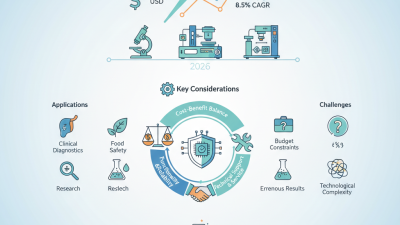
Evaluation Dimension What to Verify Relevant Standard or Reference Recommended Evidence Suggested Weight Priority
Product Application Fit Confirm that the equipment supports the intended microbiology workflow, sample volume, operating temperature, culture method, and laboratory capacity. Applicable laboratory procedures, validated user requirements, and equipment specifications. User Requirement Specification, technical datasheet, application consultation, and demonstration results. 20% Critical
Temperature Performance Evaluate temperature range, uniformity, stability, recovery time, alarm functions, and the effect of ambient conditions. Calibration procedures and applicable laboratory equipment safety and performance requirements. Factory test report, calibration certificate, temperature-mapping report, and alarm test records. 12% Critical
Contamination Control Review airflow design, filtration, chamber materials, cleanability, door sealing, and procedures for preventing cross-contamination. Good laboratory practice, biosafety procedures, and the intended containment classification. Airflow diagram, filter specifications, cleaning instructions, decontamination procedure, and site acceptance test. 15% Critical
Electrical and Product Safety Check electrical protection, grounding, insulation, over-temperature protection, emergency controls, and suitability for the destination country. Applicable electrical safety requirements and destination-market conformity rules. Declaration of conformity, safety test report, wiring diagram, user manual, and risk assessment. 10% Critical
Quality Management System Assess documented design controls, incoming inspection, production records, final testing, corrective actions, and change management. A certified quality management system, such as ISO 9001, where applicable to the supplier's operations. Valid certificate, audit report, inspection plan, batch records, and nonconformance procedure. 10% High
Calibration and Validation Support Determine whether the supplier can support installation qualification, operational qualification, performance qualification, and recurring calibration. Customer validation protocol and traceable measurement practices. IQ/OQ/PQ templates, calibration scope, traceability statement, service qualifications, and acceptance criteria. 8% High
Documentation Quality Review the completeness and clarity of manuals, preventive-maintenance schedules, spare-parts lists, troubleshooting guides, and software instructions. Document-control procedures and local regulatory or institutional requirements. Controlled manuals, revision history, service checklist, wiring diagrams, and translated documentation when required. 6% High
After-Sales Service Evaluate installation, training, response time, remote support, field-service coverage, warranty handling, and escalation procedures. Contractual service-level commitments and customer support requirements. Service-level agreement, support organization chart, training plan, warranty terms, and anonymized service records. 8% High
Spare Parts and Maintainability Check the availability, interchangeability, expected service life, lead time, and storage requirements of critical replacement parts. Preventive-maintenance plan and agreed equipment lifecycle requirements. Critical-spares list, price schedule, lead-time commitment, maintenance intervals, and parts obsolescence policy. 5% Medium
Total Cost of Ownership Compare purchase price with shipping, installation, validation, energy consumption, consumables, maintenance, calibration, and disposal costs. Lifecycle-cost analysis over the planned operating period. Itemized quotation, operating-cost estimate, warranty coverage, maintenance costs, and five-year lifecycle model. 4% Medium
Delivery and Export Capability Verify production capacity, realistic lead time, export documentation, packaging, installation conditions, and logistics responsibilities. Purchase contract, agreed Incoterms, import requirements, and site-readiness plan. Production schedule, packing specification, export references, shipping documents, and delivery-risk plan. 2% Medium
Total Evaluation Weight 100% Use a Weighted Scorecard

Recommended scoring method: assign each criterion a score from 1 to 5, multiply the score by the suggested weight, and require objective evidence before approving a supplier.

Leading China-Based Microbiology Equipment Manufacturers

China Top Microbiology Lab Equipment Suppliers?

Leading China-Based Microbiology Equipment Manufacturers serve research institutes, hospitals, food laboratories, and industrial testing centers. Their product ranges often include incubators, autoclaves, biosafety cabinets, colony counters, and laboratory refrigerators. Experienced manufacturers usually control key stages in-house, from stainless-steel fabrication to temperature testing. This can improve consistency and shorten communication during technical changes.

A reliable supplier should provide calibration records, material specifications, electrical details, and clear maintenance instructions. Ask how temperature uniformity is tested inside an incubator. Request sample inspection reports, not only polished catalog images. For biosafety cabinets, airflow verification and filter documentation deserve careful attention. Small details matter, especially door seals, alarm response, chamber drainage, and controller readability during long experiments.

No factory is flawless. That matters.

Some manufacturers may offer competitive pricing but weaker after-sales training. Others provide strong engineering support but slower customization. Buyers should compare production experience, quality procedures, export documentation, spare-part access, and response times. A practical evaluation may include a video factory audit, sample-unit inspection, and a written acceptance checklist. Independent verification remains valuable when equipment affects culture conditions or contamination control. The best partnership is not always the cheapest; it is the one that communicates clearly when a specification, delivery date, or performance target needs reconsideration.

Purchasing, Quality Control, and After-Sales Support

When choosing China’s top microbiology lab equipment suppliers, purchasing decisions should begin with verified specifications, not attractive prices. Ask for calibration records, material certificates, electrical requirements, and documented factory testing. A remote factory tour can reveal assembly conditions, storage practices, and testing equipment. Request a sample unit or inspection before placing a larger order. Small details matter, such as door seals, chamber drainage, cable length, and cleaning access.

Quality control should continue after delivery. Check the package for impact damage and compare serial numbers with the shipping documents. Test temperature uniformity with independent data loggers, especially in incubators and cold storage units. For sterilization equipment, review cycle records and confirm pressure readings against calibrated instruments. A written acceptance checklist reduces disputes. The lowest quotation is rarely the lowest total cost. It may exclude installation, validation, or replacement parts.

After-sales support deserves equal attention. Confirm warranty coverage, response times, spare-part availability, and remote troubleshooting procedures in writing. Ask whether technicians can provide installation guidance, operating training, and maintenance schedules. Keep photographs and service records for every repair. I once overlooked local voltage requirements during a purchase review, causing an avoidable delay. That mistake changed our checklist. Supplier promises can also sound stronger than actual service, so request references from laboratories with similar workloads. Clear communication helps, but measurable service commitments are more reliable.