
• NEWS AND UPDATES

    The latest updates regarding our products and our company

2026 Top Lab Equipment Suppliers for Global Buyers

Selecting reliable laboratory partners is becoming harder as global buyers face wider product ranges, tighter budgets, and changing delivery conditions. The 2026 Top Lab Equipment Suppliers for Global Buyers guide examines manufacturers and distributors through practical purchasing criteria. These criteria include product quality, calibration support, technical documentation, warranty coverage, lead times, and after-sales service.

A dependable supplier should provide more than polished product pages. Buyers need clear specifications, traceable testing records, installation guidance, and responsive technical assistance. A centrifuge may look suitable online, yet rotor compatibility, noise levels, maintenance access, and local voltage requirements can affect daily performance. The same applies to balances, incubators, microscopes, analytical instruments, and safety systems. Small details matter.

This overview draws on supplier experience, professional product evaluation, and publicly available business information. It considers whether companies serve research institutions, hospitals, universities, industrial laboratories, and quality-control teams. Regional availability also matters, especially when spare parts cross borders or engineers need to travel. No ranking can predict every purchasing outcome. Supplier information changes, and some service claims require direct verification. That limitation deserves attention.

For global buyers, the strongest lab equipment suppliers combine dependable products with transparent communication. They explain limitations instead of hiding them. They also help customers plan installation, training, validation, and long-term maintenance. This guide is intended to support informed comparisons, not replace technical review or internal procurement checks. Careful buyers should request current quotations, confirm compliance requirements, and test critical assumptions before signing a contract.

2026 Top Lab Equipment Suppliers for Global Buyers

What Defines a Leading Lab Equipment Supplier in 2026

A leading laboratory equipment supplier in 2026 offers more than instruments and attractive prices.

It provides traceable calibration, clear validation records, responsive service, and stable replacement-part access. MarketsandMarkets estimated the laboratory equipment market could grow from about USD 27.8 billion in 2023 to USD 35.4 billion by 2028. This growth increases buyer choice, but also makes technical evaluation harder.

Reliable suppliers connect equipment performance with daily laboratory realities. Their systems should support data integrity, cybersecurity, energy efficiency, and recognized quality standards. ISO/IEC 17025 remains a useful reference for testing and calibration competence.

Buyers should also examine service response times, installation training, software updates, and documented maintenance procedures. A low purchase price may hide expensive downtime. No supplier is perfect. Even experienced providers can miss local workflow differences or underestimate staff training needs.

Tips:

Request a sample calibration certificate. Ask for average repair times. Compare five-year ownership costs, not only quotations. Check whether the supplier can provide local technical support and spare parts. For critical workflows, run a site trial before purchase. A practical test often reveals noise, heat, awkward interfaces, or cleaning problems that brochures rarely mention.

Core Categories of Laboratory Equipment and Their Applications

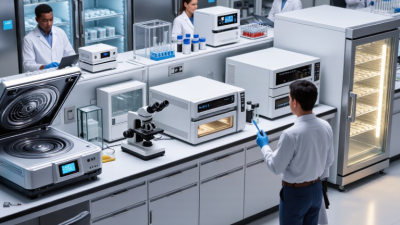
Laboratory equipment suppliers in 2026 serve workflows rather than isolated products. Analytical instruments measure composition, purity, and concentration in food, environmental, pharmaceutical, and industrial samples. Spectrometers, chromatographic systems, and balances need stable conditions, trained operators, and traceable calibration records. A precise instrument is useless when sample preparation is inconsistent.

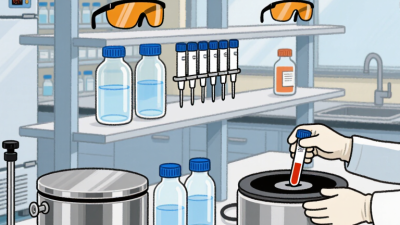
Sample preparation equipment includes centrifuges, homogenizers, mixers, digestion systems, and filtration units. These tools support safer, repeatable handling before testing.

Life science laboratories also rely on incubators, thermal cyclers, microscopes, and cell culture systems. Their applications range from microbial observation to molecular analysis. Small temperature changes matter. They can alter results.

Cold storage, freezers, drying ovens, and clean workstations protect samples and reduce contamination risks. Safety equipment, including fume extraction, spill-control tools, and protective enclosures, supports responsible daily operations. Buyers should check voltage, service coverage, spare-part access, installation space, and operator training. A perfect specification sheet can still disappoint when maintenance is difficult. That mistake happens often. Local standards and documentation requirements also vary, so procurement teams should verify them before purchase. Balancing price, durability, measurement accuracy, and long-term support remains a practical challenge for global buyers.

How Global Buyers Should Evaluate Supplier Quality and Compliance

For 2026 laboratory equipment sourcing, supplier quality should be tested, not assumed. The ISO Survey 2022 recorded more than 1.26 million ISO 9001 certificates worldwide, yet certification alone cannot prove consistent production. Global buyers should request current certificates, defined scopes, audit dates, and the certification body’s accreditation status. A certificate with an unclear scope is a warning.

Ask for calibration records linked to national or international standards. Check serial numbers, uncertainty values, calibration intervals, and maintenance history. The WHO Laboratory Quality Management System handbook emphasizes traceability, documented procedures, competent staff, and corrective action. These details become visible during a factory audit: labeled reference instruments, controlled storage, clean assembly areas, and signed inspection records. Small gaps matter.

Compliance also requires evidence after shipment. Request installation qualification, operational qualification, user training records, spare-parts commitments, and response-time targets. OECD Good Laboratory Practice principles place strong emphasis on documented methods, equipment suitability, and data integrity. Suppliers should explain how they manage nonconforming products and CAPA records. Ask for a redacted example.

A practical scorecard can rate quality, documentation, service, cybersecurity, and regulatory readiness separately. Do not reward the lowest price too quickly. It may conceal weak validation or expensive downtime. I have seen procurement teams overvalue polished presentations. That is an avoidable mistake. Still, audits are imperfect, and remote evidence can miss problems. Buyers should repeat critical checks before contract renewal.

International Purchasing, Logistics, Installation, and Technical Support

2026 Top Lab Equipment Suppliers for Global Buyers

International Purchasing, Logistics, Installation, and Technical Support

Global laboratory buyers now assess more than product specifications. They examine documentation, delivery control, installation capacity, and post-sale response. The World Bank’s 2023 Logistics Performance Index covers 139 economies and measures customs, infrastructure, tracking, and timeliness. These factors directly affect international laboratory projects. A supplier should provide export documents, shock-resistant packaging, shipment tracking, and realistic delivery milestones. Details matter. One missing certificate can delay customs clearance for days.

Installation is equally important. Qualified engineers should verify site conditions, connect utilities, perform commissioning, and record acceptance results. Technical support should include remote diagnosis, spare-parts planning, calibration guidance, and user training. ISO/IEC 17025 emphasizes competence and reliable measurement processes, making traceable calibration essential for testing laboratories. In practice, a low equipment price can become expensive after poor installation or slow support. I have seen purchasing teams focus too heavily on quotations. That decision sometimes ignores downtime, training gaps, and local service coverage. Suppliers should publish response targets and escalation procedures. The OECD’s Main Science and Technology Indicators show continued global investment in research, increasing pressure on laboratories to maintain dependable workflows. Yet support promises are not enough. Buyers should request service records, installation checklists, warranty terms, and references from comparable facilities before signing international contracts.

Emerging Trends Shaping the Global Laboratory Equipment Market

The global laboratory equipment market is shifting from standalone instruments toward connected, data-rich workflows. Fortune Business Insights estimated the market at USD 16.97 billion in 2023. Its 2024 report projects growth to nearly USD 28 billion by 2032. This expansion reflects stronger demand for automation, traceability, and faster testing.

Automation is gaining practical importance. MarketsandMarkets projects the laboratory automation market will grow from about USD 6.1 billion in 2023 to USD 9.7 billion by 2028. In real laboratories, this means robotic sample handling, remote equipment monitoring, and software-based maintenance alerts. Energy efficiency is also becoming a purchasing factor. Low-temperature storage, ventilation, and sterilization can consume substantial electricity. Buyers now examine lifetime operating costs, not only purchase prices.

The trend is useful, but not perfectly smooth. Smaller laboratories may struggle with integration fees, staff training, and unreliable network infrastructure. That assumption deserves testing. Equipment suppliers should provide modular systems, clear calibration records, cybersecurity controls, and accessible technical support. According to the International Energy Agency, data centers and digital services are increasing electricity demand worldwide, reminding laboratories that connected systems still carry an environmental cost. Practical procurement should balance automation with repairability, local service capacity, and transparent performance data. Fancy interfaces help less when technicians cannot restore a failed instrument quickly.