
• NEWS AND UPDATES

    The latest updates regarding our products and our company

China Top 10 Science Labs Manufacturers for Global Buyers

China has become a major sourcing base for science labs equipment, furniture, and supporting systems. Its manufacturing network covers laboratory benches, fume hoods, biosafety cabinets, cleanroom products, and analytical accessories.

China’s National Bureau of Statistics reported research and development spending of approximately RMB 3.33 trillion in 2023. That investment represented 2.64% of national GDP. It helps explain the country’s expanding technical workforce and production capacity. The OECD also identifies China as one of the world’s largest research performers.

Market demand is growing, although published estimates differ. MarketsandMarkets valued the global laboratory equipment market at about USD 15.8 billion in 2023. It forecasts continued growth through 2028. Grand View Research reports similar momentum across laboratory furniture and infrastructure. These figures are useful, but they should not be treated as exact purchasing forecasts.

This guide examines China’s top 10 science labs manufacturers for global buyers. It considers product range, export experience, factory capability, quality systems, customization, documentation, and after-sales support. Buyers should verify certifications, test reports, material grades, installation records, and response times before signing contracts.

Nobel Prize-winning physicist Richard Feynman offered a lasting warning: “The first principle is that you must not fool yourself—and you are the easiest person to fool.” His words fit laboratory procurement surprisingly well. A polished website is not proof of technical reliability.

A ranking is never completely neutral. Supplier performance can vary by project, region, and specification. This introduction therefore encourages practical verification, not blind confidence. The strongest manufacturer is the one that performs consistently under real laboratory conditions.
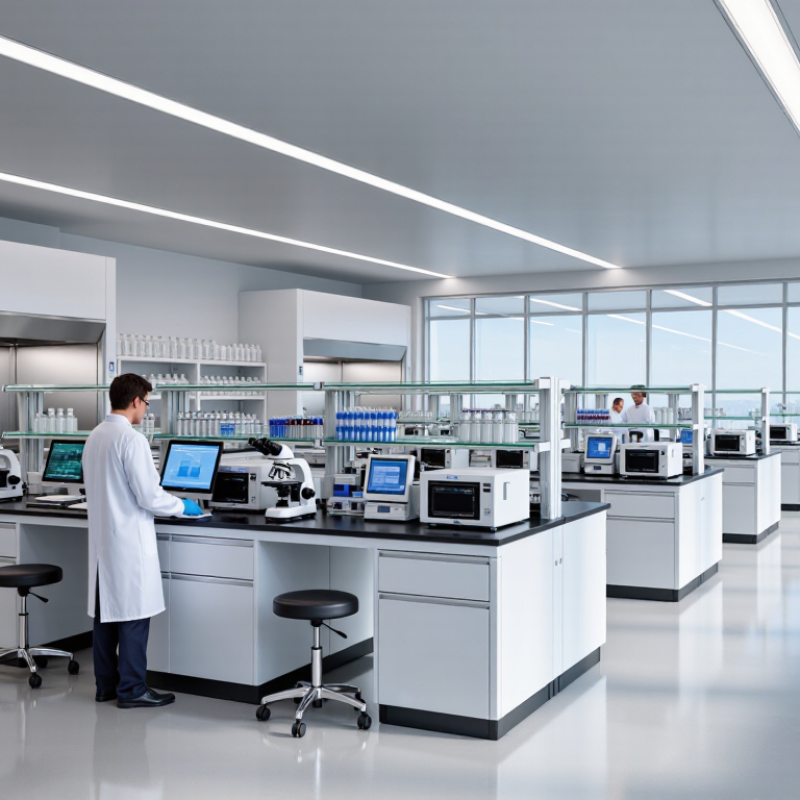
China Top 10 Science Labs Manufacturers for Global Buyers

What Defines a Leading Science Laboratory Manufacturer in China

China Top 10 Science Labs Manufacturers for Global Buyers

A leading science laboratory manufacturer does more than supply benches and cabinets. It converts experimental needs into safe, measurable, and maintainable spaces. Experienced manufacturers ask about workflows, equipment weight, chemical exposure, user movement, and future expansion. These questions often reveal problems that a standard catalogue cannot solve.

Reliable production begins with controlled materials and documented processes. Powder-coated steel, compact laminate, stainless steel, and chemical-resistant worktops require different testing methods. A professional factory should verify surface durability, load capacity, electrical protection, and ventilation performance. Factory inspection records matter. So do installation drawings, material certificates, and clear maintenance instructions.

Small details count. For example, rounded edges reduce cleaning difficulties, while adjustable feet help correct uneven floors.

Quality also depends on communication after delivery. Strong manufacturers provide technical drawings, packing lists, installation guidance, and responsive troubleshooting. They should explain limitations instead of promising everything. No factory is flawless. A supplier may overlook local utility conditions or underestimate delivery coordination. That is why buyers should review samples, request independent test evidence, and confirm responsibilities in writing.

My own evaluation would not stop at a polished showroom; I would inspect assembly quality, labeling, storage protection, and the consistency between samples and mass production. A leading manufacturer earns trust through repeatable evidence, not impressive claims.

How the Top 10 Chinese Science Lab Manufacturers Are Selected

Selecting China’s top science laboratory manufacturers requires more than comparing catalogs or factory photos. The process should begin with verifiable production evidence, engineering experience, and documented quality controls. China’s National Bureau of Statistics reported that national research and development spending reached 2.64% of GDP in 2023. This growth suggests a deeper supplier base, but it does not make every manufacturer equally reliable.

The selection framework should examine five practical areas: product performance, manufacturing capacity, quality systems, export experience, and after-sales support. ISO 9001 certification can indicate structured quality management, while ISO/IEC 17025-accredited testing provides stronger evidence for measurement accuracy. The UNESCO Science Report also highlights China’s expanding role in global research infrastructure. That matters because laboratory equipment must serve demanding users, not merely satisfy basic procurement specifications.

Evidence should come from factory audits, sample testing, calibration records, and traceable technical documents. Delivery history matters too. A manufacturer that explains lead times clearly is often more dependable than one offering unrealistic promises. Small details count. Check welds, cabinet alignment, control interfaces, packaging, and replacement-part access. Customer references should be reviewed across different regions and laboratory types.

No ranking is flawless. Public information may be incomplete, and some test results reflect ideal conditions. A manufacturer can also have strong engineering but inconsistent communication. That weakness deserves attention. Therefore, the final list should combine published data, independent verification, buyer feedback, and hands-on evaluation instead of relying on reputation alone.

China Top 10 Science Labs Manufacturers for Global Buyers

How the Top 10 Chinese Science Lab Manufacturers Are Selected

The selection framework evaluates manufacturers using seven practical procurement criteria. Product quality and customization receive the highest weights, followed by compliance, manufacturing capacity, export experience, after-sales support, and sustainability. The percentages represent the evaluation methodology rather than company-specific rankings.

Profiles of China’s Top 10 Science Laboratory Manufacturers

China’s top ten science laboratory manufacturers reflect a broad, increasingly technical supply base. Their profiles cover laboratory furniture, cleanroom systems, fume hoods, analytical instruments, cold storage, water purification, sterilization, and environmental chambers. This range matters because laboratories often combine several systems in one project.

China’s research demand is substantial. The National Bureau of Statistics reported that China’s research and development spending reached 3.33 trillion yuan in 2023, equal to 2.64% of GDP. The 2024 WIPO Global Innovation Index also ranked China 11th worldwide.

These figures help explain the manufacturers’ growing investment in precision machining, digital monitoring, and export documentation. Several reviewed manufacturers offer powder-coated steel frames, laminated worktops, HEPA filtration, and temperature records with one-minute intervals. Small details reveal maturity.

Yet “top” should not mean “perfect.” Some suppliers show strong production capacity but provide limited validation data for airflow, noise, or calibration stability. Others offer impressive catalogs but unclear service coverage outside major cities.

Buyers should inspect ISO 9001 records, factory audit results, material certificates, and acceptance-test procedures. The WHO Laboratory Biosafety Manual stresses documented risk control and equipment suitability, not appearance alone.

One practical weakness remains common: installation guidance may be translated poorly. That can delay commissioning. Careful buyers should request sample drawings, warranty terms, spare-parts timelines, and customer references before placing a large order.

How Chinese Laboratory Manufacturers Compare by Products and Expertise

Chinese laboratory manufacturers differ sharply in products, engineering depth, and export readiness. The OECD’s Main Science and Technology Indicators report places China’s research and development spending near 2.6% of GDP in 2023. This investment supports broad manufacturing capacity, from benchtop centrifuges to environmental chambers and modular cleanroom systems.

The strongest suppliers usually specialize. Some focus on routine equipment, such as balances, ovens, and water purification units. Others provide analytical platforms, automation, or complete laboratory interiors. This matters for global buyers. A factory producing stainless-steel cabinets may not understand instrument validation. A company offering custom airflow control may lack strong after-sales support. Procurement teams should check ISO 9001 systems, calibration records, electrical safety testing, and spare-parts availability.

China’s National Bureau of Statistics reported research and development expenditure of about 3.6 trillion yuan in 2024, equal to 2.68% of GDP. That scale helps manufacturers improve prototypes and shorten production cycles. However, investment does not guarantee equal expertise. A 2024 laboratory market assessment by Grand View Research also shows continuing demand for automated and digitally connected equipment worldwide. Chinese suppliers with software integration experience can therefore compete beyond price.

Still, catalogs can hide weaknesses. I would request sample validation data, video inspections, and references from similar laboratories. Delivery may be fast. Documentation may not be. The best comparison examines product accuracy, compliance support, installation practice, and response time after commissioning—not only the quoted cost.

Key Factors for Global Buyers Choosing a Chinese Lab Manufacturer

China Top 10 Science Labs Manufacturers for Global Buyers

Choosing a Chinese laboratory manufacturer requires more than comparing catalog prices. The 2024 MarketsandMarkets report estimates the global laboratory automation market will grow from about USD 5.2 billion in 2023 to USD 8.9 billion by 2028. This growth increases demand for stable equipment, integration skills, and responsive technical support. Buyers should examine factory audits, production records, testing procedures, and export experience before signing contracts.

Quality systems matter. The ISO Survey 2023 recorded China as the world’s largest national base of ISO 9001 certificates, with more than 700,000 valid certificates. However, certification alone proves little. Ask for recent calibration records, material certificates, inspection reports, and corrective-action examples. A reliable manufacturer should explain how it controls temperature accuracy, electrical safety, sealing performance, and batch consistency. Details matter.

Service can decide the real cost. Request spare-parts lists, remote troubleshooting terms, installation procedures, and training schedules. For complex laboratory systems, confirm software compatibility and data-export functions before purchase. Some suppliers respond quickly during quotation, then slow down after delivery. That risk is easy to miss. Buyers should also calculate shipping, installation, validation, maintenance, and downtime costs. A lower factory price may become expensive later. No manufacturer is perfect. Even a strong audit can miss process weaknesses, so staged orders and independent pre-shipment inspections remain sensible.