
• NEWS AND UPDATES

    The latest updates regarding our products and our company

Why Are Biology Lab Kits Important for Schools?

Biology becomes easier to understand when students can observe evidence, not just read about it. A cell diagram introduces structure, but a microscope slide can reveal texture, shape, and variation. Biology lab kits give schools organized materials for turning concepts into practical activities. They can include prepared slides, hand lenses, simple measuring tools, specimen containers, and clear instructions. The exact contents should match students’ ages, lesson goals, and available classroom equipment.

When students compare leaf surfaces or record how seeds change over several days, they practice careful observation and data recording. A well-planned kit also helps teachers prepare lessons with limited setup time. Clear labels, reusable tools, and activities with realistic time requirements make a difference. Small details matter. A missing dropper or unclear instruction can interrupt a lesson.

Good kits support learning; they do not replace teacher guidance or sound lesson planning. Schools should check that materials are durable, instructions are understandable, and activities follow appropriate classroom safety procedures. They should also consider whether the kit encourages questions, rather than giving students only steps to copy. Not every activity will work perfectly: results can vary with light, temperature, or handling. That variation can prompt useful discussion, but it can also frustrate students if expectations are unclear. Biology lab kits are most valuable when teachers connect hands-on observations to accurate explanations and help students reflect on what their results do—and do not—show.
Why Are Biology Lab Kits Important for Schools?

What Biology Lab Kits Contain

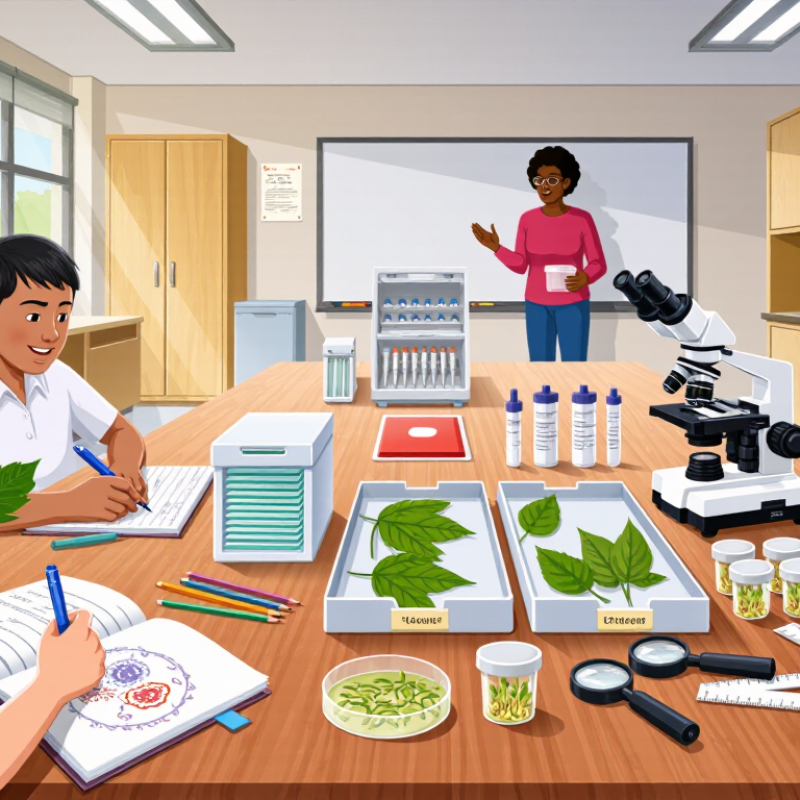
Biology lab kits usually combine tools for observing, measuring, and recording living systems. A classroom set may contain microscopes, prepared slides, plastic droppers, test tubes, small beakers, and measuring cylinders. Some include trays, forceps, safety goggles, and gloves. These items let students examine structures closely and practise handling equipment carefully. Small details matter. A worksheet or lab notebook can guide observations, while labelled containers help keep samples organized. The exact contents vary with grade level and curriculum, so teachers should check that each activity matches students’ skills.

Many kits also include safe sample materials, such as seeds, leaves, or prepared specimens, plus simple models or diagrams. These help students compare what they see under a microscope with larger biological structures. A good kit is not just a box of equipment; clear instructions and suitable safety guidance are part of its value. Teachers still need to review materials before class and explain proper cleanup. Sometimes a kit looks complete but lacks enough slides or droppers for every group. That is easy to overlook, and it can slow a lesson. Checking quantities and replacing worn items keeps practical work more manageable.

How Lab Kits Connect Biology Concepts to Practical Work

Biology lab kits help students connect textbook ideas with evidence they can see and record. A diagram may show how cells are arranged, but a prepared slide viewed under a microscope makes those structures more tangible. Students can adjust the focus, sketch what they observe, and compare their notes with a labeled diagram. Small details matter.

Kits can also support simple investigations, such as tracking seed growth under different light conditions. Students measure shoots, record dates, and consider whether their results match their predictions. This builds practical skills alongside biology knowledge: careful observation, fair comparisons, and clear data recording. A kit does not guarantee a memorable lesson, though. Some observations are unclear, and results may vary. That is useful, too, when teachers guide students to question what happened rather than rush toward a neat answer. Activities should suit learners’ ages, and any lab work needs appropriate supervision and safety instructions.

Tips: Ask students to write a prediction before starting. Keep measurements consistent, and leave time to discuss unexpected results. A brief reflection can reveal what the activity taught—and what remains uncertain.

Why Biology Lab Kits Matter: Connecting Concepts to Practical Work

Using a microscope helps students connect cell biology to direct observation. This chart shows the approximate field-of-view diameter at three magnifications, assuming a 10× eyepiece with an 18 mm field number. As magnification increases, the visible area decreases—helping students understand why locating a specimen at low power is useful before viewing it in greater detail.

Which Scientific Skills Students Develop Through Experiments

A biology lab kit gives students a chance to test ideas they have only seen in diagrams. They might compare how seeds grow under different light conditions, using a ruler to record small changes each day. This routine builds careful observation and measurement. Students learn to form a testable question, predict an outcome, and keep other conditions as steady as possible. Those steps make variables less abstract. They also reveal how easily a rushed measurement can distort a result.

Experiments develop patience, data literacy, and clear communication. Students can organize their observations in a table, notice patterns, and explain what the evidence does or does not support. A result that differs from the prediction is useful, not a failure. Mistakes happen. A spilled sample or uneven watering may prompt students to check their procedure and try again. They also practice sharing equipment, following safety instructions, and listening to different interpretations. Still, a kit alone cannot guarantee meaningful learning. Teachers need to connect each activity to a clear question and allow time for discussion. Some experiments feel too tidy on paper; real classroom results can be inconsistent, and that uncertainty is worth examining.

Why Are Biology Lab Kits Important for Schools? — Which Scientific Skills Students Develop Through Experiments
Experiment or Activity Scientific Skills Practiced What Students Learn Observable Evidence of Learning
Well-designed biology lab kits give students opportunities to investigate living systems through hands-on activities. The examples below connect common school experiments with skills students can practice and demonstrate.
Microscope observation of plant or animal cells Using a microscope, careful observation, scientific drawing, recording observations Students examine prepared or classroom-safe specimens, adjust focus and magnification, and identify visible cell structures appropriate to their grade level. A labeled drawing or observation record that identifies the specimen, magnification, and visible features.
Seed germination under different conditions Forming a testable question, identifying variables, measuring, collecting data Students compare how a chosen condition, such as water availability, relates to germination while keeping other conditions as consistent as possible. A data table recording germination over time, followed by a conclusion based on the observations.
Osmosis using plant tissue Making predictions, measuring mass or length, comparing results, interpreting data Students investigate how water movement across cell membranes can affect plant tissue placed in solutions with different concentrations. Before-and-after measurements and a graph or written explanation describing the pattern observed.
Enzyme activity investigation Controlling variables, following a procedure, timing reactions, evaluating evidence Students examine how a factor such as temperature or pH may affect enzyme activity, using an appropriate classroom model and safe materials. A comparison of reaction results across conditions, with variables and limitations clearly noted.
Ecosystem sampling in a schoolyard or simulated habitat Sampling, classification, counting, recognizing patterns, considering sampling bias Students record organisms or other observable features in a defined area and discuss how sampling methods influence the data collected. A consistent field record with a description of the sampling method and a summary of findings.
DNA extraction from fruit using classroom materials Following a sequence of steps, making observations, connecting models to biological concepts Students observe material precipitated from a cell mixture and discuss that the visible material is a crude extract, not a single purified DNA molecule. A procedure record and a brief explanation distinguishing the classroom model from DNA’s structure inside cells.
Shared skills across investigations Lab safety, teamwork, accurate measurement, data recording, evidence-based communication Students practice using equipment responsibly, documenting methods and results, and supporting conclusions with observations rather than assumptions. Completed lab notes, safe equipment handling, collaborative participation, and a conclusion linked to recorded evidence.

How Kits Support Safe and Inclusive Classroom Learning

Biology lab kits can help teachers manage risks before students begin an experiment. When materials are portioned and clearly labeled, fewer containers need to be handled at each table. Protective eyewear, gloves, and cleanup supplies should match the activity, not simply fill a standard kit. Teachers still need to review instructions, check materials, and follow their school’s safety procedures. A kit is a starting point.

Clear, repeatable steps can make practical science more accessible. Illustrated instructions, large-print labels, and materials with distinct shapes or colors support students with different reading, vision, or learning needs. Stable trays and lightweight tools can help students with limited dexterity take part more comfortably. Short task cards also let students work at different speeds without making anyone feel singled out. Small changes matter.

Inclusion takes planning. Teachers can offer roles such as observing, recording results, or handling equipment, while making sure every student has a meaningful way to contribute. They should also consider allergies, sensory sensitivities, and whether an activity requires close adult supervision. A neatly packed kit cannot anticipate every classroom need; sometimes an activity needs adjustment, or a better explanation. That is worth noticing. When teachers invite feedback and revise instructions, kits can support safer, more thoughtful learning.

What Schools Should Consider When Selecting Biology Lab Kits

Selecting biology lab kits starts with the lessons students will actually perform. A kit for observing leaf cells needs clear slides, safe stains, and microscopes suited to the class. A kit for studying ecosystems may need sampling tools and simple data sheets instead. Match each activity to grade level, learning goals, and available lesson time.

Safety deserves close attention. Check that materials are age-appropriate, instructions are readable, and protective equipment is included where needed. Teachers should also review storage requirements, disposal guidance, and any allergy or sensitivity concerns. Small details matter: a missing dropper can stall a whole group, while crowded worktables can make careful handling harder. No checklist catches everything.

Consider how many students will share each kit and whether supplies can be replenished. Durable trays and reusable tools may reduce replacement needs, but consumables still require a realistic budget. Ask whether the kit supports different learning needs, with clear diagrams, large labels, or tasks that students can complete in pairs. Check that the teacher guide explains setup, likely observations, and common sources of error. It is worth testing one activity before ordering a full class set; instructions that look clear on paper can feel less clear in a busy classroom. A perfect kit is unlikely. The useful one fits the room, the students, and the science being taught.