
NEWS AND UPDATES
The latest updates regarding our products and our company

What Are the Best Laboratory Supplies from China?
Choosing the best laboratory supplies from China requires more than comparing prices on a marketplace. It requires evidence.
China’s scientific manufacturing base has expanded alongside its research investment. The OECD’s Main Science and Technology Indicators report shows China’s research and development spending has reached roughly 2.5% of GDP. UNESCO’s Science Report also identifies China as one of the world’s largest R&D performers. This scale supports broad production, from glassware and pipette tips to centrifuge tubes, microscopes, and analytical instruments. Yet manufacturing capacity does not guarantee consistent quality. That distinction matters.
A reliable purchasing process should examine ISO 9001 or ISO 13485 certification, batch traceability, certificates of analysis, material specifications, and documented quality-control procedures. For sterile products, buyers should verify sterilization methods, expiry dates, packaging integrity, and relevant regulatory requirements. The WHO Laboratory Biosafety Manual, fourth edition, emphasizes risk-based selection, proper containment, and dependable equipment maintenance. These principles apply even to routine items such as gloves, tubes, and disposable filters.
Practical testing remains essential. Request samples first. Check whether pipette tips fit your instruments, whether tubes survive centrifugation, and whether labels remain readable inside cold storage. A lower quotation may hide weaker plastics, inconsistent dimensions, or delayed technical support. No supplier is perfect. Even established factories can make occasional mistakes. The best laboratory supplies usually come from manufacturers that communicate clearly, document performance, and accept reasonable inspection. This article examines the strongest product categories, supplier credentials, and purchasing checks for laboratories seeking value without compromising safety or reliability.
Defining the Main Categories of Laboratory Supplies from China
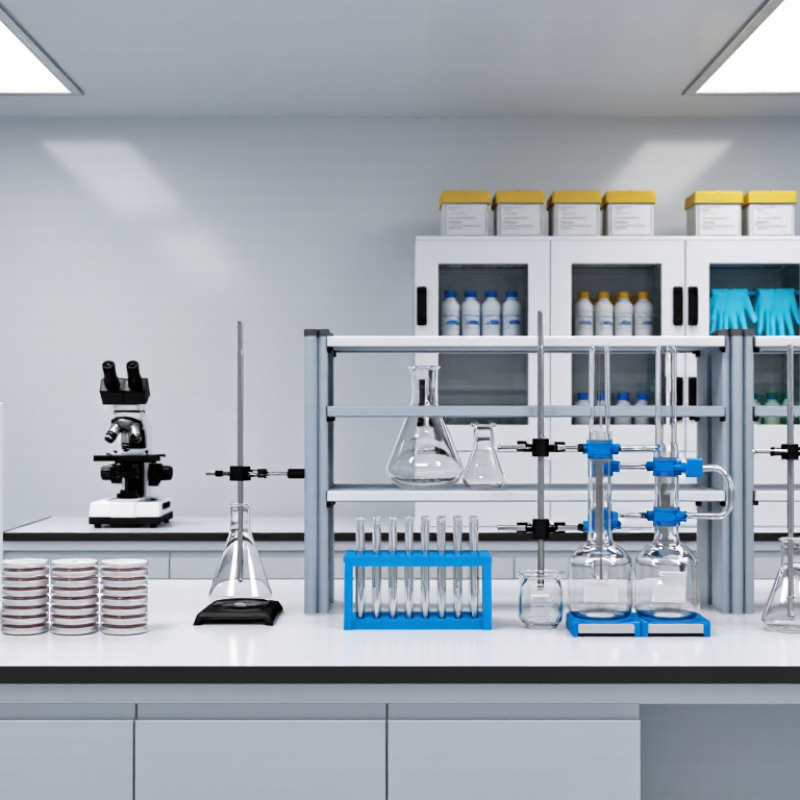
Laboratory supplies from China cover several practical categories, each serving a different stage of laboratory work. Glassware includes beakers, flasks, test tubes, and volumetric containers. Borosilicate glass is valued for heat resistance and chemical stability. Plasticware includes pipette tips, sample tubes, culture plates, and disposable containers. Buyers should check material grade, sterility, dimensional accuracy, and packaging quality.
Equipment forms another major category. Common items include centrifuges, balances, water baths, mixers, microscopes, and temperature-controlled storage units. Their value depends on calibration, stable performance, clear manuals, and accessible technical support. Consumables deserve equal attention. Filters, membranes, gloves, labels, and chromatography accessories can affect test accuracy. A low price means little when a filter clogs early or a label loses adhesion.
Safety and storage supplies complete the main categories. These include laboratory coats, protective eyewear, spill-control materials, chemical cabinets, and secondary containment trays. Reliable sourcing requires reviewing specifications, inspection records, test reports, and batch traceability. Photos are helpful, but they cannot replace a sample inspection. Small defects matter. A slightly loose cap can compromise a sample. No catalog is flawless. Product descriptions may also omit important details, such as tolerance limits or storage conditions. Comparing samples against written requirements creates a more dependable purchasing process. Local regulations and laboratory procedures should guide final selection.
Evaluating Quality, Safety, and Manufacturing Standards
What Are the Best Laboratory Supplies from China?
When evaluating laboratory supplies from China, I inspect more than packaging and price. Quality starts with controlled materials, stable dimensions, and clear batch identification. Reliable manufacturers should maintain documented quality systems, such as ISO 9001 or other relevant standards. For medical or sterile applications, additional controls may apply. Production records, equipment calibration, and worker training also reveal manufacturing discipline.
Safety requires practical evidence. I check chemical compatibility, temperature tolerance, leakage resistance, and surface cleanliness. For sterile products, suppliers should provide sterilization validation and packaging integrity data. Certificates of analysis are useful, but they should match the exact batch supplied. Independent testing can confirm performance, especially for plasticware, glassware, filters, and protective equipment. I have found that attractive certificates do not always prove consistent quality. That remains an uncomfortable lesson.
Tips: Request recent batch records, inspection criteria, and material specifications before ordering. Ask for samples from normal production, not specially prepared samples. Verify dimensions with simple laboratory tools. Check whether labels remain readable after refrigeration or cleaning. Keep communication documented. Small details matter.
No audit is perfect. A supplier may meet standards today and struggle during rapid expansion. Regular inspections, incoming checks, and performance reviews help identify changes early. Researchers should also consider user training, storage conditions, and disposal procedures. A safe product can still fail when handled carelessly.
What Are the Best Laboratory Supplies from China? - Evaluating Quality, Safety, and Manufacturing Standards
| Supply Category | Typical Applications | Key Material or Construction Requirements | Relevant Quality and Safety References | Recommended Quality Checks | Risk Level |
|---|---|---|---|---|---|
| Glass Beakers and Flasks | Mixing, heating, evaporation, and general laboratory preparation | Borosilicate glass 3.3 is preferred for improved thermal and chemical resistance; uniform wall thickness and polished rims are important. | ISO 3819 for beakers; ISO 1773 for narrow-neck boiling flasks; applicable national laboratory-glassware requirements | Visual inspection, dimensional measurement, thermal-shock testing where applicable, leak testing for stoppered vessels, and review of material certificates | Medium |
| Volumetric Flasks and Measuring Cylinders | Preparation and measurement of solutions at defined volumes | Low-expansion glass or chemically compatible plastic; clearly defined calibration mark, readable graduations, and stable shape are essential. | ISO 1042 for one-mark volumetric flasks; ISO 4788 for graduated measuring cylinders; ISO 3696 for laboratory water used in calibration-related work | Gravimetric volume verification at the stated reference temperature, graduation clarity, dimensional inspection, and calibration documentation | Medium to High |
| Pipette Tips and Disposable Consumables | Liquid transfer, sample preparation, molecular biology, and analytical testing | Low-binding polypropylene, consistent molding, clean packaging, and compatibility with the intended pipette system; sterile versions require validated sterilization. | ISO 8655 for piston-operated volumetric apparatus; ISO 11137 for radiation sterilization when applicable; ISO 14644 for controlled cleanroom environments where claimed | Fit testing, gravimetric accuracy checks, endotoxin or bioburden testing when relevant, particulate inspection, and verification of lot traceability | High |
| Centrifuge Tubes | Sample separation, storage, and centrifugation | Polypropylene is commonly used for chemical resistance and moderate heat resistance; tube geometry, cap seal, and rated centrifugal force must match the application. | Applicable ISO 11137 requirements for sterilized products; manufacturer-validated maximum relative centrifugal force and temperature limits | Leak testing, dimensional checks, cap-opening force, material compatibility review, and centrifuge testing at the declared operating limits | High |
| Filter Membranes and Syringe Filters | Particle removal, sample clarification, and sterile filtration of compatible liquids | Membrane chemistry, pore-size rating, housing material, extractables profile, and chemical compatibility must be selected for the fluid and process. | ASTM F316 for bubble-point-related testing; ISO 29463 for high-efficiency filtration where applicable; validated microbial retention methods for sterilizing filters | Bubble-point or integrity testing, flow-rate verification, extractables assessment, pore-size validation, and lot-specific certificates | High |
| Laboratory Safety Glasses | Protection from chemical splashes, impact hazards, and flying particles | Impact-resistant lenses, adequate side protection, optical clarity, secure fit, and compatibility with other personal protective equipment | EN 166, ANSI/ISEA Z87.1, or another applicable national eye-protection standard, depending on the destination market | Review of conformity markings, impact classification, lens clarity, frame inspection, fit evaluation, and chemical-splash suitability | High |
| Chemical-Resistant Gloves | Hand protection during chemical handling, sample preparation, and cleaning | Glove polymer, thickness, cuff length, dexterity, and permeation resistance must correspond to the specific chemical and exposure time. | EN ISO 374 for chemical and microorganism protection; ASTM D6319 or ASTM D6978 where applicable to the product and use case | Permeation and degradation data, pinhole inspection, tensile testing, size consistency, packaging integrity, and expiry-date verification | High |
| Laboratory Plasticware | Sample storage, reagent handling, transport, and routine testing | Polypropylene, polyethylene, or polystyrene should be selected according to chemical resistance, temperature range, clarity, and required rigidity. | Applicable ISO or ASTM material and performance methods; food-contact or medical-use requirements only when the intended application requires them | Dimensional inspection, closure compatibility, leak testing, chemical compatibility review, particulate inspection, and material identification | Medium |
| Laboratory Balances | Mass measurement, formulation, sample preparation, and quality control | Stable weighing platform, environmental protection, repeatable sensors, level indication, and documented readability and capacity. | OIML R 76 for non-automatic weighing instruments; ISO/IEC 17025 for calibration laboratories providing accredited calibration services | Repeatability, eccentric-load testing, linearity, sensitivity to vibration and temperature, calibration status, and service documentation | High |
| pH and Electrochemical Meters | Acidity, conductivity, oxidation-reduction, and ion-related measurements | Stable electrodes, temperature compensation, suitable measurement range, replaceable sensors, and traceable calibration solutions are required. | ISO/IEC 17025 for calibration activities; certified reference materials should be traceable to recognized national or international measurement standards | Calibration at multiple points, slope and offset evaluation, repeatability, response time, temperature compensation, and electrode-condition checks | High |
Note: Applicable standards depend on the product design, intended use, destination market, and regulatory classification. Supplier claims should be verified through current certificates, test reports, technical files, and lot traceability records.
Comparing Suppliers, Certifications, and Product Specifications
Chinese laboratory supplies can offer strong value, but supplier comparison must go beyond price. Compare manufacturing experience, export records, response speed, and quality procedures. The 2023 ISO Survey recorded more than one million ISO 9001 certificates worldwide. Certification is common. It is not automatic proof of product performance. Ask suppliers to provide current certificates, issuing bodies, certificate numbers, and matching factory addresses. Verify them independently.
Product specifications deserve equal attention. For plastic consumables, check material grade, volume tolerance, temperature range, sterility method, and packaging integrity. For balances or centrifuges, review accuracy, calibration intervals, operating speed, noise, and service support. ASTM and ISO test methods can make comparisons more objective. The WHO Laboratory Quality Management System guidance also emphasizes traceability, document control, and equipment maintenance. These details often reveal differences hidden by attractive quotations. A cheaper item may create higher costs through contamination, breakage, or repeated testing.
Tips: Request three samples from different production batches. Record dimensions, labeling, seals, and performance. Confirm whether specifications apply to every batch or only a prototype. Check the supplier’s corrective-action records when possible. Do not accept vague claims such as “laboratory grade.” One weakness remains: online certificates can be outdated or copied. Recheck them before payment. A practical audit, even a small one, is more reliable than polished sales language.
Selecting Supplies for Different Laboratory Applications
Selecting laboratory supplies from China requires matching each item to its application, not choosing by price alone. Two 2024 market analyses estimate the global laboratory supplies market at roughly USD 40–45 billion, with annual growth near 5%. This expansion increases supplier variety, but it also makes technical screening more important.
For molecular testing, choose low-binding tubes, filtered tips, and certified nucleic-acid-free consumables. Check lot numbers, sterilization records, and leakage tests.
For cell culture, prioritize uniform flask surfaces, reliable seals, and documented endotoxin limits.
Analytical laboratories need volumetric glassware with stated tolerances, stable balances, and calibration records traceable to ISO/IEC 17025 standards.
Clinical laboratories should also review ISO 15189-related quality controls, especially for specimen containers and temperature-sensitive storage.
The application changes everything.
For teaching laboratories, durable polypropylene ware may offer better value than premium glass. Field teams may need insulated transport boxes, compact centrifuges, and rechargeable equipment.
China’s manufacturing base supports many customized formats, including small batches, but specifications can vary between production lots.
I once treated a supplier’s “high precision” claim as sufficient evidence; it was not. Request samples, compare measured performance, and audit packaging before placing a large order.
Grand View Research’s 2024 market analysis also identifies disposables as a major growth segment, which makes plastic quality, waste handling, and supply continuity practical purchasing concerns.
Managing Costs, Customization, Shipping, and After-Sales Support
What Are the Best Laboratory Supplies from China?
The best laboratory supplies are not always the cheapest. For glassware, racks, pipette tips, and centrifuge consumables, compare total landed cost. Include tooling, inspection, packaging, freight, duties, and replacement rates. A supplier should provide material certificates, dimensional tolerances, batch records, and sample approval. ISO 9001 certification is useful, but it does not replace product testing. That distinction is easy to miss.
Customization can reduce waste, especially for tray sizes, labels, closures, and instrument compatibility. Ask for a technical drawing before production. Confirm minimum order quantities, mold ownership, and revision control in writing. Small design changes may affect validation and delivery. Sometimes, a standard item is safer. Customization is not automatically better.
Shipping needs a realistic buffer. UNCTAD reports that over 80% of global merchandise trade by volume moves by sea. The World Bank’s 2023 Logistics Performance Index ranked China 19th, with a score of 3.7 out of 5. These figures show strong logistics capacity, not guaranteed punctuality. Use shock-resistant packaging, humidity protection, and tracking milestones. After-sales support should include response times, replacement rules, and corrective-action reports. A video inspection before dispatch can prevent disputes. Still, my checklist is not perfect. Local regulations, laboratory validation, and changing freight conditions can alter the final decision.
What Are the Best Laboratory Supplies from China? — Managing Costs, Customization, Shipping, and After-Sales Support
The chart shows a transparent USD 10,000 procurement budget for a laboratory supply order, divided into product cost, customization, packaging, international shipping, import-related charges, and after-sales support.
Product cost remains the largest budget component, while customization, logistics, and after-sales support should be included early to avoid unexpected landed costs.
Related Posts
-
10 Tips for Choosing Laboratory Supplies and Equipment
-

2026 Best Lab Apparatus for Innovative Experiments and Research?
-

China Top 10 Science Labs Suppliers for Global Buyers
-
Top 10 Scientific Equipment Suppliers Worldwide?
-
What Is the Best Scientific Lab Equipment to Buy in 2026?
-
2026 Top Lab Equipment Suppliers for Global Buyers
Schedule
Monday to Thursday:
8:15 – 17:00
Friday:
8:00-15:00
Address
Leonardo Da Vinci, 10
Valencia Technology Park
46980 Paterna, Valencia, SPAIN
Real Laboratory SL
info@site_e1c8a3bd-d539-4d7f-8695-37f21373de39
Teléfono: +34 96 136 61 07