What Are the Top Types of Scientific Equipment in 2026?
What Are the Top Types of Scientific Equipment in 2026?
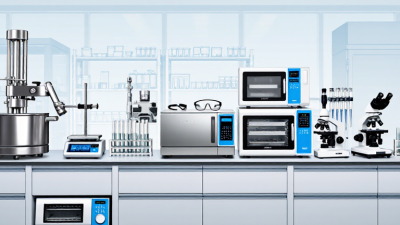
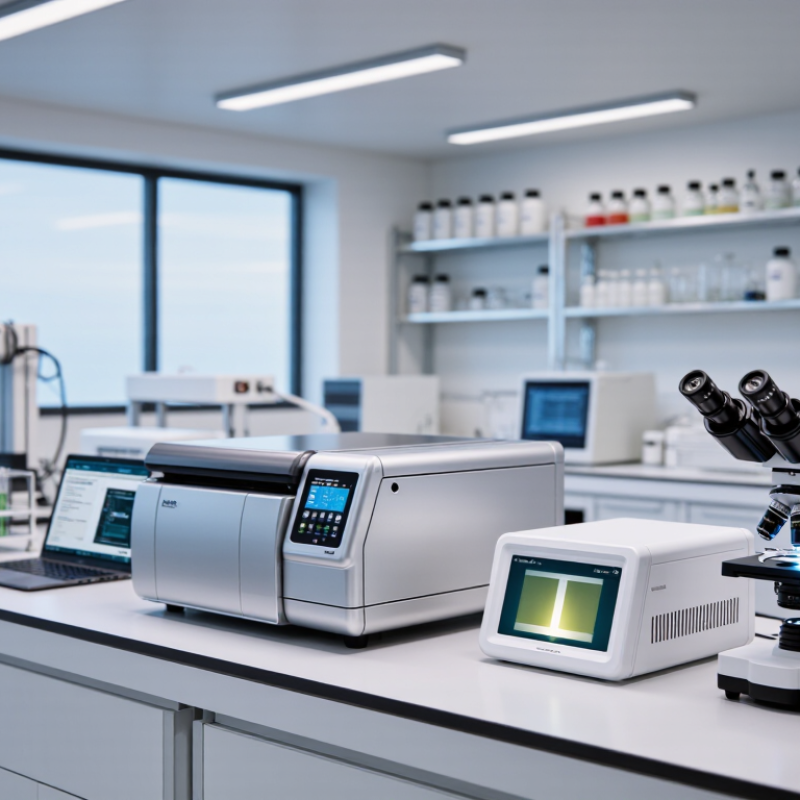
A modern lab is often recognized by its instruments: a spectrometer beside a laptop, a centrifuge humming on the bench, or a microscope focused on a thin, glowing sample. In 2026, scientific equipment will continue to shape how researchers measure, observe, and test ideas. This overview looks at major categories, from analytical instruments and imaging systems to sample-preparation tools, environmental monitors, and laboratory automation.
Physicist Lord Kelvin, whose work relied on precise measurement, is widely credited with saying, “To measure is to know.” The line remains useful, though instruments alone do not guarantee good science. Calibration, clear methods, and skilled operators matter just as much. A sophisticated device can still produce confusing results if its settings are poorly understood.
The sections ahead explain what these equipment types do, where they are commonly used, and what buyers may want to consider in 2026. That includes accuracy, throughput, maintenance, software compatibility, and the practical cost of keeping a system running. Not every lab needs the newest model. Sometimes the less impressive instrument is the better fit. This guide also has limits: equipment needs vary by discipline, sample, and budget, so no single ranking can suit every laboratory.
Core Categories of Scientific Equipment in 2026
Scientific equipment in 2026 spans several practical categories, each built around a different task. Analytical instruments measure what a sample contains, from chemical composition to material properties. Microscopes and imaging systems reveal structures too small for the eye. A clear image helps, but it does not replace careful sample preparation.
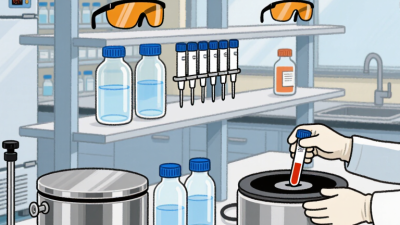
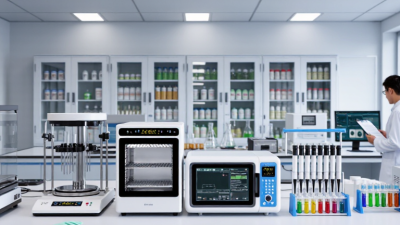
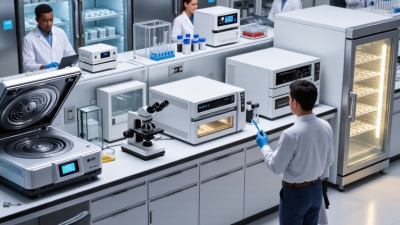
Preparation and handling equipment includes balances, centrifuges, incubators, ovens, and automated pipetting systems. These tools help researchers weigh, separate, heat, and move samples with consistent procedures. Even a precise balance can mislead if it sits on a vibrating bench. Small details matter. Routine calibration and maintenance keep measurements useful.
Monitoring and control equipment tracks conditions such as temperature, humidity, pressure, and water quality. Data systems can connect readings across instruments, making trends easier to review. But connected equipment is not automatically reliable; staff still need to check sensor placement, recording intervals, and calibration records. Safety equipment, including fume extraction and protective enclosures, also supports everyday laboratory work. The right setup depends on the samples, workflow, and available expertise. More automation may save time, yet it can add maintenance and training demands. There is no perfect configuration. A sensible equipment plan starts with the question being measured.
Measurement Instruments for Physical and Chemical Properties
In 2026, useful scientific equipment is defined less by novelty than by dependable measurement. Digital balances track mass, while calipers and micrometers reveal small dimensional differences. Temperature probes and pressure sensors monitor changing physical conditions in experiments and production settings. For a sample of liquid, a calibrated thermometer can show whether a reading shifts as it cools. Small details matter.
Chemical measurements rely on instruments such as pH meters, conductivity meters, and spectrometers. A pH meter needs a clean electrode and fresh buffer solutions; residue can distort readings. Conductivity measurements can help estimate dissolved ionic content, but they do not identify each substance. Spectrometers assess how samples interact with light, providing useful evidence about composition. Results still depend on sample preparation and instrument settings.
Reliable practice includes checking calibration against appropriate reference standards and recording temperature, units, and instrument condition. Repeat measurements can expose drift or handling errors. Even a well-maintained instrument has limits, and a displayed number is not automatically accurate. I have seen careful-looking data become questionable when a sample sat uncovered or a sensor was used outside its range. That is worth remembering. A clear record of uncertainty helps others judge what the measurements can—and cannot—support.
Imaging Systems for Observing Samples and Processes
In 2026, imaging systems help researchers watch samples change, not just capture attractive pictures. A microscope can reveal a cell dividing; a thermal camera can track heat moving through a material. Wide-field fluorescence captures broad areas quickly, while confocal imaging isolates thin optical sections. Each method answers different questions.
Grand View Research estimated the global microscopy market at USD 8.56 billion in 2023 and forecast 7.4% annual growth from 2024 through 2030. That market estimate signals demand, but it does not tell a lab which instrument will produce reliable results.
A fast camera may miss faint details. Higher magnification may shrink the visible field. Trade-offs matter.
For live samples, illumination intensity and exposure time can affect what researchers observe. Short exposures help record rapid motion, yet may leave dim images. A sharp image can still mislead. Teams should check calibration, scale bars, and raw files alongside processed images.
X-ray micro-computed tomography can show internal structures without slicing a sample, though resolution and scan time constrain what becomes visible. In practice, the best system is the one matched to the process, sample, and measurement—not simply the one with the highest advertised resolution.
Analytical and Testing Equipment for Laboratory Research
Analytical and testing equipment helps researchers turn samples into evidence. In 2026, common laboratory tools include spectrometers, chromatographs, microscopes, balances, and thermal analyzers. Each measures a different property, from light absorption to mass change. The right choice depends on the research question, sample type, and required detection limit. More sensitive is not always more useful.
A spectrometer can reveal how a sample interacts with light, while chromatography separates compounds in a mixture. Microscopes show structure at scales the eye cannot resolve. A calibrated analytical balance may measure tiny mass differences, but airflow or vibration can affect readings. Small details matter. Researchers should check calibration records, use suitable controls, and document sample preparation. Otherwise, precise-looking results can still be misleading.
Testing equipment also evaluates performance under controlled conditions. Temperature chambers, tensile testers, and conductivity meters can help assess stability, strength, or electrical behavior. Before collecting data, labs need to verify that instruments suit the method and operating range. Maintenance logs and repeat measurements support reliable results. Yet equipment cannot fix a poorly designed experiment. Even careful protocols leave room for uncertainty, especially when samples vary or methods have not been validated for a new material. A little doubt is useful. It prompts researchers to question outliers, review assumptions, and report limitations clearly.
Automated and Digital Platforms for Scientific Workflows
Automated and digital platforms are becoming core scientific equipment, not optional add-ons. In 2026, a workflow may link liquid handlers, analytical instruments, electronic lab notebooks, and scheduling software. The value is practical: samples move through repeatable steps, while timestamps and instrument readings stay connected. Grand View Research estimated the global laboratory automation market at $5.63 billion in 2023 and projected $10.34 billion by 2030. MarketsandMarkets separately forecast growth from $5.8 billion in 2023 to $8.8 billion by 2028. Their estimates use different scopes, but both point to sustained investment.
On a busy bench, automation can transfer samples, flag a temperature drift, and record results without manual re-entry. Digital workflow tools can then show which instrument handled each sample and when. That traceability helps teams investigate deviations and reproduce experiments. Still, software cannot fix a poorly designed protocol. Integration can be awkward, and staff need time to verify that imported data match the physical sample. The weak spot? Human oversight remains essential. A useful platform should make errors easier to spot, not hide them behind a clean dashboard. Teams should test workflows with real samples before relying on automated alerts. Some steps will stay manual, and that is not always a failure.